
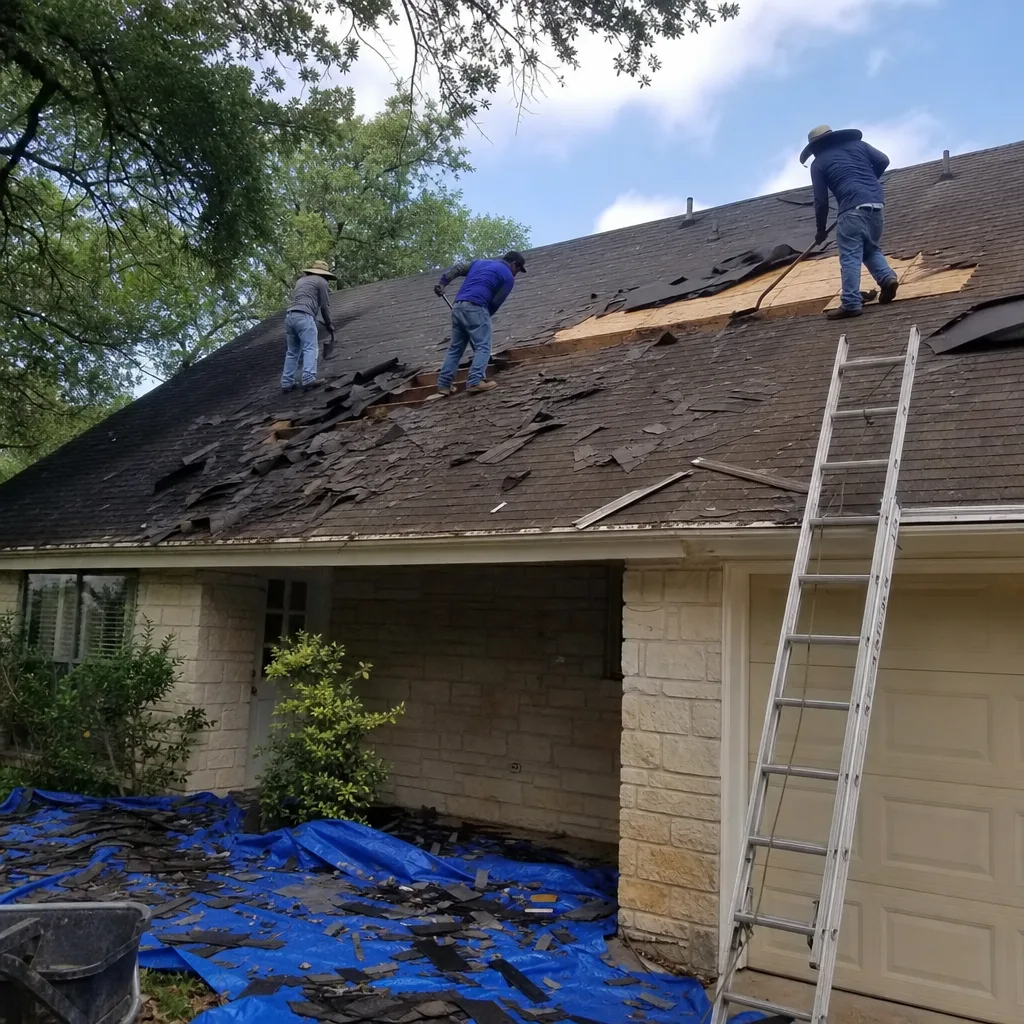
Last updated October 17, 2026
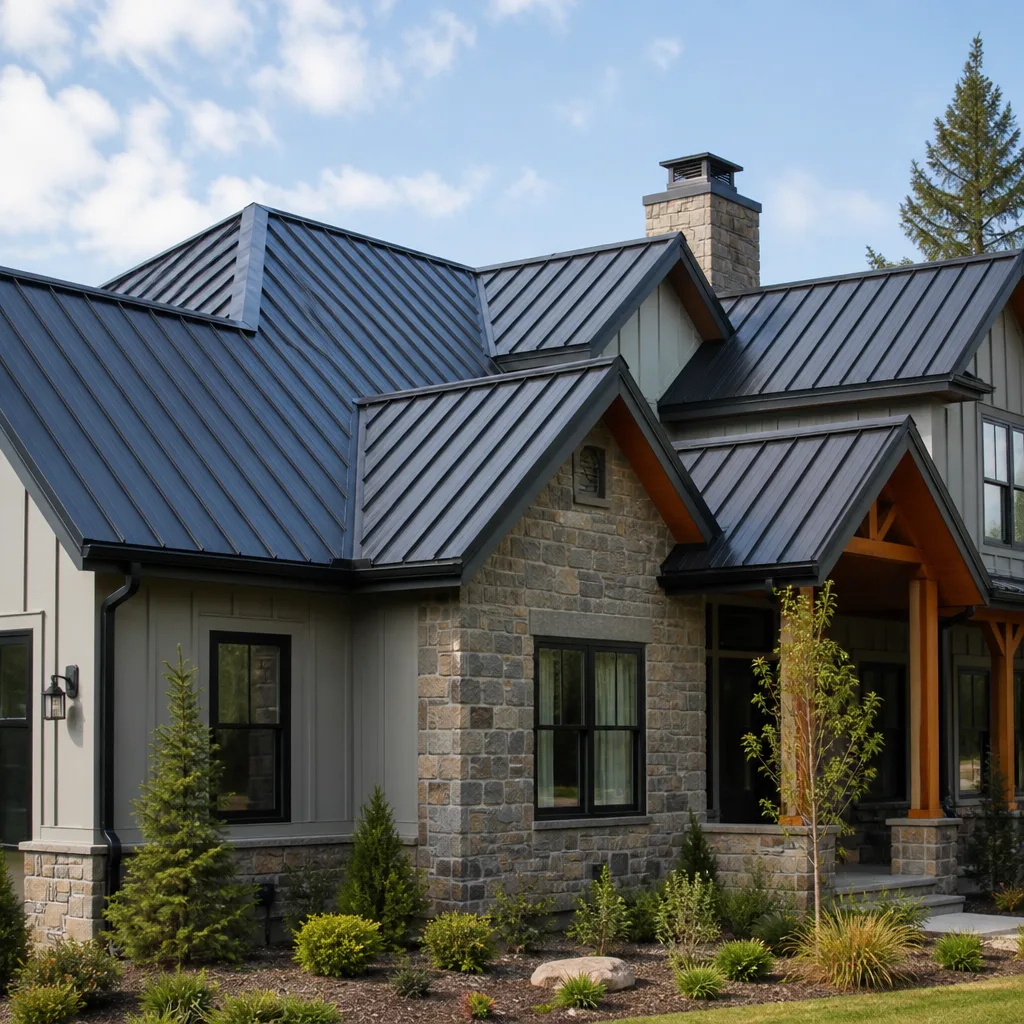 Metal roofing
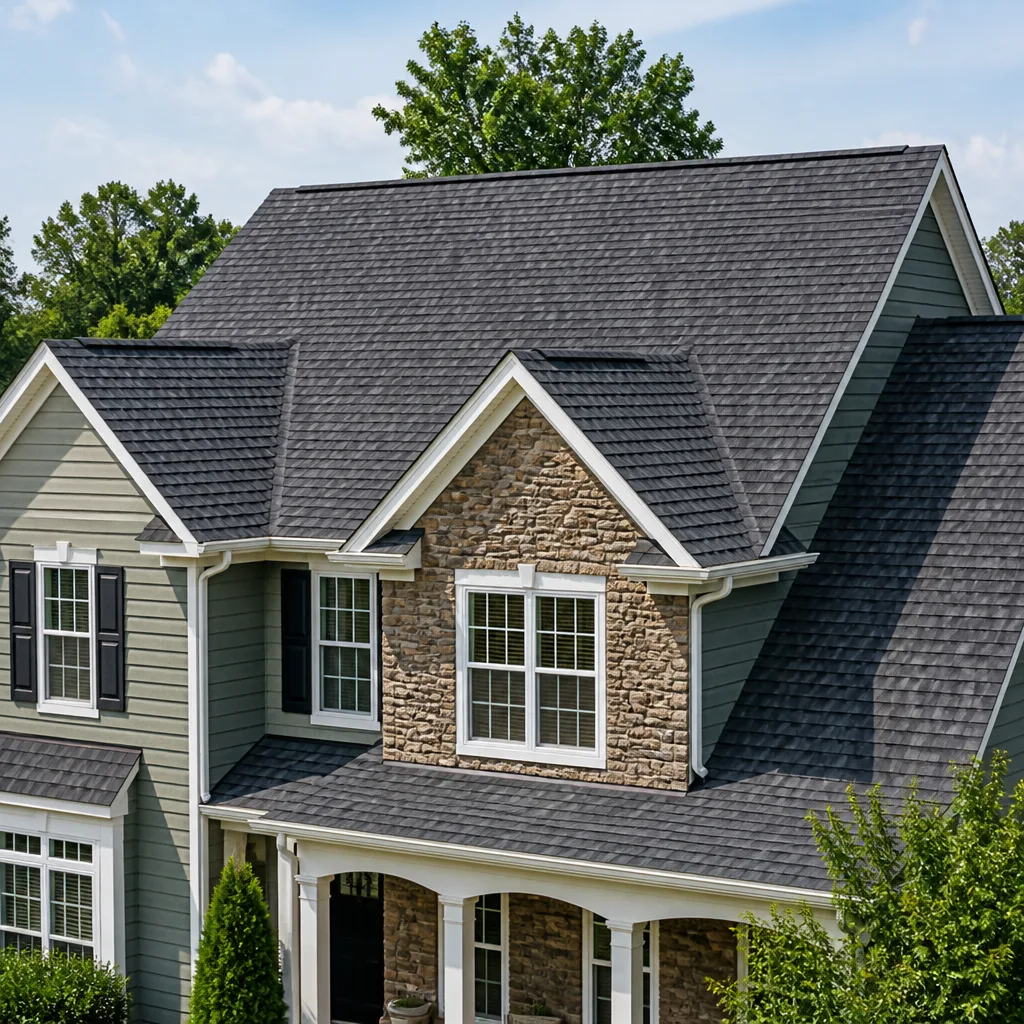 Architectural shingles
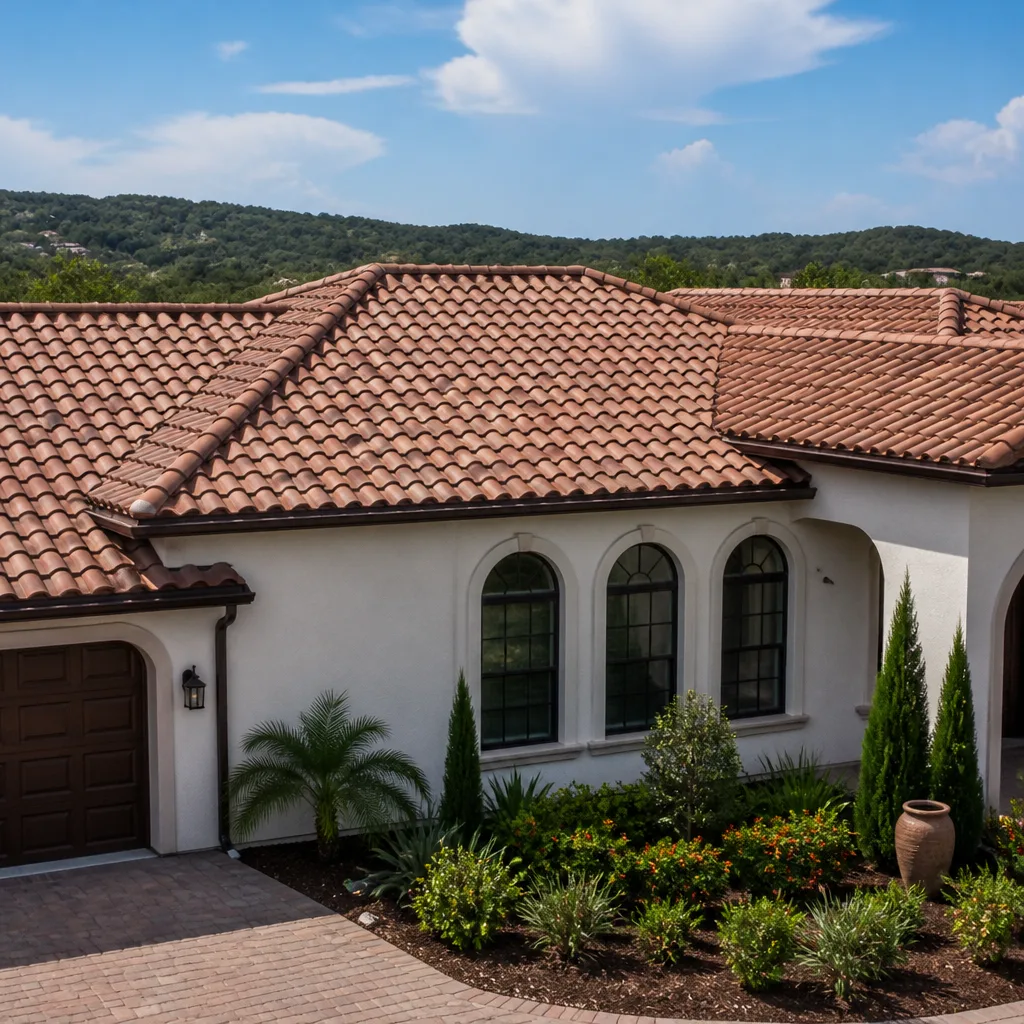 Tile roofing
 GAF
GAF Owens Corning
 Flat & low-slope
Free roof inspection with deck photos before we talk money - GAF and Owens Corning certified installation
Roofing Permits, Codes & Inspections in TX: What You Need to Know
Texas is one of only a handful of states with no mandatory statewide roofing contractor license. That means the person on your roof may have passed zero state-administered competency tests. The only real protection you have is the permit process, which many contractors quietly skip to save a few hundred dollars and a morning at the permit office. In Austin, that process is more layered than most people realize, because city code, county rules, and neighborhood overlays can all apply to the same roof. This guide explains exactly what’s required, when, who’s responsible, and what it costs if you get it wrong, and it builds on our Complete Guide to Roofing in Austin.
Quick Answer
Most full roof replacements in Austin require a permit from the City of Austin Development Services Department, along with at least one inspection. Repair permits depend on square footage, and homes in historic districts or HOA-governed neighborhoods may need design review before materials go on. The permit is the homeowner’s legal responsibility even when a contractor handles the paperwork, and skipping it can come back on you at resale or during an insurance claim.
Styles & brands we work with
Table of Contents
- Who Needs a Roofing Permit in Austin, and When
- What Happens When Work Is Done Without a Permit
- How Austin’s Energy Code Affects Your Roofing Cost
- Historic Districts and HOA Overlays: What’s Restricted Where
- The Inspection Sequence: What an Austin Inspector Actually Checks
- How to Confirm Your Contractor Closed the Permit Properly
- Homeowner Liability When a Contractor Skips Permits
- Permits, Inspections, and Your Homeowner’s Insurance
Who Needs a Roofing Permit in Austin, and When
The short answer: a full roof replacement in Austin always requires a permit. The City of Austin Development Services Department (DSD) treats a complete tear-off and re-roof as structural work. That permit is not optional, and it’s not something a reputable contractor will offer to skip.
Repairs are where it gets murky. Austin’s rule turns on square footage. If the repair area is under a certain threshold, generally 100 square feet of roof surface, a permit may not be required. Replace a few shingles after a windstorm, patch a small section of decking, reseal a vent pipe, and you’re typically in exempt territory. But once you’re replacing an entire slope, a large section of flashing, or more than a small patch of decking, the permit requirement kicks in.
Here’s the part most homeowners don’t know: the threshold is not a loophole you want to exploit. A contractor who suggests breaking a large job into smaller “repairs” to avoid the permit isn’t doing you a favor. They’re shifting risk onto you, and that risk has a long tail.
What the Permit Actually Covers
- Structural review of the existing decking and rafters against current Austin building code
- Verification that the planned materials meet wind uplift requirements for the Austin area
- Energy code compliance for any insulation or ventilation work done under the roof
- A scheduled inspection by a City of Austin code inspector after the work is complete
Mercer Roofing Co Austin pulls permits on every job that requires one. We don’t ask whether you want one, because in Austin, the answer is almost always yes, as we cover in our Roofing Warning Signs: A Austin Homeowner’s Reference Guide. That’s part of what we cover when we give you a written price before any work starts.
What Happens When Work Is Done Without a Permit
Unofficially, plenty of Austin roofs get replaced without permits. Officially, the consequences can surface years later in ways most homeowners never anticipate.
The most common scenario is the sale. When you sell a home in Austin, the buyer’s title company and lender typically request a permit history from the City of Austin. If the roof was replaced in 2021 and no permit exists for that work, the underwriter may flag it. Sometimes it’s a minor disclosure issue. Sometimes it’s a condition of closing that the seller obtain a retroactive permit, which means an inspection of a roof that was never inspected, and repair or replacement of any work that doesn’t meet current code. That retroactive permit can cost thousands more than the original permit would have.
The second scenario is insurance. If a storm damages your roof and the adjuster discovers unpermitted work, the claim can be denied or reduced, because the insurer’s position is that they’re insuring a roof that legally shouldn’t be there in its current state. We’ve talked to Austin homeowners who learned this after a hailstorm, and it’s not a phone call anyone wants to make.
The third scenario is a city code enforcement action. Less common, but it happens when a neighbor complains or when the city gets wind of work through a different permit on the property. The city can issue a stop-work order, require a permit application, and assess penalty fees.
All of this is avoidable. The permit for a roof replacement in Austin is not a barrier, it’s a paper trail that protects the homeowner. It proves the work was done, inspected, and approved.
How Austin’s Energy Code Affects Your Roofing Cost
Austin adopts the International Residential Code (IRC) with local amendments, and as of the current adoption cycle, the city is aligned with IRC 2021. What that means for your roof is that a permitted roof replacement or significant repair in Austin can trigger energy code requirements that go far beyond shingles.
The big one is attic insulation. Austin’s energy code sets a minimum insulation R-value, typically R-30 to R-38 for attic spaces depending on the zone and the specific amendment in force. If your roof job involves removing or disturbing the roof decking, or if the home is undergoing a major renovation, the permit may require bringing attic insulation up to current code. For an older Austin home, that could mean adding several inches of blown-in insulation or batt insulation, which adds real cost to the project.
Here’s what that looks like in dollars. If a roof replacement in Austin comes in at $12,000 for a typical single-story home and the permit requires insulation upgrades, you might add $1,500 to $3,000 depending on attic size and current insulation levels. That’s a cost many homeowners discover mid-project, because the contractor didn’t mention it in the estimate. We mention it. A written price from Mercer Roofing Co Austin includes any energy code work we anticipate, because finding out about mandatory insulation upgrades halfway through a roof replacement is exactly the kind of surprise that erodes trust.
Ventilation is the second energy code issue. Austin’s climate, with its long hot summers, makes attic ventilation a real performance factor. The code requires a balance of intake and exhaust ventilation, measured in net free area, and a roof replacement is the moment to correct any deficiency-a topic we detail in our Seasonal Roofing Care for Austin: Year-Round Homeowner’s Guide. Ridge vents, soffit vents, and in some cases powered vents or solar attic fans may be required to meet current code.
Historic Districts and HOA Overlays: What’s Restricted Where
This is where Austin roofing gets genuinely complicated, and where a generic answer fails. The city permit process and the neighborhood overlay process are separate reviews, and both can govern what goes on your roof.
If your home is in a City of Austin historic district or a designated historic landmark, you need a Certificate of Appropriateness from the Historic Landmark Commission before you re-roof. That review governs materials. In neighborhoods like Hyde Park, Old West Austin, and portions of Travis Heights, the historic review can restrict you to specific roofing materials: composition shingles in certain colors, standing seam metal, or in some cases tile or slate. Three-tab shingles are often prohibited in historic districts in favor of architectural shingles or materials that match the home’s original character.
The review process adds time, typically two to six weeks depending on the commission schedule, and that’s before the building permit is even issued. A contractor who doesn’t know which Austin neighborhoods fall under historic review will learn it at the permit counter, and you’ll learn it when your project stalls.
HOA overlays work differently. An HOA is a private covenant, not a city regulation, but it has real teeth. Many Austin-area HOAs, especially in master-planned communities like Steiner Ranch, Circle C, and Avery Ranch, require architectural review before any exterior change, including roofing. The HOA may dictate shingle color, shingle style, and even the brand in some restrictive covenants. Failure to get HOA approval can result in fines and, in the worst case, an order to re-roof with approved materials.
The practical takeaway: if you live in a historic district, an HOA, or both, your contractor needs to be proactive about both review processes before the first shingle is ordered. Mercer Roofing Co Austin has worked through both paths in Austin, and we build that review time into the project schedule so you’re not surprised by a delay.
The Inspection Sequence: What an Austin Inspector Actually Checks
Once the permit is issued and the roof work is done, the City of Austin sends a code inspector to the property. This inspection is not a formality. Inspectors in Austin fail roof installations regularly, and the reasons are usually specific and fixable.
Here’s the typical sequence for a permitted roof replacement in Austin:
- Permit posting. The permit must be posted at the job site, visible from the street, on the day of inspection.
- Framing/sheathing check. If any decking was replaced, the inspector verifies it meets thickness and attachment requirements and that damaged rafters or trusses were addressed.
- Underlayment check. Austin requires a specific underlayment, typically a synthetic or felt product meeting ASTM standards, applied according to the manufacturer’s installation instructions.
- Flashing check. The inspector looks at flashing at roof penetrations, valleys, sidewalls, and chimneys. This is the most common point of failure, because flashing is easy to install wrong and expensive to fix after shingles are on.
- Shingle installation check. Nail pattern, nail placement, exposure, and alignment are verified. Improper nailing, especially overdriven nails in high winds, is a frequent fail.
- Final sign-off. If everything passes, the inspector signs the permit, and the job is recorded as complete in the city’s system.
The inspector is not there to nitpick. They’re enforcing a code that exists because Austin experiences high winds, hail, and intense UV exposure that fail roofs that were never installed to standard. A roof that passes inspection is a roof that was installed the way the manufacturer and the city both require.
How to Confirm Your Contractor Closed the Permit Properly
A permit that was pulled but never closed is almost as bad as no permit at all. In Austin, a permit stays open until the final inspection is passed and recorded. Open permits show up on title searches and can complicate a sale just like unpermitted work.
Here’s how to verify your permit was closed:
- Ask your contractor for the permit number. They should have it before work begins.
- After the final inspection, ask for a copy of the signed inspection report or the final approval notice.
- You can verify the permit status yourself through the City of Austin’s online permit portal, Austin Build + Connect, using the property address or permit number.
- If the permit shows as still open 30 days after the final inspection, call your contractor. The city’s system has occasional lag, but an open permit that lingers is a red flag.
Mercer Roofing Co Austin closes every permit we open, and we provide the inspection sign-off to the homeowner after the final visit. It’s part of the written guarantee we include with every job.
Homeowner Liability When a Contractor Skips Permits
This is the section most roofing companies won’t write, because it exposes a practice that is common in Austin and rarely discussed honestly. When a contractor skips a permit, the legal liability lands on the homeowner, not the contractor.
The City of Austin issues permits to the property and records them against the property. The permit obligation runs with the land. If the city discovers unpermitted work, the notice goes to the property owner. If a title company flags the work at resale, the seller is responsible for resolving it. If an insurance claim is denied because of unpermitted work, the homeowner absorbs the loss.
The contractor who skipped the permit may be long gone by then. Many roofing contractors in Austin operate on thin margins, and some cycle through business names and phone numbers every few years, which makes them hard to find when a problem surfaces. The permit is your protection against that scenario, because it creates a paper trail that binds the work to the property regardless of what happens to the contractor.
We take the position that a contractor who offers to skip a permit is telling you something important about how they’ll handle the rest of the job. The permit is not complicated, and it’s not expensive relative to the cost of a roof. Skipping it saves the contractor time, not you money.
Permits, Inspections, and Your Homeowner’s Insurance
Your insurance company has a position on permits, even if they never say it out loud: a permitted, inspected roof is a known quantity. An unpermitted roof is a liability they didn’t agree to cover.
When you file a claim for roof damage in Austin, the adjuster will ask when the roof was installed and by whom. If the answer is a vague “a few years ago by some guys in a truck,” the claim gets harder to defend. If the work was permitted, the city has a record of it. That record is not your enemy, it’s your evidence that the roof was installed to code and passed inspection.
There’s also the question of the contractor’s insurance. In Texas, roofers are not required to carry workers’ compensation, which means if a worker falls on your roof, your homeowner’s insurance may be the policy that pays. A contractor who skips permits is not necessarily uninsured, but the two often travel together, because both are costs that a certain type of roofer avoids. When we dispatch a technician in Austin, that technician is background-checked, identity-verified, and arrives in a marked uniform with a photo ID badge, the Threshold Verified standard we’re held to as part of the Threshold Group family. You know who’s on your roof, and the paper trail is there if you need it.
Common Mistakes to Avoid
- Hiring a contractor who says the permit is “unnecessary” for your specific roof. A full replacement in Austin always requires one. If they say otherwise, they’re either misinformed or avoiding the process. Either way, that’s your signal to call someone else.
- Not checking HOA or historic district rules before signing a contract. Material restrictions can force a re-roof if the wrong shingle goes on. That’s a five-figure mistake in Austin.
- Paying the full balance before the final inspection passes. Once the money is gone, leverage is gone. A reputable contractor doesn’t need full payment before the job is complete and the permit is closed.
- Assuming the contractor’s insurance protects you. Ask what insurance they carry and verify it. In Texas, the default is that the homeowner’s policy absorbs the risk when a roofer is underinsured.
- Ignoring energy code requirements in your budget. Insulation and ventilation upgrades required by Austin’s code can add $1,500 to $3,000 to a roof replacement. Plan for it.
- Choosing shingles by price alone. Austin’s hail and wind exposure mean a cheap three-tab shingle can fail early. GAF, CertainTeed, and Owens Corning architectural shingles are the standard for a reason.
See the difference
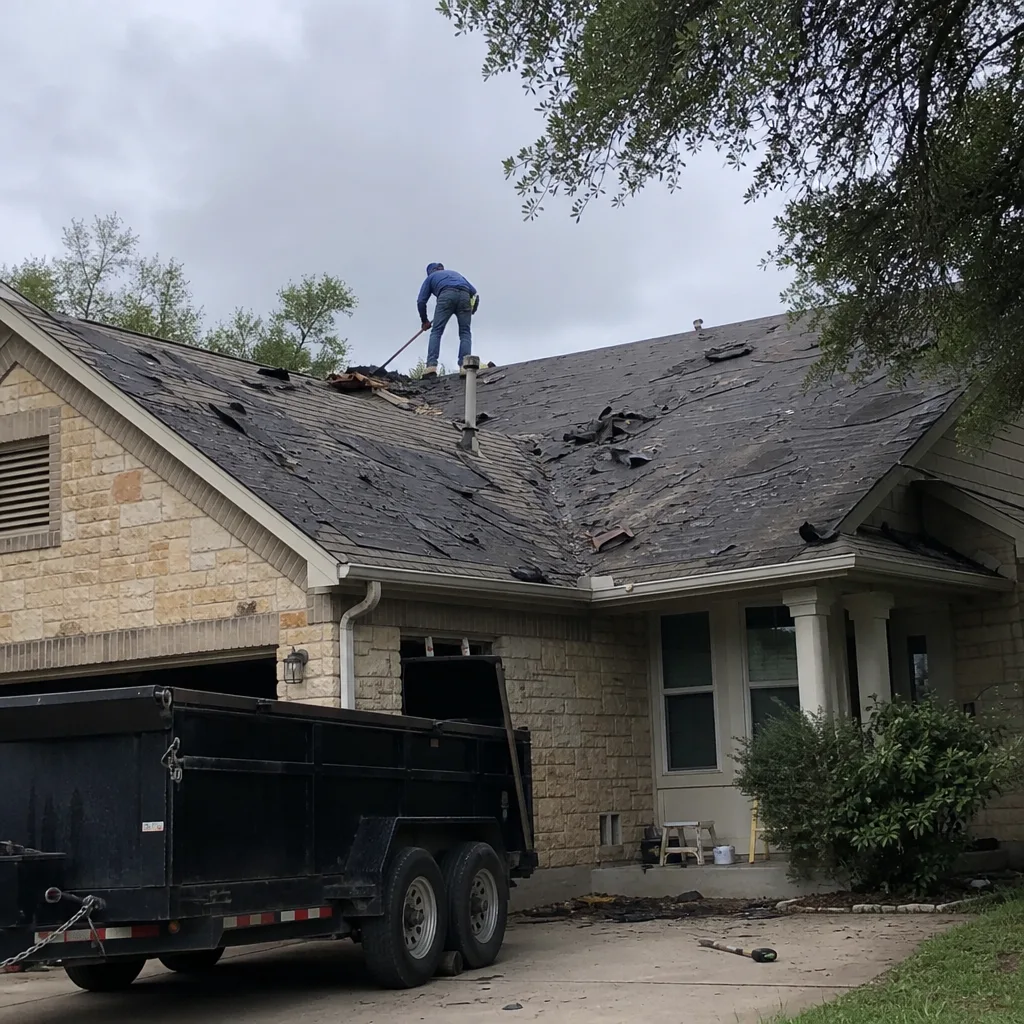 Before
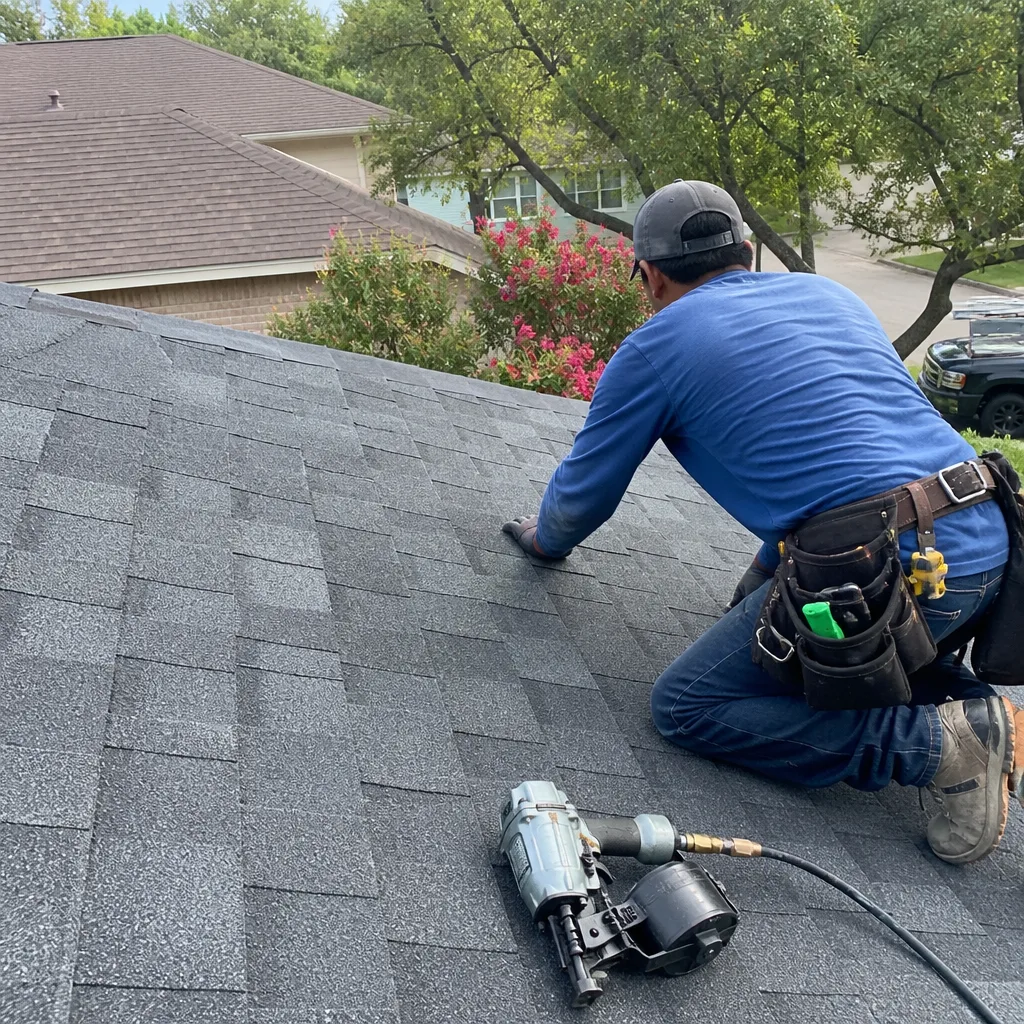 After
After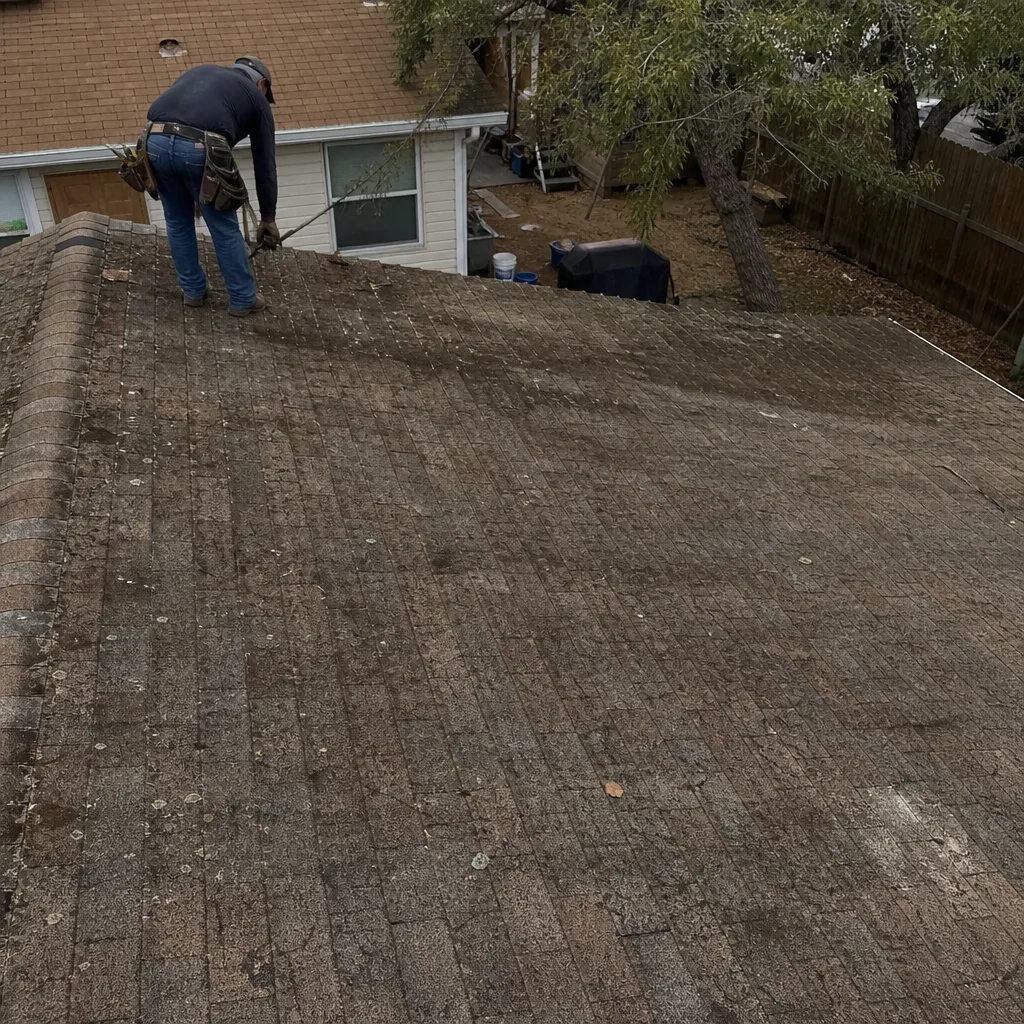 Before
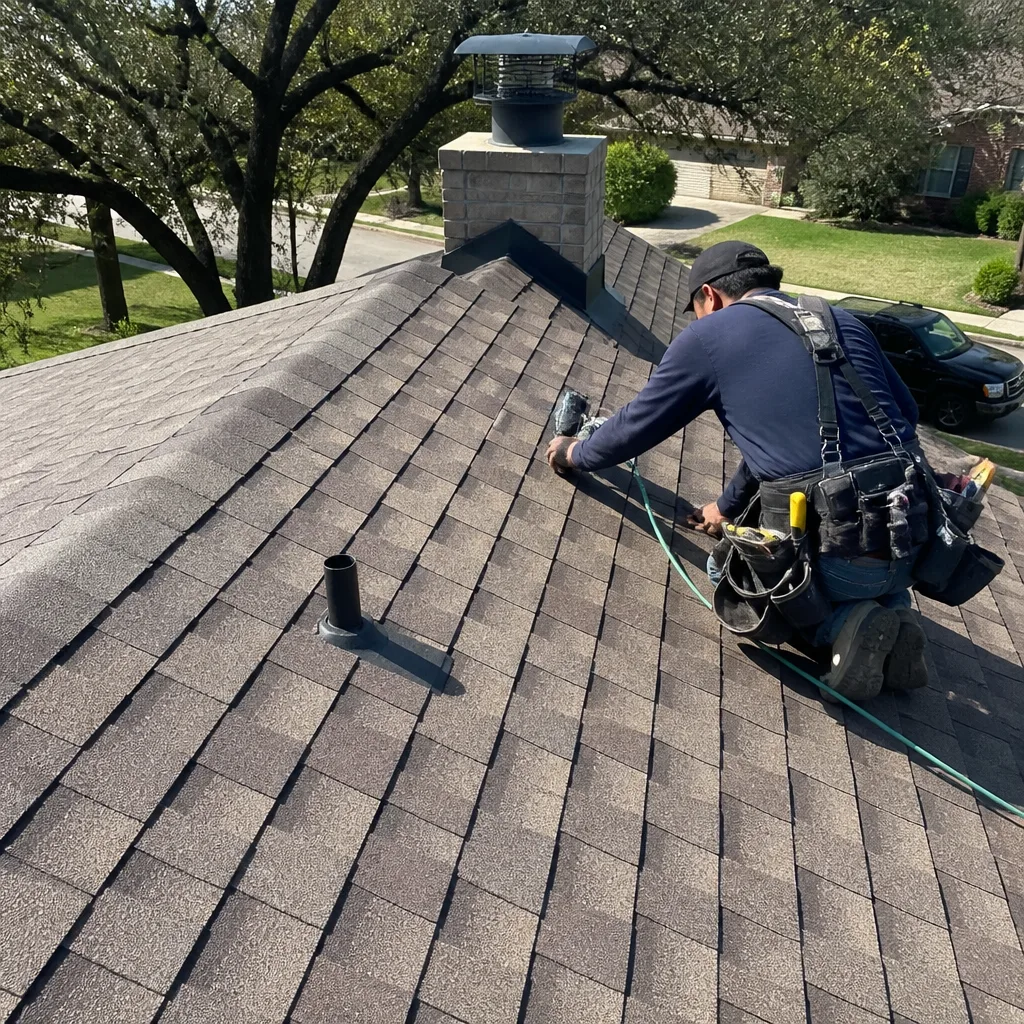 After
After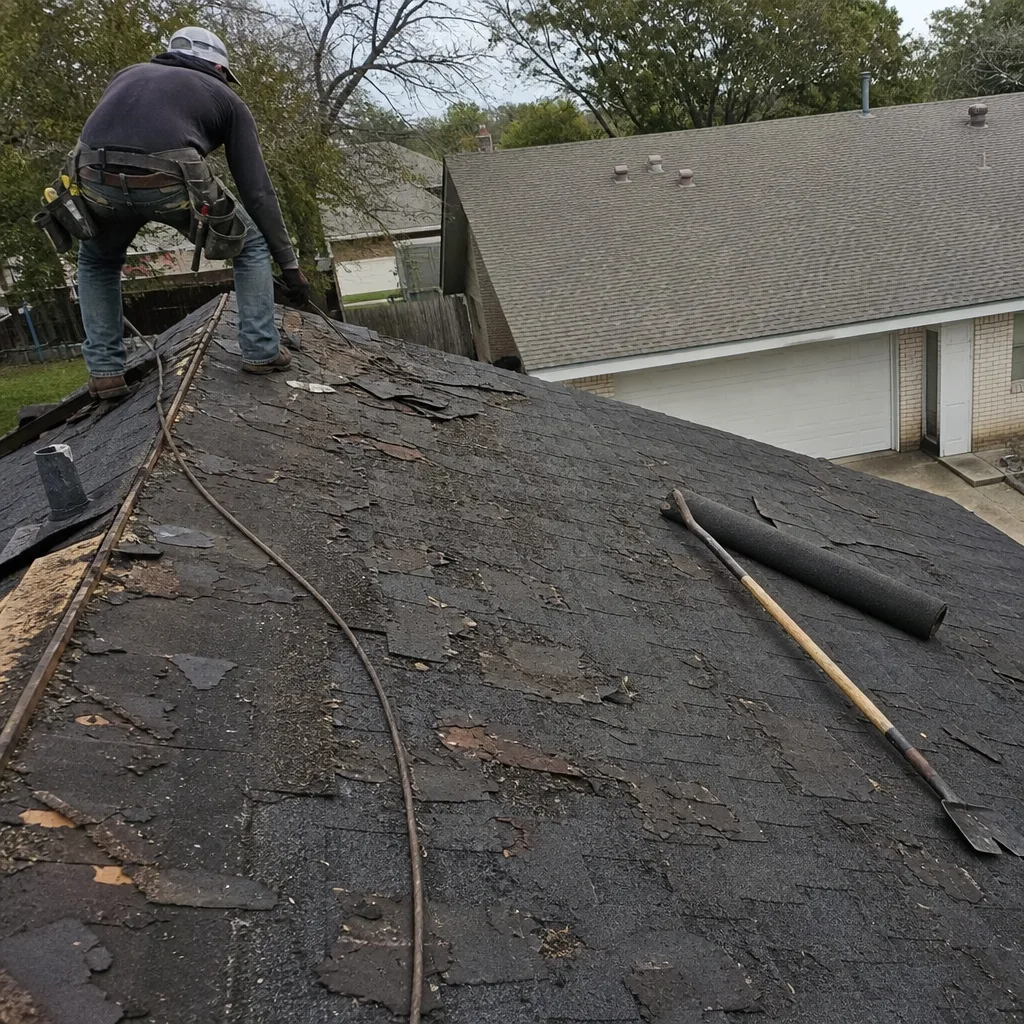 Before
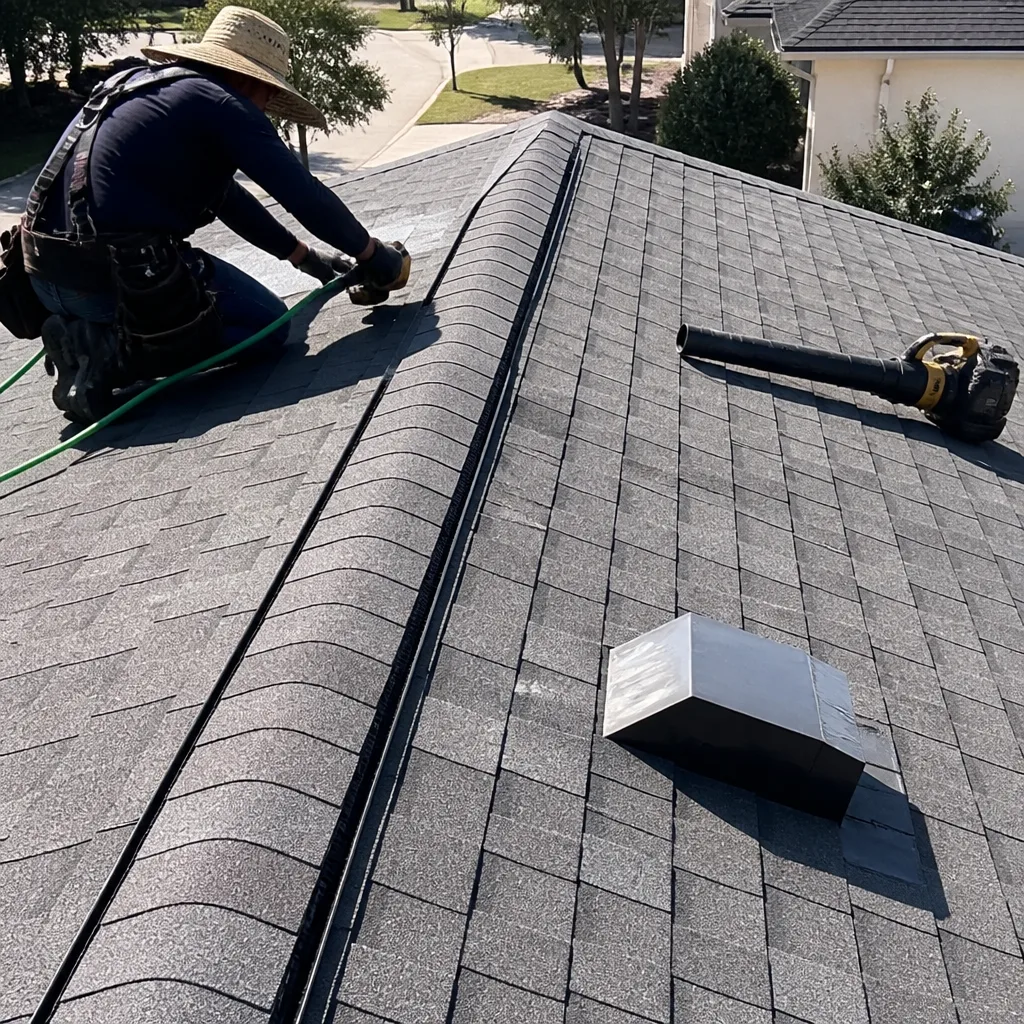 After
AfterWhen to Call a Professional
Any full roof replacement in Austin is a professional job, both because of the permit requirement and because a roof that isn’t installed to code will fail early and expensively. Repairs that involve flashing, any structural decking work, or more than a small patch are the same. If you live in a historic district or an HOA-governed neighborhood, the review process alone is enough to make professional help worth it, because that process has paperwork, deadlines, and specific material knowledge baked in.
If you’re not sure whether your project needs a permit, call the City of Austin Development Services Department, or call a roofer who will look up your specific address and tell you honestly what applies, and explore more guides & resources on our blog. Mercer Roofing Co Austin offers free estimates in Austin, call (361) 202-8874 and we’ll walk you through the permit requirements for your specific roof before you spend a dollar.
Frequently Asked Questions
Yes, a full roof replacement in Austin requires a permit from the City of Austin Development Services Department. Repairs under roughly 100 square feet may be exempt, but any complete tear-off and re-roof is a permitted job with a required inspection. Call (361) 202-8874 and we’ll check the requirements for your specific address.
Roofing permit fees in Austin typically run from $150 to $500 depending on the project valuation and square footage, and the fee is paid as part of the permit application. The permit fee is separate from the roofing work itself, and a reputable contractor includes it as a line item in the written quote.
The title company or lender may flag the missing permit during closing, which can delay the sale indefinitely or require you to obtain a retroactive permit, including an inspection and any repairs needed to bring the roof to current code. That process routinely costs more than the original permit would have.
If the permit triggers energy code review, which it often does when decking is replaced or the attic is exposed, Austin’s adopted energy code may require attic insulation to meet a minimum R-value, typically R-30 to R-49 depending on the amendment. That’s why a written estimate should account for it before work begins.
Yes, an HOA is a private covenant that can restrict shingle color, style, and brand, and many Austin-area HOAs require architectural review before re-roofing. Violating an HOA rule can result in fines or an order to tear off and replace the roof with approved materials.
Yes, Mercer Roofing Co Austin pulls the permit on every job that requires one under Austin code, closes the permit after final inspection, and provides the inspection sign-off to the homeowner. It’s part of the written guarantee that comes with every project.
The Bottom Line
Austin’s roofing permit process is the only real protection Texas gives you, because the state itself requires nothing from roofers. The permit creates a record that the work was done and inspected, and that record protects you at resale, in an insurance claim, and if the roof fails early. Skipping it saves the contractor a few hundred dollars and a half-day, and transfers years of liability onto you. The energy code, historic district rules, and HOA overlays all layer on top of the base permit requirement, and any roofer who can’t explain all three for your specific Austin address is guessing. Mercer Roofing Co Austin home for the full picture on how we work. We write the price before we start, pull the permit, pass the inspection, and stand behind the roof for 365 days through our Done Right Promise. If you’re planning a roof in Austin, Roof Repair in Austin or a full Roof Installation in Austin start with a phone call to (361) 202-8874. Want to know more about who we are before the phone rings, see our Roofing Company in Austin page.
Written by Grant Whitlock, Owner at Mercer Roofing Co Austin, serving Austin since 2000.