
Last updated October 17, 2026
 Metal roofing
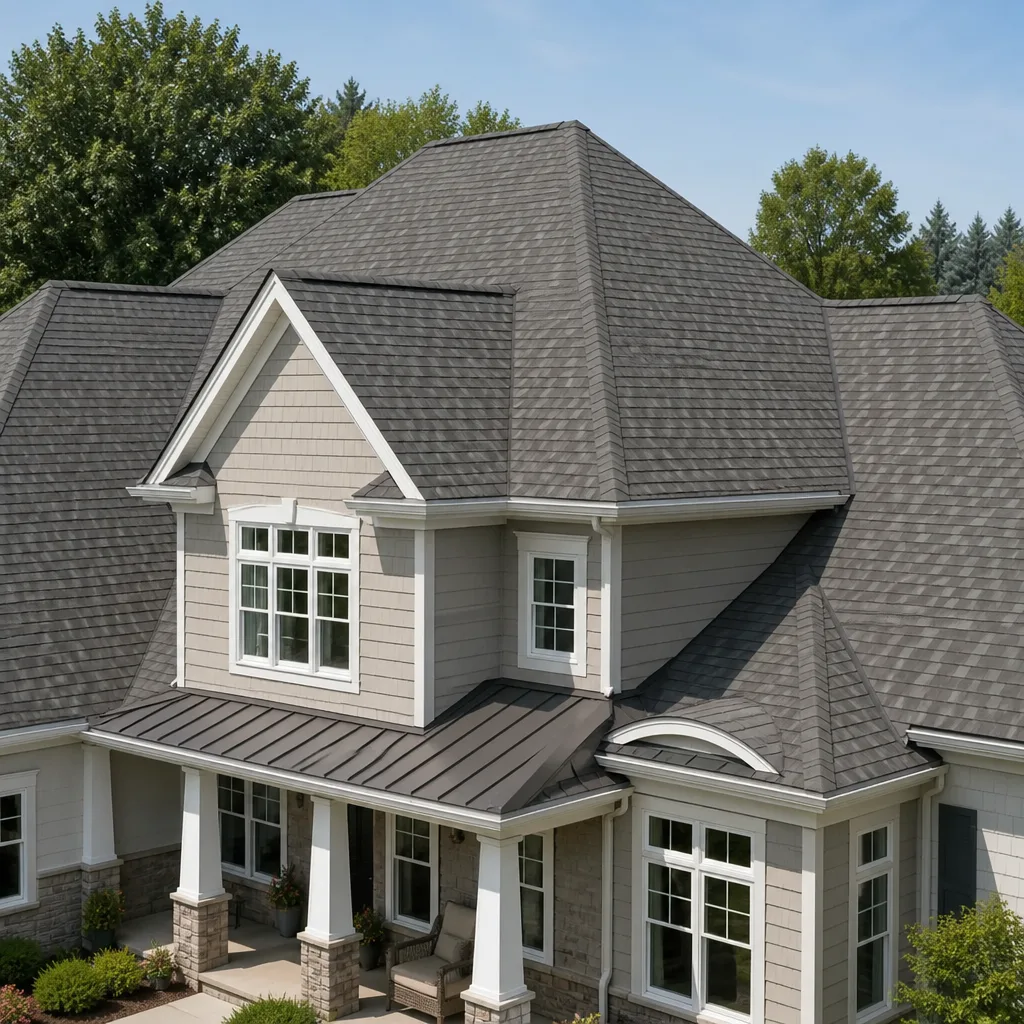
 Architectural shingles
 Tile roofing
 GAF
GAF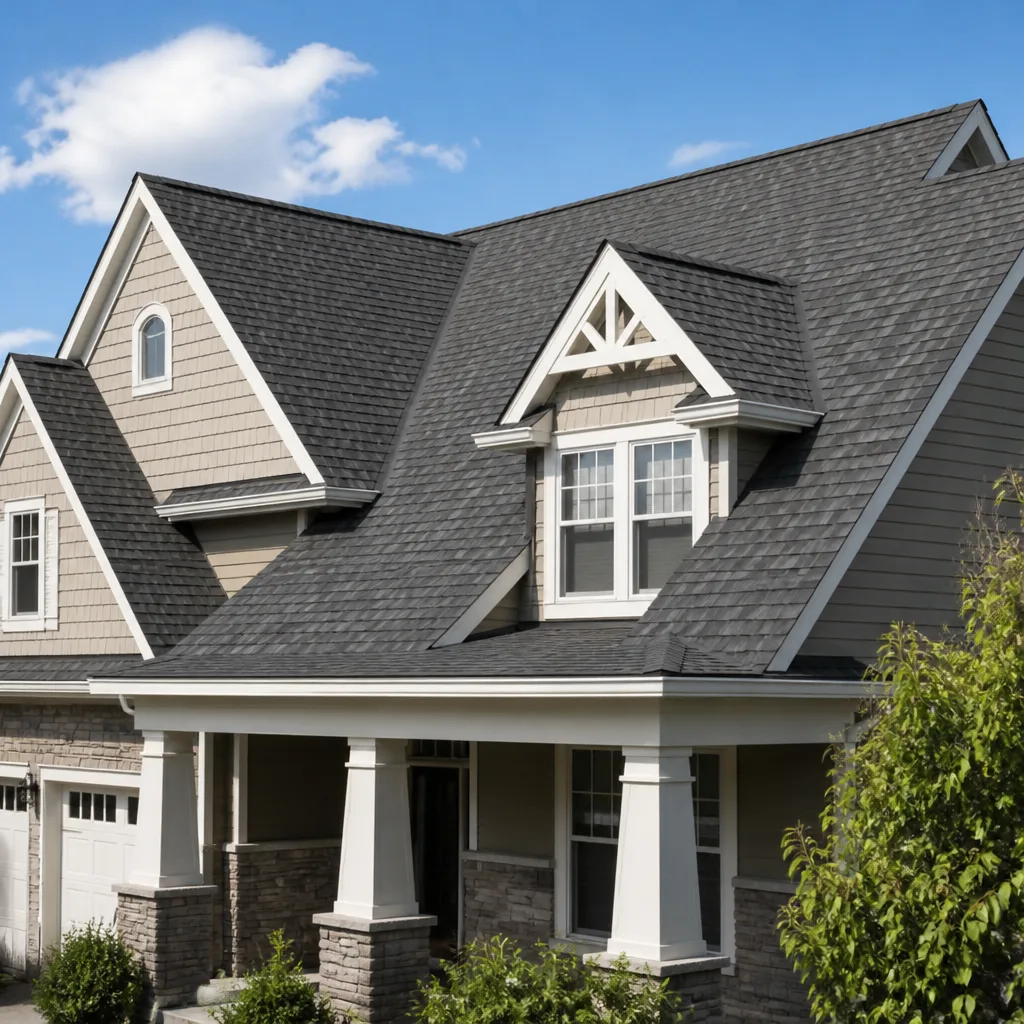 Owens Corning
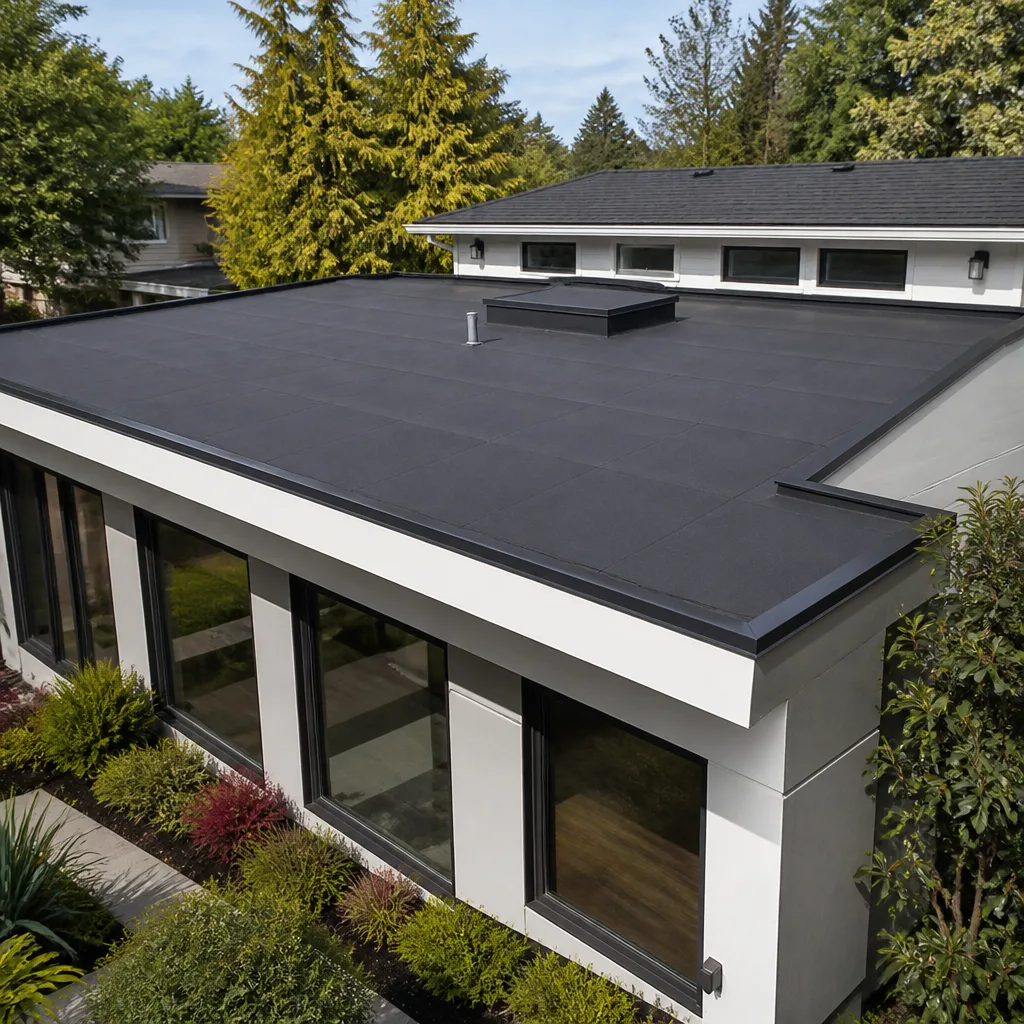 Flat & low-slope
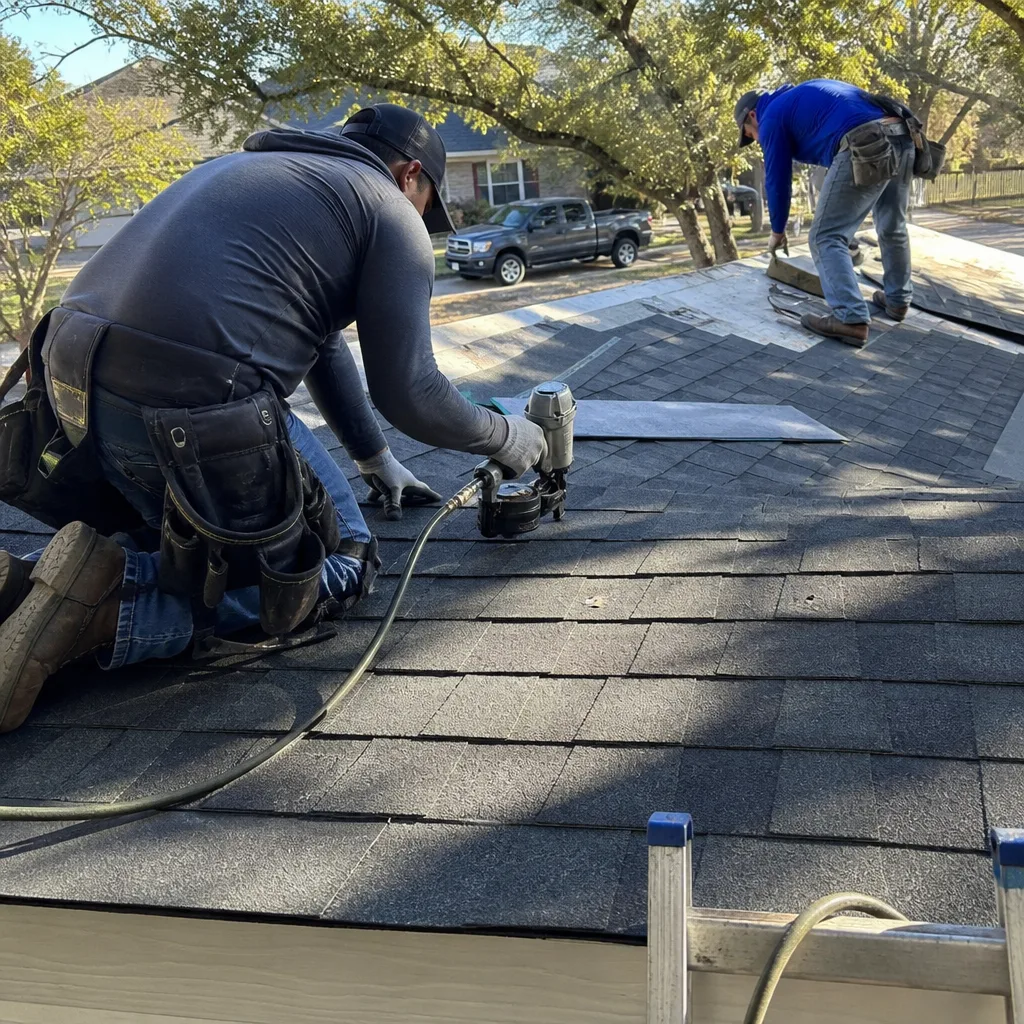
Free roof inspection with deck photos before we talk money - GAF and Owens Corning certified installation
The Complete Guide to Roofing in Austin
Austin gets an average of 89 days above 90°F per year, more than Miami, yet most roofing guides written for Texas homeowners were built around Houston’s rain load or Dallas’s hail belt. That leaves Austin residents with advice that fits their roof about as well as a one-size poncho. The three forces actually shaping roofing in this city are the hybrid climate that swings between Gulf Coast humidity and West Texas heat, a post-boom contractor landscape flooded with out-of-state storm chasers, and neighborhood-specific codes that vary block by block. This guide gives you a local-first framework for materials, contractors, costs, and timelines built entirely around those Austin realities, and you can explore more guides & resources for deeper dives into each topic.
Quick Answer
Roofing in Austin means choosing materials that survive both 100°F summers and the occasional hard freeze, working with a contractor who knows the city’s patchwork of historic district and HOA overlay codes, and budgeting between $7,500 and $22,000 for a full replacement depending on square footage and shingle grade. A complete asphalt shingle roof on a 1,800-square-foot Austin home typically runs $11,000 to $15,000 in 2025-2026, and reputable local installers offer written warranties of 365 days or longer alongside manufacturer coverage. Before you sign any bid, verify the contractor’s Texas registration, check their Austin references, and confirm every material spec and line item in writing. For a detailed walkthrough, see our How to Hire a Roofing Contractor in Austin: A Step-by-Step Guide.
Styles & brands we work with
Table of Contents
- How Austin’s Climate Actually Wears Out Your Roof
- Material Tiers: What Works and What Fails in Austin
- Austin Codes, Overlay Zoning, and Historic District Rules
- How to Read an Austin Roofing Bid Line by Line
- Contractor Vetting Checklist for Austin’s Post-Storm Market
- Real Cost Ranges for Austin Roofs in 2025-2026
- What a Legitimate Warranty Covers and What It Quietly Excludes
- Permits, Inspections, and the Austin Approval Timeline
How Austin’s Climate Actually Wears Out Your Roof
Most national guides talk about rain and wind because that is what damages roofs in Seattle, Chicago, or coastal Florida. Austin’s problem is different. It is the temperature swing. A summer day can push an attic to 140°F, and a February night can drop to 18°F. That is a 120-degree range in a single year, repeated year after year. Asphalt shingles expand when hot and contract when cold, and that constant movement pulls at the adhesive strips that hold each shingle to the one below it. What manufacturers call a 30-year shingle in a mild climate often shows visible granule loss and corner curling within 12 to 14 years in Austin’s specific heat cycle.
Humidity is the second force. Austin’s Gulf Coast influence means months of elevated moisture content in the decking beneath the shingles. Plywood and OSB absorb that moisture, swell, and then bake dry in July. The result is nail pops: the small-headed nails that hold shingles down work themselves loose as the wood swells and shrinks. Drive through neighborhoods like Crestview or Allandale after a windy spring and you’ll see roofs with small bumps pushing up through the shingle surface. Those are nails backing out. Left alone, they create tiny entry points for water.
Hail matters too, but not in the way Dallas homeowners fear. Austin sits at the edge of the southern hail corridor. Severe hailstorms arrive every three to five years, often targeting specific zip codes. The 78745 and 78749 corridors have seen notable hail events that Dallas would consider minor, but which were enough to compromise shingle granules and shorten roof life by several years. In our experience repairing roof repair jobs across Austin, we see more cumulative heat damage than catastrophic storm damage. The roof fails slowly, not suddenly.
What this means for your material choices
- Avoid the cheapest 3-tab shingles entirely. They lack the adhesive strength and granule density to survive Austin’s thermal cycling beyond 10 years. The upfront savings disappear when you replace twice as often.
- Architectural or dimensional shingles are the practical baseline. Their thicker profile and stronger adhesion handle the expansion-contraction cycle better than 3-tab.
- Impact-rated shingles are worth checking against your insurance. Class 4 shingles from brands like CertainTeed or Owens Corning can reduce hail damage claims in Austin’s occasional storms. Some insurers discount premiums for them.
- Attic ventilation matters as much as the shingle. A properly vented attic stays closer to 110°F in summer instead of 140°F. That 30-degree difference extends shingle life measurably. If your roofer is not discussing ridge vents, soffit intake, and airflow ratios, they are not solving your actual roof problem.
Material Tiers: What Works and What Fails in Austin
Choosing a roofing material in Austin is not purely about budget. It is about matching the product to the climate’s specific demands. The wrong material fails early and creates a cycle of repairs. The right material costs more upfront and then stays quiet for decades. Here is how the major categories perform in Austin’s conditions.
Tier 1: Entry-Level Asphalt (3-Tab)
Cost range: $4.50 to $6.50 per square foot installed. The 3-tab shingle is the economy option that most Austin roofers still offer because some homeowners ask for the lowest price. We recommend against it for any Austin home where the owner plans to stay more than five years. The adhesive strip on a 3-tab is narrow, the shingle is thin, and Austin’s heat cycling degrades both quickly. Expect granule loss within 6 years and failure by year 10 to 12. That is half the useful life of a mid-tier shingle at roughly 30% lower cost. The math favors the upgrade.
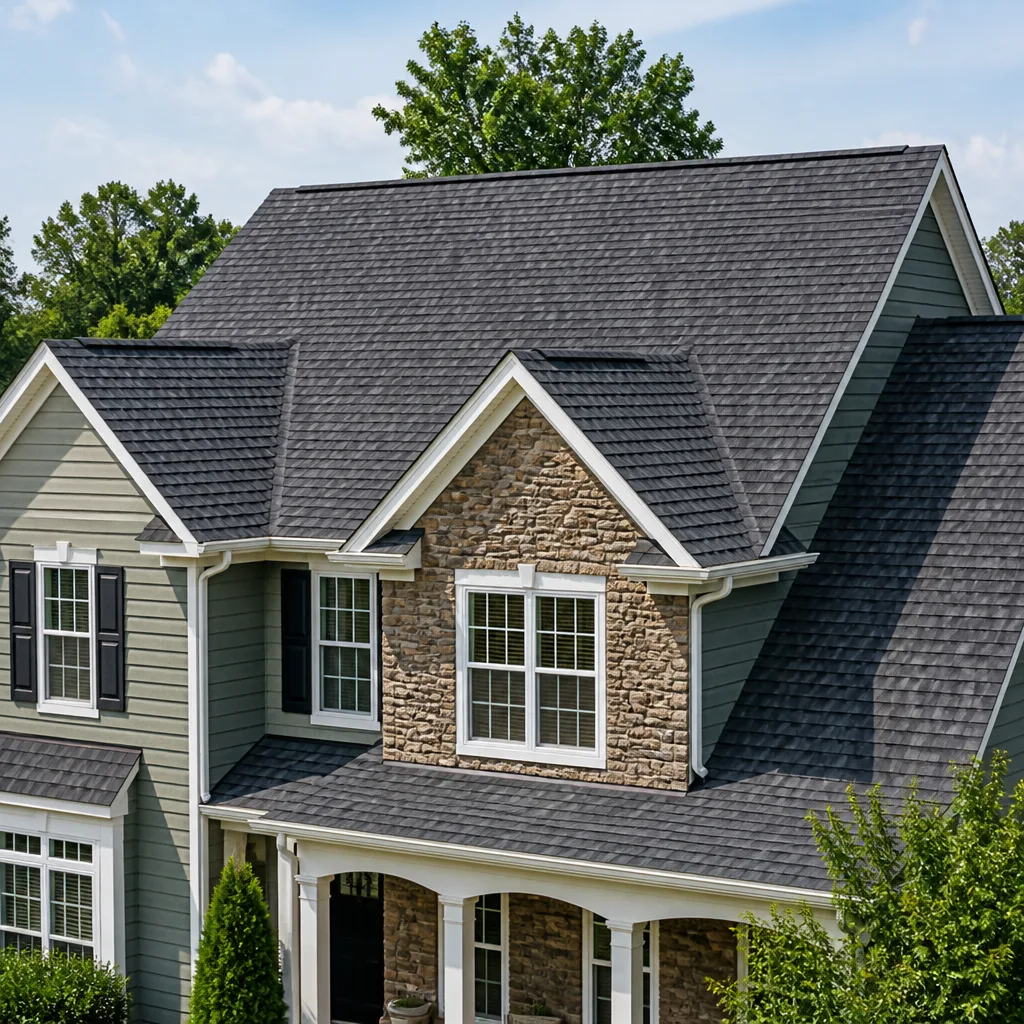
Tier 2: Architectural / Dimensional Asphalt
Cost range: $7.00 to $10.50 per square foot installed. This is the workhorse for Austin homes. Architectural shingles from GAF, CertainTeed, Owens Corning, Atlas, and Tamko are thicker, have stronger adhesive zones, and carry wind ratings that matter during spring storm season. Installed correctly with proper underlayment and ventilation, a Tier 2 roof lasts 18 to 22 years in Austin. The premium over 3-tab is modest, typically $2,500 to $4,500 on a standard home, and it buys an extra decade of service. For most Austin homeowners, this is where a full roof installation provides the best value.
Tier 3: Impact-Resistant / Class 4 Asphalt
Cost range: $9.50 to $14.00 per square foot installed. These are architectural shingles engineered with a polymer-modified asphalt that flexes instead of cracking under hail impact. Brands like Atlas and IKO manufacture Class 4 lines that test well against the stone sizes Austin sees in its intermittent hail events. The insurance angle matters: many Texas carriers offer premium reductions for Class 4 roofs, and some require them on homes with two or more hail claims in the past decade. The payback is not immediate, but on a 25-year ownership horizon, impact resistance on Austin’s southwest fringe can save money and claims hassle.
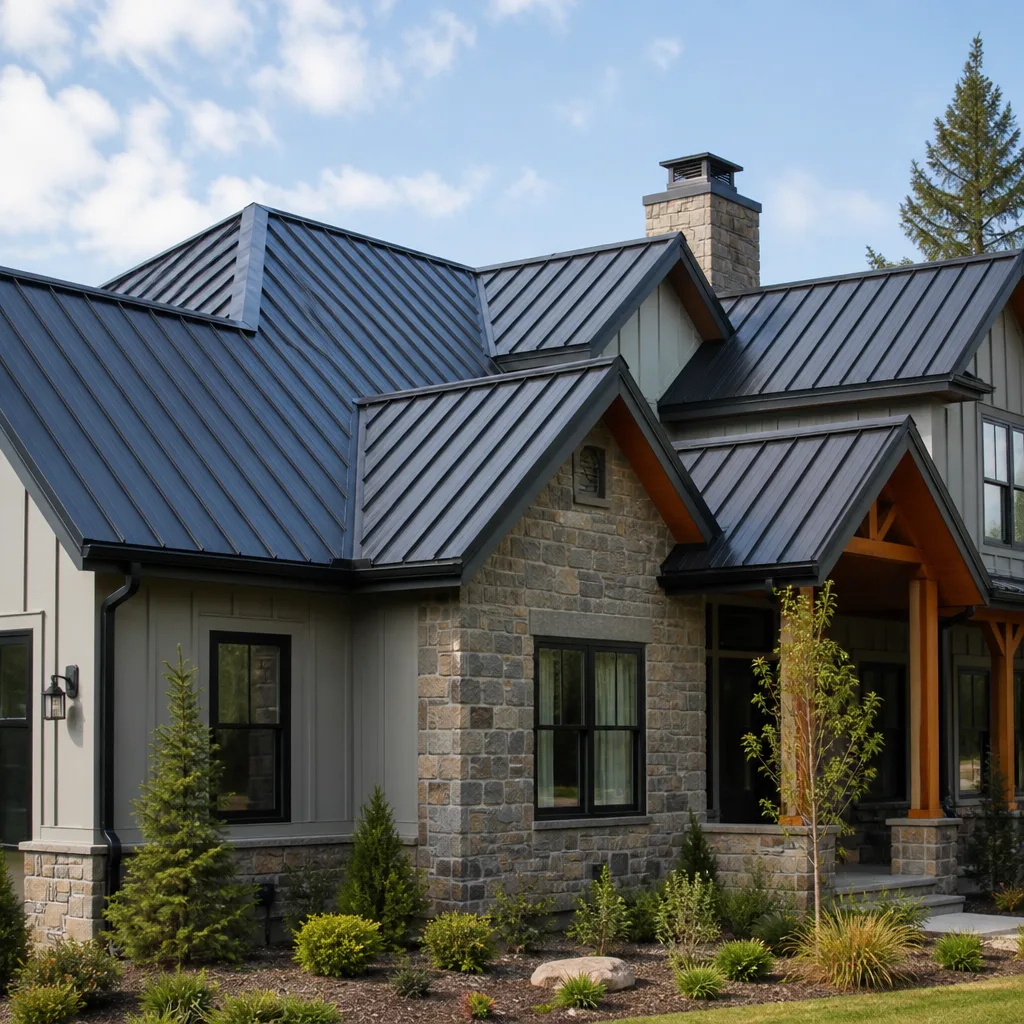
Tier 4: Metal (Standing Seam and Stone-Coated Steel)
Cost range: $14.00 to $24.00 per square foot installed. Metal handles Austin’s heat better than any asphalt product. It reflects solar radiation, cools quickly, and does not rely on adhesives that degrade under thermal cycling. A standing seam metal roof on a Central Austin home can last 40 to 50 years with minimal maintenance. The hurdle is cost: a full metal roof on a 2,000-square-foot home runs $28,000 to $48,000. That is two to three times the cost of Tier 2 asphalt. Metal makes sense for homeowners planning to stay 15-plus years, for historic district properties where material authenticity matters, and for homes with steep or complex roof geometries where asphalt installation is compromised.
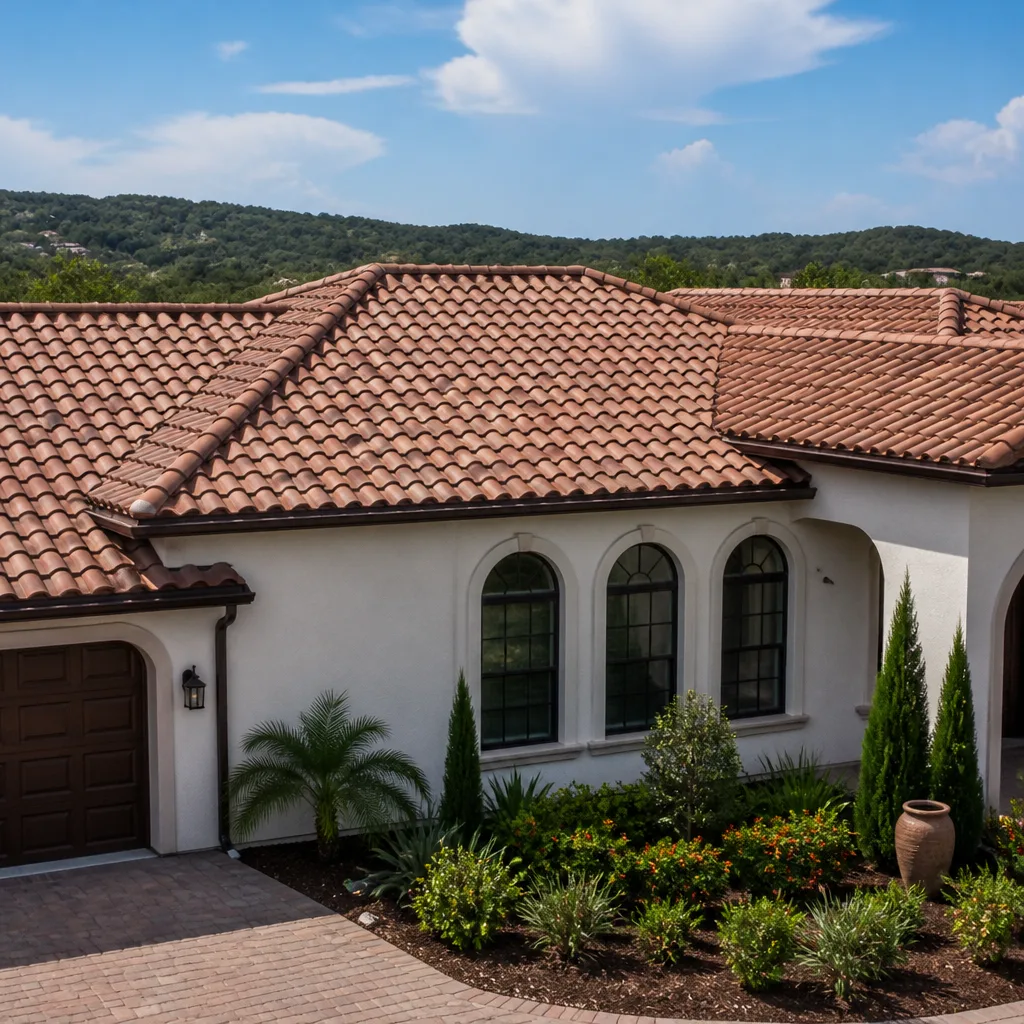
Tier 5: Tile and Slate
Cost range: $18.00 to $35.00 per square foot installed. Concrete and clay tile carry a distinctive southwest look that fits many Austin neighborhoods, especially Tarrytown, Pemberton Heights, and parts of Hyde Park. Tile handles heat well and lasts 50-plus years. The catch is weight. Clay tile weighs roughly three times what asphalt weighs, and many Austin homes built before 1980 were not framed for that load. A structural engineer must evaluate the roof framing before tile is considered. Slate has the same weight concern plus a higher material cost. Tile and slate are niche choices in Austin, not defaults.
Austin Codes, Overlay Zoning, and Historic District Rules
This is the section most national guides skip entirely. Austin is not one roofing market. It is at least eight distinct ones. What you can put on your roof depends on your address to a degree that surprises homeowners every week.
The City of Austin’s Land Development Code includes historic zoning overlays for neighborhoods like Hyde Park, Old West Austin, the Castle Hill area, and the Bouldin Creek neighborhoods. If your home falls within a designated Historic District or carries an individual historic landmark designation, the Historic Landmark Commission reviews your roofing plans before a permit is issued. That review cares about material type, color, profile, and sometimes even installation method. Removing a clay tile roof and replacing it with architectural asphalt can trigger a denial. The Commission wants replacement materials to match the original character of the home.
Beyond historic district lines, many Austin neighborhoods carry deed restrictions or HOA covenants that control roof appearance. Circle C, Steiner Ranch, Avery Ranch, and parts of Round Rock all have documented roofing standards in their community rules. Some HOAs restrict color palettes. Others mandate specific materials. A few require architectural shingles as a minimum grade. The roofer you hire must be willing to pull those covenants and verify compliance before ordering materials. A roofer who only checks city permits will not catch an HOA violation until the violation letter arrives.
The practical takeaway: before you sign a roof installation contract in Austin, your contractor should verify three layers of regulation: the city permit, the HOA or deed restriction, and any historic overlay. Skipping any one creates rework risk.
How to Check Your Property’s Restrictions
- Pull your address on the City of Austin’s zoning map. The online tool shows overlay districts. Look for “H” designations and any “HD” or “HLC” references.
- Request your deed restrictions from the Travis County Clerk. These are public records and can be pulled online or in person. The restrictions, not the current HOA board, are what legally bind the property.
- Contact the HOA management company directly. Ask for the current architectural control guidelines in writing. Ask specifically about roofing materials, colors, and any pre-approval process.
- If your home is in a historic district, call the Historic Preservation Office. They will tell you whether your project requires Commission review or falls under a certificate of appropriateness exemption.
This research takes an afternoon. It can save a tear-off and re-roof that costs $15,000 because a homeowner assumed their roofer had checked. A good Austin roofing company does this research as part of the estimate process. Ours includes the covenant and overlay checks before we ever order a dumpster.
How to Read an Austin Roofing Bid Line by Line
Roofing bids are written in trade language that rewards insiders and confuses everyone else. Here is what each line actually means, and where Austin homeowners get quietly overcharged.
Decking
Decking is the wooden surface beneath the shingles, typically plywood or OSB. On an Austin roof, decking that has absorbed years of Gulf-influenced humidity often shows soft spots or delamination when old shingles come off. A legitimate bid includes a line like “decking replacement at $X per sheet if needed.” The key phrase is “if needed.” Many storm-chaser bids quote a low roof price and then “discover” that 40 sheets of decking need replacement, which adds $3,000 to the final invoice. A written bid that specifies the per-sheet rate and commits to showing you the damaged decking before replacing it protects you from that practice. At Mercer Roofing, we photograph every sheet we remove and show you the damage before invoicing for it.
Underlayment
Underlayment is the water-resistant barrier between the decking and the shingles. Austin code and building practice now call for synthetic underlayment on most residential re-roofs, not the felt paper of decades past. Synthetic costs slightly more and performs significantly better under the city’s heat cycling. The bid should name the product, not just say “underlayment.”
Ice and Water Shield
This is where upsells hide. Ice and water shield is a self-sealing membrane applied in valleys, around roof penetrations, and along eaves in high-risk water zones. In Austin, it is legally required in certain areas of the roof: valleys, penetrations, and the eaves in specific code sections. It is not required across the entire roof surface, and a roofer who pushes full-deck ice and water shield on a central Austin ranch home is padding the quote. The legitimate use is localized protection. Ask where and why every layer is being applied.
Flashing
Flashing is the metal that seals the joints where the roof meets vertical surfaces: chimneys, walls, dormers, vents. This is where roof leaks actually start in Austin, more often than in the shingle field. The bid should specify whether flashing will be replaced or reused. Reusing old flashing saves money and leaks sooner. A proper Austin re-roof replaces step flashing, counter-flashing, and pipe boots as standard practice. If the bid does not mention flashing replacement, ask.
Ridge Vents and Ventilation
Austin’s heat makes ventilation a structural issue, not an option. The bid should include ridge vents or box vents sized to your attic’s square footage, plus soffit intake area. The ratio that works in Austin is roughly 1 square foot of ventilation per 150 square feet of attic floor space. If the roofer cannot tell you what ratio they are installing, they are not solving Austin’s specific problem.
Labor and Workmanship Warranty
A legitimate bid has two warranties: the manufacturer’s warranty on the shingle material, and the contractor’s workmanship warranty on the installation. The manufacturer’s warranty covers product defects. The workmanship warranty covers installation errors like improper nailing, poor flashing, or failed sealants. In Austin’s heat, installation errors show up within the first year. Ask for a written workmanship warranty of at least 365 days, with the specific remedy spelled out. Ours is the 365-Day Done Right Promise: if the work is not right within a year, we make it right, and every repair carries a written guarantee with a free second visit if the repair fails.
Contractor Vetting Checklist for Austin’s Post-Storm Market
Austin’s growth over the past decade attracted a wave of roofing contractors, and not all of them are local. After major hail events like the one that swept through south Austin in 2023, out-of-state crews arrive, set up shop for a season, and leave. The homeowners they roof for have no one to call when a workmanship problem surfaces 18 months later. Here is a vetting checklist built specifically for Austin’s market.
- Verify the contractor’s physical Austin address. A P.O. Box is not a business location. A Google Maps search that shows an office, a yard, or a warehouse in Travis, Williamson, or Hays County is what a legitimate local roofer looks like.
- Verify Texas registration and insurance. Texas does not license roofers the way some states license trades, but legitimate contractors carry commercial general liability insurance and workers’ compensation. Ask for a certificate of insurance and call the carrier to verify the policy is active. The certificate is a piece of paper. The phone call is the verification.
- Check the contractor’s Austin references. Ask for three local addresses from the past 24 months. Drive by them. Look at the roof. A roofer who cannot produce three Austin references from recent work may be a storm chaser.
- Confirm the written price commitment. A contractor who will not put a price in writing before work starts is not offering a real commitment. Mercer Roofing’s standard practice is a written price provided before any work begins, every time, with no surprises on the invoice.
- Ask who will actually be on your roof. Some companies sell the job and then subcontract it to a crew they have never met. Ask whether the installers are employees or subcontractors, and ask for the names and photos of the technicians who will arrive. At Mercer Roofing, every technician is background-checked, identity-verified, and dispatched under the Threshold Verified standard. You receive the technician’s name and photo before the visit, and the technician presents a photo ID badge at your door.
- Run the company name through the Travis and Williamson County court records. A pattern of lawsuits for nonpayment, incomplete work, or warranty claims is public information and takes ten minutes to find.
None of these steps requires special knowledge. They require the discipline to spend an hour before you spend $15,000. The homeowners who skip this process are the ones who call roofing companies in Austin two years later asking if anyone can fix what another company abandoned.
Real Cost Ranges for Austin Roofs in 2025-2026
National averages mislead because they pool cheap markets like rural Alabama with expensive ones like coastal California. Here are Austin-specific ranges based on what we quote and what our competitors quote for comparable work in Travis, Williamson, and Hays counties.
Full Roof Replacement, Tear-Off Included
| Home Size (Square Feet) | Roof Size (Squares) | 3-Tab (Low) | Architectural (Mid) | Class 4 / Metal (High) |
|---|---|---|---|---|
| 1,200 – 1,500 sq ft | 15 – 19 | $5,800 – $8,500 | $9,500 – $13,500 | $16,000 – $28,000 |
| 1,600 – 2,000 sq ft | 20 – 25 | $7,200 – $10,800 | $12,000 – $17,000 | $22,000 – $38,000 |
| 2,100 – 2,600 sq ft | 26 – 33 | $9,000 – $13,500 | $15,000 – $21,500 | $28,000 – $48,000 |
| 2,700 – 3,500 sq ft | 34 – 44 | $11,500 – $17,000 | $19,000 – $27,000 | $36,000 – $62,000 |
These ranges assume standard roof pitch (4/12 to 6/12), one layer of tear-off, and no structural repairs. Steeper pitches add 15-25% for labor safety and speed. Two or more layers of existing shingles add tear-off disposal costs. Rotten decking adds $75 to $95 per sheet replaced.
Partial Repairs in Austin
- Flashing repair: $350 to $800 depending on chimney size and access.
- Pipe boot replacement: $150 to $350.
- Valley leak repair with new underlayment: $500 to $1,200.
- Hail-damaged shingle section replacement: $800 to $2,500 depending on area affected.
- Attic ventilation installation (ridge vent + soffit): $900 to $2,200.
If someone quotes you a full replacement for half the low end of these ranges, ask about their decking line item, their underlayment spec, and their flashing replacement policy. The price is being made up somewhere, and you will find it in the final invoice.
What a Legitimate Warranty Covers and What It Quietly Excludes
Warranties are the most misunderstood part of roofing. A manufacturer’s warranty and a contractor’s workmanship warranty are separate documents with different obligations, and both contain exclusions that Austin homeowners rarely read until a claim is denied.
Manufacturer’s Warranty
The big manufacturers (GAF, CertainTeed, Owens Corning, IKO, Atlas, Tamko, Boral) all offer warranty programs that look similar on the surface. The fine print matters. Most “lifetime” shingle warranties cover manufacturer defects for a pro-rated period that shrinks every year. After year 10, a successful claim might reimburse a fraction of the shingle cost while the homeowner pays full price for labor. The warranty also excludes damage caused by “acts of nature” beyond the rated wind or hail threshold, and it excludes any roof installed without adequate ventilation. That ventilation clause is the one that bites Austin homeowners: install dark shingles on an under-ventilated attic, bake the roof to 150°F every summer, and the manufacturer will call the premature granule loss a ventilation problem, not a product defect.
Contractor’s Workmanship Warranty
This is the warranty that actually protects you, and it varies widely. Some Austin roofers offer 2-year workmanship coverage. Others offer 10. Some state the remedy clearly (we fix the problem at no cost), while others bury the obligations in fine print (homeowner pays for materials, labor only is covered). Ask three specific questions before committing: What specifically is covered? For how long? What do I pay if the workmanship fails? A clear answer in writing is what separates a real warranty from a sales phrase.
Mercer Roofing’s 365-Day Done Right Promise covers every repair with a written guarantee. If the repair fails within 365 days, we return and make it right at no cost. That is the specific commitment, in writing, included with every job. If a contractor cannot state their warranty this plainly, keep looking.
Permits, Inspections, and the Austin Approval Timeline
Permitting in Austin is not optional, but the process is slower than most homeowners expect. The City of Austin requires a permit for any roof replacement and for most structural repairs. The permit application includes documentation of the materials being installed, the contractor’s registration, and, when applicable, the historic district approval.
As of 2025, the city’s typical permit turnaround for a standard re-roof runs 7 to 14 business days. That timeline extends to 4 to 6 weeks when historic landmark review is required. If your roofer promises to start tomorrow and sign the permit later, they are asking you to accept liability for work they have not been authorized to perform. A legitimate Austin roofing company includes the permit in the written estimate, not as a line item added after you sign.
The final inspection is your protection. The city inspector verifies that the roof was installed to current Austin building code, including the underlayment specification, flashing details, and ventilation requirements. Do not make the final payment until the inspection has passed. This is standard practice in Austin, and any contractor who pushes back on it is telling you something.
What the Permit Process Actually Looks Like
- Contractor files the permit with material specs and scope of work.
- City reviews the application (7-14 business days standard; longer with historic review).
- Permit issued, work scheduled, tear-off and installation begin.
- City inspector schedules a final inspection after the contractor completes the work.
- Inspection passes, the job is closed, and the warranty documentation is issued.
This process adds time to the project, and that time is the homeowner’s protection. It is the difference between a roof that meets Austin’s specific code requirements and a roof that meets whatever shortcut the installer felt like taking.
Common Mistakes to Avoid
- Choosing a roof based on the lowest bid. Austin’s hot asphalt market means the cheapest bids are often from storm chasers who will not be in Texas next year. A roof that costs $3,000 less and fails in four years costs far more than the one that was priced honestly.
- Skipping the HOA and historic district research. Replacing a roof with materials the neighborhood association prohibits means either fighting an enforcement action or tearing off a brand-new roof. Checking costs an afternoon. Not checking costs tens of thousands.
- Accepting a bid without decking, flashing, and ventilation line items. Every one of those omissions is a surprise charge on the back end. Written line-item pricing is the only protection you have.
- Paying the full amount upfront. A legitimate Austin roofer asks for a deposit and collects the balance at final inspection. Paying 100% before work starts surrenders every piece of leverage you have.
- Waving off the final inspection. The city inspector is your advocate. Their signature means the work meets Austin’s code. Skip it and you own whatever shortcut the crew took.
- Assuming the manufacturer’s warranty covers installation quality. It does not. The contractor’s workmanship warranty is the document that protects you from bad nailing, flashing failures, and improper ventilation. Get it in writing or do not sign.
- Ignoring ventilation in the quote. In Austin’s heat, a roof without adequate ventilation is a premature failure waiting to happen, and the manufacturer will deny the warranty claim when it does.
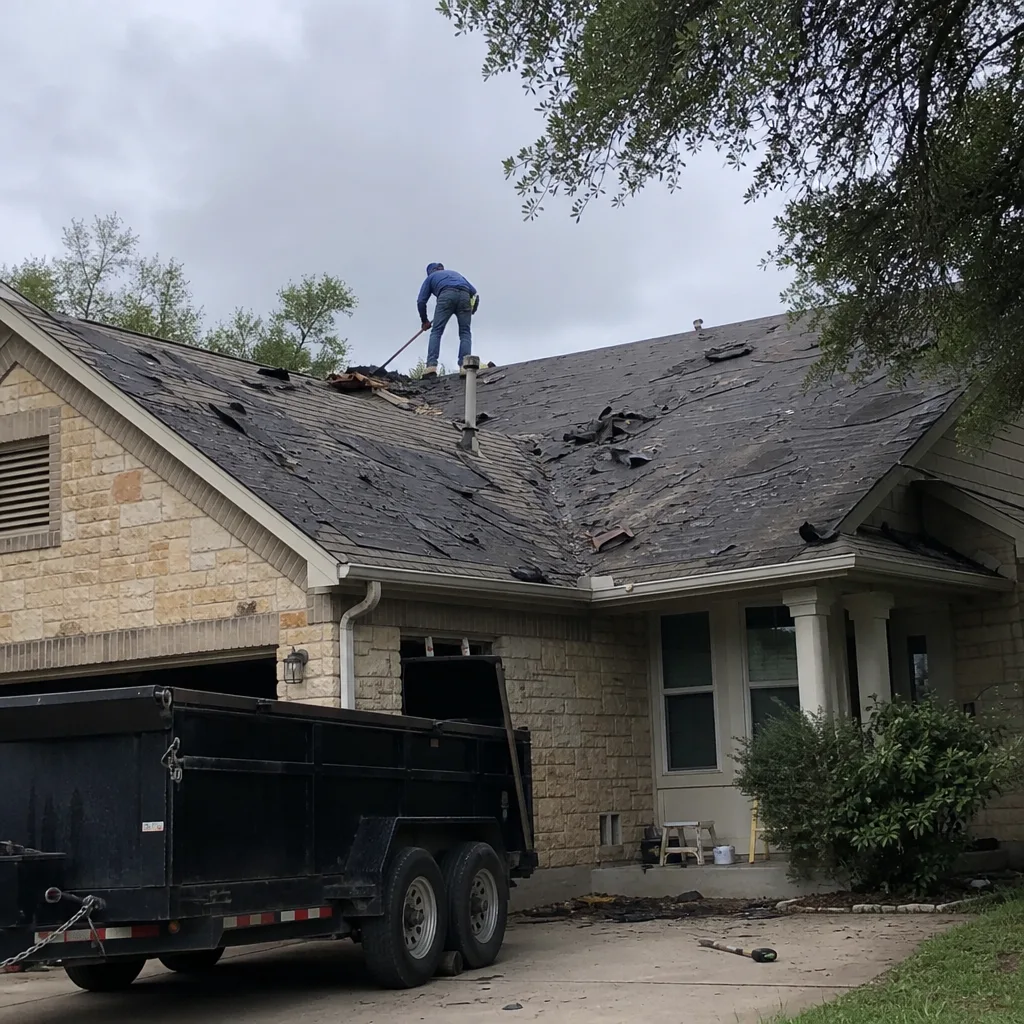
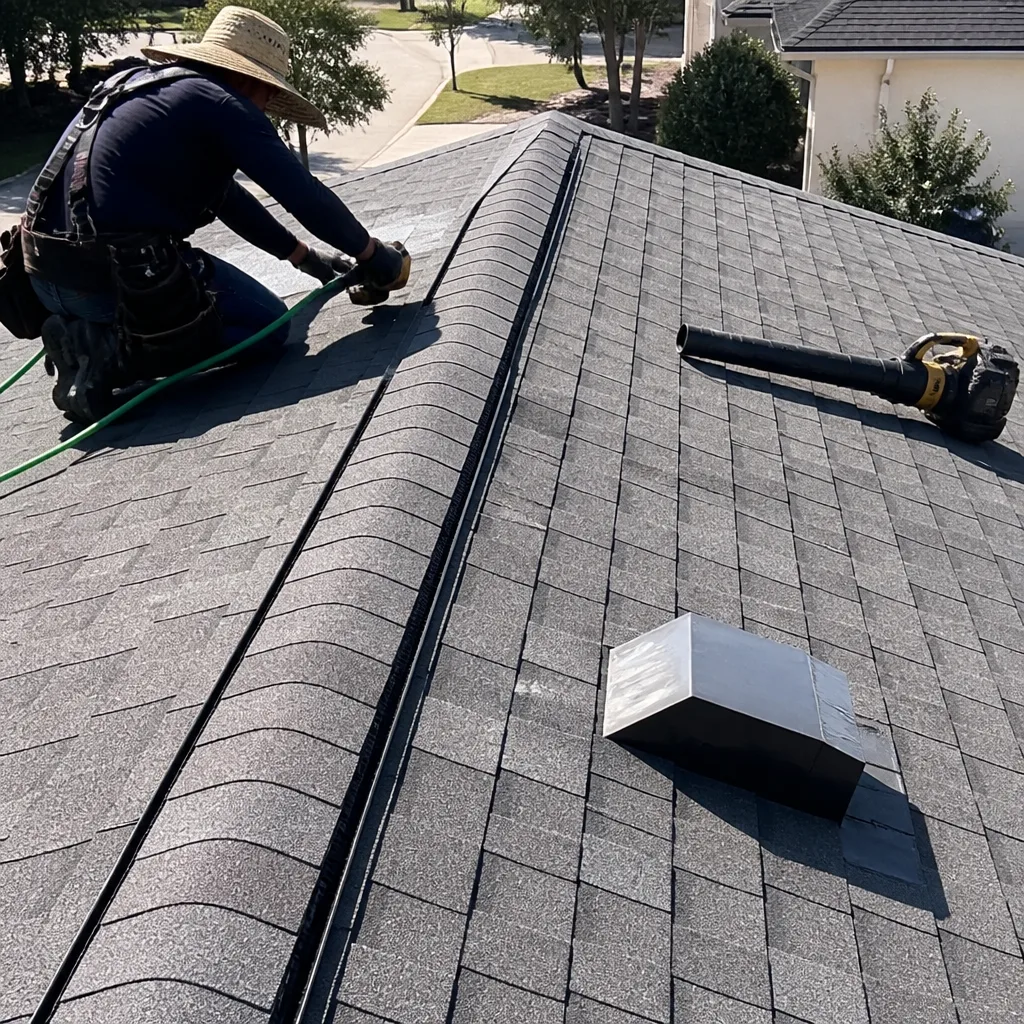
See the difference
 Before
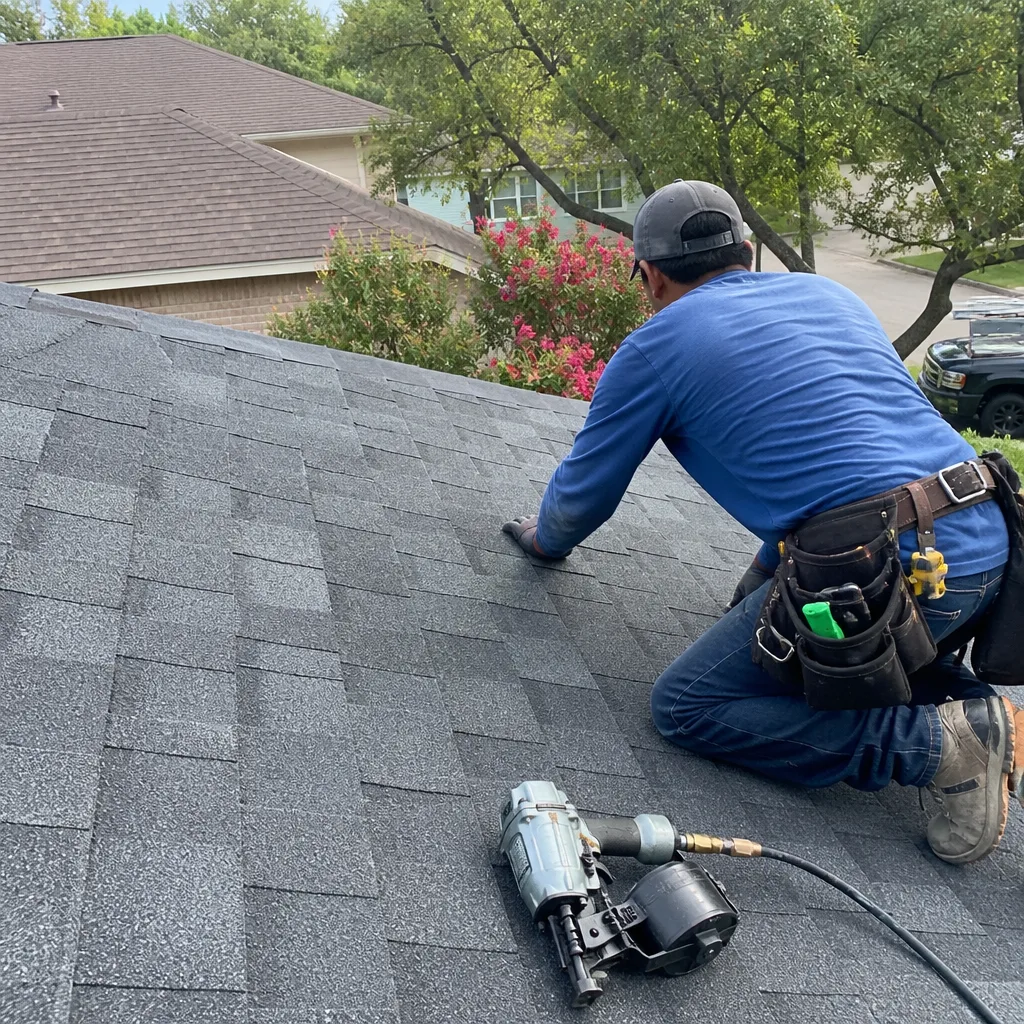 After
After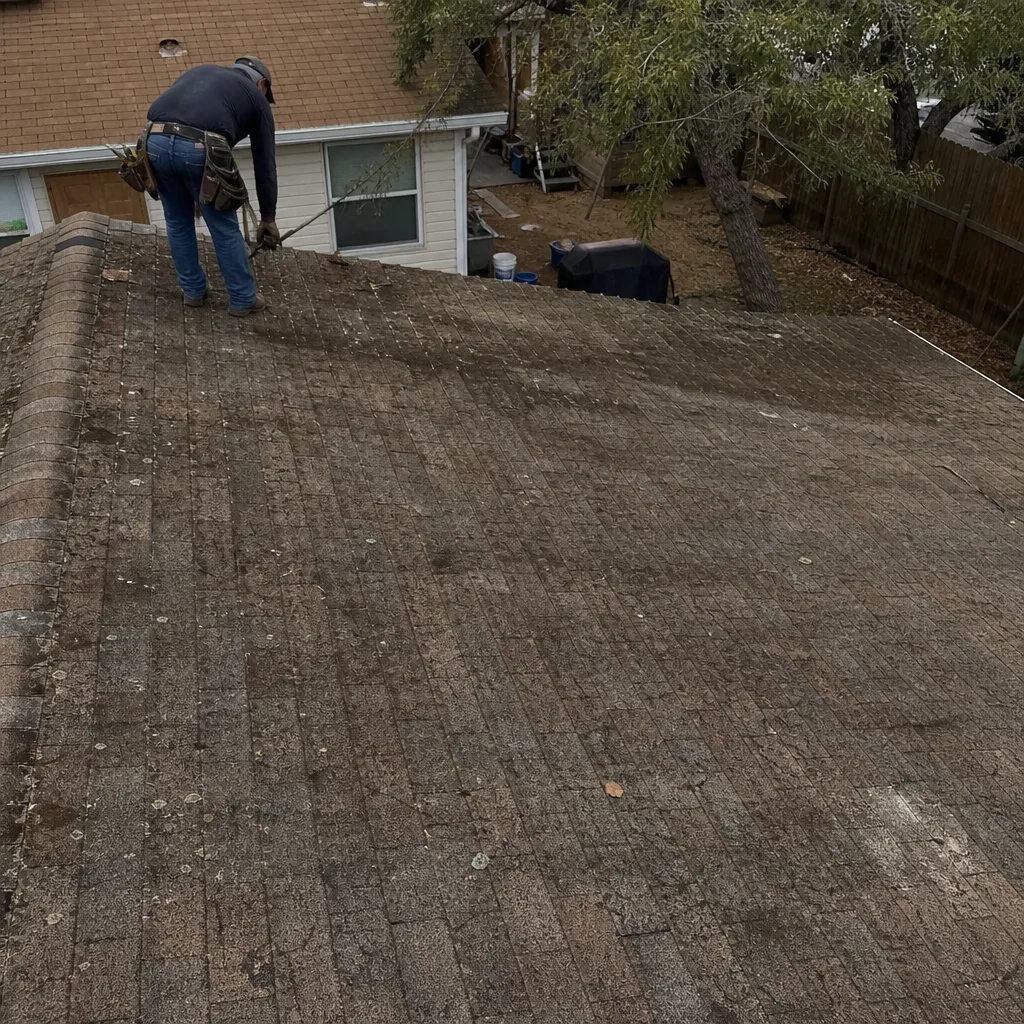 Before
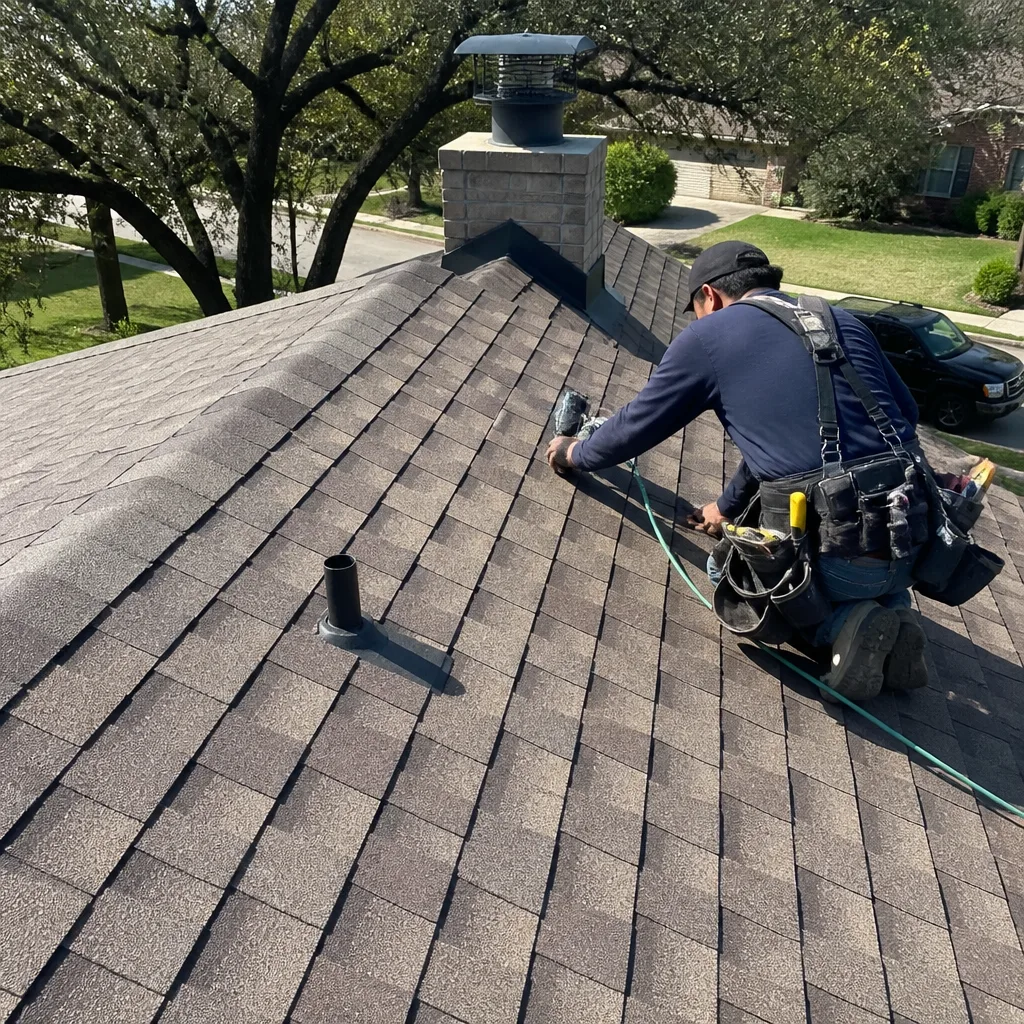 After
After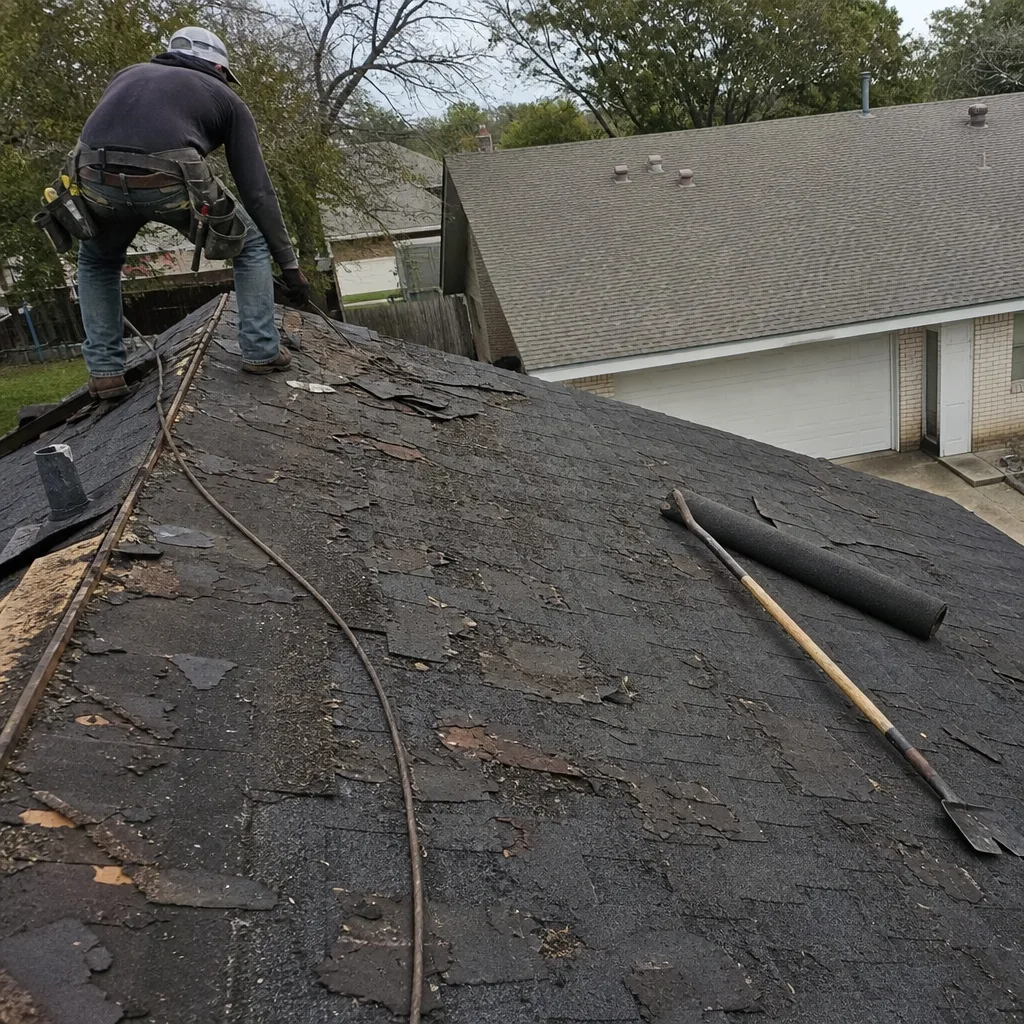 Before
 After
AfterWhen to Call a Professional
Some roofing problems can wait for a convenient time. Others cannot. If you see water stains on your ceiling after an Austin rain, granules collecting in your gutters, shingles that are visibly curling or cracked, or daylight through your attic boards, the roof has already failed and the damage is spreading. Our Roof Repair Maintenance Checklist for Austin Homeowners can help you catch these signs earlier. A leak that reaches the decking is no longer a roof problem. It is a ceiling, insulation, drywall, and potentially mold problem.
If you are not comfortable on a ladder, do not inspect your own roof. Austin’s steep pitches and soft decking after years of humidity make a simple visual check genuinely dangerous for an untrained person. Mercer Roofing Co Austin offers free estimates in Austin, and every technician who arrives at your door is background-checked, uniformed, and carrying a photo ID. Call (361) 202-8874 to schedule yours. You’ll know the technician’s name and see their photo before they knock.
Frequently Asked Questions
A full architectural shingle roof on a standard Austin home of 1,600 to 2,000 square feet typically costs $12,000 to $17,000 including tear-off, permits, and standard flashing replacement. Smaller homes run $9,500 to $13,500, and larger homes range from $19,000 to $27,000. These are Austin-specific figures for architectural shingles. Call (361) 202-8874 for an exact quote based on your roof’s square footage, pitch, and condition, and the estimate is free.
Standing seam metal lasts longest in Austin because it does not rely on adhesive strips that degrade under thermal cycling, and it reflects solar radiation instead of absorbing it. A properly installed standing seam roof can last 40 to 50 years in Central Texas. Among asphalt products, impact-resistant Class 4 architectural shingles from manufacturers like Atlas and IKO outperform standard shingles in Austin’s specific climate. The trade-off is cost: metal is two to three times the price of asphalt.
Yes. The City of Austin requires a building permit for residential roof replacement, and the permit application includes documentation of materials, contractor registration, and any historic district approval that applies. Plan for 7 to 14 business days of permit processing on a standard re-roof, and longer if your home falls within a Historic Landmark Commission review area. Your contractor should include the permit in the written estimate, not add it as a surprise line item.
Look for a physical Austin address that is verifiable, active Texas insurance that you confirm by calling the carrier, three recent local references you can drive by, and a written price commitment before work starts. Ask who will actually be on the roof and whether the installers are employees or subcontractors. A legitimate Austin roofer will tell you exactly who is coming and will not resent the question. Verify every claim in writing.
A manufacturer’s warranty covers product defects on a pro-rated basis and excludes damage caused by installation error or inadequate ventilation, which means many Austin heat-related failures fall outside its scope. The contractor’s workmanship warranty covers installation quality and is the document that actually protects you. Ask what is covered, for how long, and what you pay if the work fails. The answers vary widely between contractors. Mercer Roofing’s written guarantee is specific: 365 days, if the work is not right, we make it right. Call (361) 202-8874 and ask us to put the warranty in writing so you can read it before you decide.
Because contractors are bidding different scopes of work behind the same headline number. The low bid often omits decking replacement, flashing replacement, proper underlayment, and ventilation. The final invoice then catches up to the true cost. The honest bid includes those line items upfront. When two Austin quotes are thousands apart, compare the line items, not the bottom line, and ask each contractor to explain the missing pieces.
The Bottom Line
Roofing in Austin is a local problem with a local answer. The city’s hybrid climate demands specific materials, the neighborhood codes demand specific approvals, and the post-boom contractor market demands specific vetting. A roof that works in Dallas or Houston will not fully solve what Austin’s heat, humidity, and hail cycle throw at it. The homeowners who get the best roofs are not the ones who find the lowest price. They are the ones who read the bid line by line, verify the contractor before the contract, and demand warranties with specific written remedies. Mercer Roofing Co Austin has been serving this city since 2000 under the Threshold Verified standard, sending name-and-photo-badged technicians to every door. If you are ready for a written price and a warranty that states its terms plainly, our Austin roofing team is one call away.
Contact Mercer Roofing Co Austin today at (361) 202-8874 for your free roofing estimate. A live person answers, 24/7, and you’ll know exactly who is coming to your door before they arrive.
Written by Grant Whitlock, Owner at Mercer Roofing Co Austin, serving Austin since 2000.