
Last updated October 17, 2026
 Metal roofing
 Architectural shingles
 Tile roofing
 GAF
GAF Owens Corning
 Flat & low-slope
Free roof inspection with deck photos before we talk money - GAF and Owens Corning certified installation
Roofing Warning Signs: A Austin Homeowner’s Reference Guide
By the time you see a water stain on your ceiling, the leak has typically been active for weeks or months – and in Austin’s summer heat, a slow leak can cause enough decking rot to turn a $1,200 repair into a $4,000 section replacement before anyone notices. Most roofing warning-sign articles recycle the same tired list: missing shingles, curling edges, dark stains. Those are failure symptoms, not early warnings. This guide is different. We’ll walk you through the subtle signals specific to Austin’s climate that appear 12 to 36 months before visible failure, the ones you can catch from your driveway with binoculars, from your attic with a flashlight, or from your gutters with a bare hand. Catch them early and you repair instead of replace.
Quick Answer
Roof warning signs in Austin appear earliest in three places: granule accumulation in gutters (signaling UV-accelerated shingle aging on west-facing slopes), flashing separation at chimneys and valleys (caused by Austin’s dramatic temperature swings), and attic moisture signals like insulation compression lines or daylight pinpoints that precede any exterior symptom. A homeowner who checks these three zones twice a year – spring and late fall – will catch most roof problems 12 to 36 months before they turn into leaks.
Styles & brands we work with
Table of Contents
- Granule Loss: Reading Your Gutters Like a Rain Gauge
- Flashing Creep: The Separation Austin’s Temperature Swings Cause
- The 10-Minute Attic Check: Signs That Precede Every Exterior Symptom
- Hail Damage vs. Normal Wear: How to Tell the Difference
- Soffit and Fascia Signals: When Gutters Wicked Back Into the Deck
- The West-Facing Slope Problem Austin Homeowners Overlook
- What Early Warning Signs Cost to Fix in Austin
- Common Mistakes to Avoid
- When to Call a Professional
- Frequently Asked Questions
Granule Loss: Reading Your Gutters Like a Rain Gauge
Granules are the sandpaper-like mineral coating on asphalt shingles that protect the asphalt beneath from ultraviolet radiation. When granules shed, the shingle’s waterproofing layer is exposed directly to Austin’s sun. That exposure accelerates aging fast. Here’s what matters: some granule loss is normal in the first year after installation as manufacturing excess washes off, but a consistent trickle of granules into your gutters after year two is an early warning instrument you should learn to read.
What to look for:
- In your gutters after a heavy rain, look for piles of granules that look like coarse black or gray sand. A light dusting is normal. Quarter-inch-deep accumulation in multiple gutter sections is not.
- The pattern that matters is directional. If the gutter along your west-facing slope consistently catches twice as many granules as the east side, you’re seeing UV-accelerated aging, not uniform wear. That’s the signature of Austin’s afternoon sun beating directly on the shingle surface.
- Check downspout splash blocks. In Austin’s flash-flood style downpours, granules wash quickly through gutters and collect at the downspout exit. A ring of dark granules around the splash block is an early indicator even if gutters look clean.
The Austin-specific reason this matters more here than in most cities: Austin averages 228 sunny days a year, and much of that sun arrives when temperatures are already above 95 degrees. Attic temperatures regularly hit 140 to 160 degrees, baking shingles from below while UV radiation degrades them from above. This double-sided heat load is why roofing in Austin often ages 20 to 30 percent faster than identical materials in cooler climates. Granule loss isn’t cosmetic – it’s the canary.
We’ve inspected West Austin homes where the west-facing slope showed granule loss consistent with a 15-year-old roof on a 9-year-old installation. The east slope looked nearly new. The homeowner doesn’t need a full roof replacement. They need a targeted resurfacing or partial replacement on the affected slope – and that’s a $3,500 to $6,000 job instead of a $14,000 to $22,000 full replacement.
Flashing Creep: The Separation Austin’s Temperature Swings Cause
Flashing is the metal – usually aluminum, galvanized steel, or copper – that bridges the joints where your roof meets vertical surfaces: chimneys, skylights, vent pipes, and valleys where two roof planes meet. It’s the most common leak point on any roof, and in Austin, the primary cause is a phenomenon roofers call flashing creep.
Here’s what happens. Austin’s winter nights regularly drop below 40 degrees, and summer afternoons push past 100. That’s a 60 to 70 degree surface temperature swing on metal flashing, which expands and contracts with every cycle. Over years, the caulk and sealant around flashing joints dries, cracks, and loses adhesion. The metal itself subtly lifts or separates from the shingle surface by as little as a quarter inch. You can’t see it from the street. But water can, and it will.
How to spot flashing creep from ground level:
- Stand at a distance where you can see the chimney or skylight clearly. Use a smartphone camera with 3x zoom or higher – binoculars work better.
- Look at the point where the metal flashing meets the shingle. You’re checking for any gap, even a hairline separation, between the metal edge and the shingle surface.
- Look for a caulk line that appears cracked, peeling, or discolored. Dark caulk that’s turned chalky white or gray is failing.
- Check for lifted shingle edges immediately adjacent to the flashing. When flashing pops free, the shingles around it often follow.
- Look at valley flashing where two roof planes meet. In Austin’s oak-heavy neighborhoods like Tarrytown and Barton Hills, leaf debris accumulates in valleys, traps moisture against the metal, and accelerates separation.
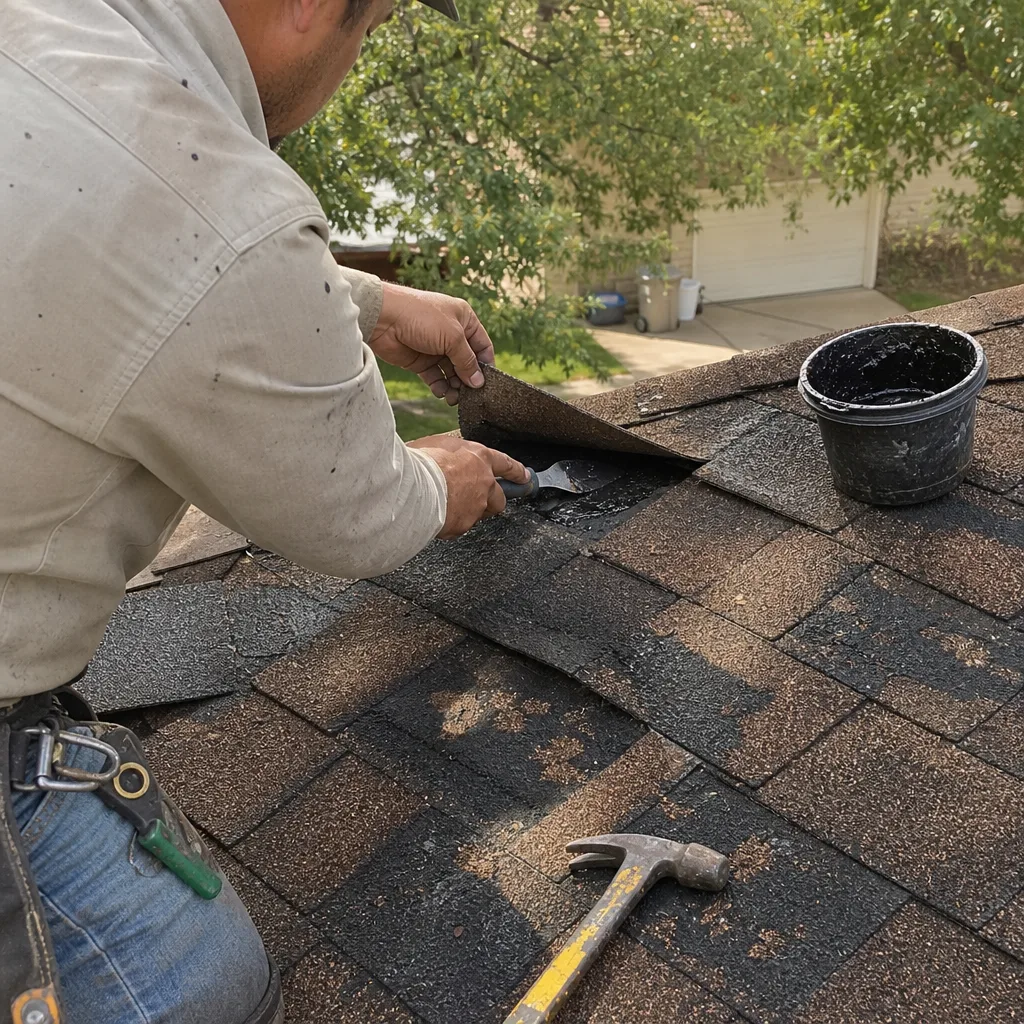
If you spot flashing separation early, the fix is usually straightforward: remove the old sealant, clean the surface, reseal with a high-quality roofing cement appropriate for Austin’s temperature extremes, and reinforce with new flashing where needed. The cost for chimney flashing repair in Austin typically runs $450 to $900. Left unaddressed, water intrusion at a failed chimney flashing rots the decking and can require a partial deck replacement, pushing the job to $2,500 or more.
The 10-Minute Attic Check: Signs That Precede Every Exterior Symptom
The attic is where roof problems announce themselves first. Long before a shingle blows off in a storm, the attic will show evidence: a pinhole of light, a subtle damp smell, an insulation line that shouldn’t be there. The problem is that most Austin homeowners never look, and the attic access panel in many mid-century homes around Allandale and Crestview is in a hallway ceiling, easy to ignore.
Here’s the 10-minute attic check we recommend every homeowner do twice a year, once in late March before the heat arrives and again in late October after the summer sun has done its damage.
What to bring: a bright flashlight, a dust mask, and your phone camera. Do not step off the marked joists or beams – drywall will not support your weight.
- Turn off the attic light and look for daylight pinpoints. Stand in the dark for 30 seconds to let your eyes adjust. Any pinprick of daylight coming through the roof deck indicates a gap, crack, or missing shingle. Even a pinhole can admit rain during an Austin thunderstorm.
- Look at the underside of the decking. Scan the plywood or OSB for dark stains, water marks, or areas that look damp. In Austin, the telltale sign of a slow leak is a brownish stain with irregular edges, often shaped like a comet, spreading from a specific point.
- Smell the air. Early decking moisture has a specific smell: musty but not moldy, like a damp towel left in a warm car. It’s more noticeable in Austin because our high heat accelerates the off-gassing from damp wood. If you smell it, start looking.
- Check insulation compression lines. When water trickles down the roof deck and reaches the insulation, it compresses the insulation and leaves visible lines or channels. Think of them as water trails. They indicate a leak that has been active for at least weeks.
- Inspect the HVAC ductwork and vent boots. Austin homes run air conditioning nine months of the year, and condensation on ductwork is common. But if you see rust on the metal duct straps or dark staining on the insulation around ceiling vents, that’s often attic moisture from a roof leak, not HVAC condensation.
We’ve walked attics in Mueller and East Austin where the homeowner had no idea a leak existed until we pointed out a two-foot-long compression line in their fiberglass insulation. No water stain on the ceiling yet. The leak had simply been absorbed by the insulation. By the time a ceiling stain appears, the same roof has often been leaking for several months.
Hail Damage vs. Normal Wear: How to Tell the Difference
Austin sits in a hail-prone corridor. Spring storm systems that roll through Central Texas regularly produce hail, and the difference between hail damage and normal granule wear determines whether you have a legitimate insurance claim or just an aging roof. Insurance adjusters know this distinction well, and so should you.
Normal granule wear looks directional. On a west-facing Austin slope, the shingles lose granules uniformly across the surface, almost like a paved road that’s been sanded smooth. The loss pattern follows the sun: heavier near the top of the shingle where water concentrates, with individual shingles showing a gradual thinning. The shingle surface feels like fine sandpaper rather than coarse sandpaper.
Hail damage looks random. Hailstones strike with a percussive impact that dislodges granules in a circular pattern. Each impact point looks like a tiny bruise on the shingle: a dark spot, typically dime-to-quarter sized, where the granules have been knocked clean off and the asphalt beneath shows through. The spots are scattered randomly across the slope, not concentrated along any edge or direction.
The check that matters: run your fingertip lightly over a suspected hail bruise. If the spot feels like a small indentation or dimple – softer than the surrounding shingle – that’s impact damage. If it’s flush with the surface and just smooth, it’s likely granule loss from age or UV exposure.
What this means for your insurance: Austin homeowners with shingle roofs should have roofs inspected after any hailstorm producing stones larger than 1 inch. Most insurance policies require filing a claim within a specific window after the storm, often 12 months in Texas. A roof that shows 8 to 12 hail impacts per square (a 10-by-10-foot area) is typically considered legitimate storm damage. Fewer than that, and an adjuster may classify the wear as normal aging and deny the claim.
If you’re unsure, a local Roofing Company in Austin that has worked with Texas insurance adjusters can give you an honest read. Mercer Roofing has walked thousands of Austin roofs after hailstorms, and we’ve seen the difference between a real claim and normal wear often enough to tell you straight.
Soffit and Fascia Signals: When Gutters Wicked Back Into the Deck
The soffit is the horizontal surface under your roof’s overhang. The fascia is the vertical board that runs along the roof’s edge, the one your gutters hang from. Together they form the bottom boundary of your roof system, and in Austin, they often show the first visible sign of a problem that started inside the roof assembly.
Here’s the sequence. A gutter fills with debris – in Austin, it’s usually live oak leaves, pecan shells, and the dust that builds up during dry spells. Water can’t flow through the gutter, so it backs up. If the gutter is full and the roof slope directs water over the back edge of the gutter, that water wicks upward against the fascia board. Over time, the fascia absorbs moisture. Then the moisture travels upward into the soffit, and from there into the roof deck edge.
What to look for on your soffit and fascia:
- Peeling paint or bubbling along the fascia board, especially on the side of the house where gutters are most shaded. In Austin neighborhoods with mature trees, this is more common on the north side of the home where gutters dry slowly.
- Dark staining on the soffit panels, particularly at the corners of the house or where two rooflines meet. Staining at the corners indicates water is being trapped there, not draining.
- Sagging or spongy soffit panels. Press gently on the soffit with a broom handle (do not climb). If it flexes or feels soft, the material behind it is retaining moisture.
- Gaps between the fascia board and the gutter brackets. When fascia wood swells and rots, the screws holding gutter brackets lose their bite, and gutters begin to pull away from the house.
- Visible rust on gutter brackets or the back of the gutter itself. Gutters should not rust in normal conditions. Rust means water is persistently sitting in the gutter or seeping behind it.
The cost to repair soffit and fascia damage in Austin typically runs $800 to $1,800 depending on the length of run and whether the underlying deck edge needs replacement. Replacing the gutter system adds $1,200 to $3,000 for a standard single-story home. Left unaddressed, the rot travels into the roof deck and a section of roof must be removed to replace it.
The West-Facing Slope Problem Austin Homeowners Overlook
Every Austin roofer knows this, and most homeowners don’t: the west-facing slope of your roof ages faster than every other slope. Sometimes dramatically faster. The reason is straightforward – Austin’s afternoon sun, from roughly 2 p.m. until sunset, hits the west-facing roof surface at a direct angle during the hottest part of the day. From June through September, that’s 100-plus degree surface temperatures on shingles that are already baking from attic heat below.
Here’s what the accelerated aging looks like at different stages:
Year 5 to 7: West-facing shingles begin losing granules at a higher rate than east- or north-facing shingles. The surface looks slightly smoother, and if you compare the gleam of the west slope to the east slope, the west appears flatter, less textured. In gutters on the west side, you’ll find measurably more granule accumulation.
Year 8 to 12: Shingles on the west slope begin to cup or curl at the edges. The corners of individual shingles lift, particularly on the side of each shingle that faces the afternoon sun. This is where roof replacement in Austin often starts, and it’s not unusual to replace a west slope while the rest of the roof has 5 or more years of life remaining.
Year 12 to 15: The west slope shows visible blistering – small pockmarks where the asphalt has bubbled and burst. At this point, the shingles are no longer waterproof and the roof is in active failure mode on that slope.
The financially smart move is to catch the west slope problem around the year 8 to 10 mark, before blistering begins. At that point, a partial roof replacement or targeted resurfacing of the west slope costs significantly less than waiting for the entire roof to fail. In Austin, a west-slope-only replacement on a standard 1,800-square-foot home typically runs $6,000 to $9,000, compared to $14,000 to $22,000 for a full roof. Products like Atlas and Roof Installation in Austin with UV-resistant shingle lines can extend west-slope lifespan, but no shingle is immune to the Texas sun.
What Early Warning Signs Cost to Fix in Austin
Homeowners delay roof repairs because they’re afraid of the number. In our experience, the number is almost always lower than expected when the problem is caught early. Here’s what the warning signs described in this guide typically cost to address in Austin, as of current market prices:
- Gutter granule accumulation – investigation only: free from most Roof Repair in Austin companies. A visual inspection confirms whether you’re seeing normal loss or accelerated aging.
- Flashing reseal (chimney, vent pipe, or skylight, one location): $450 to $900.
- Flashing replacement with new metal (one location): $700 to $1,400, depending on accessibility and the condition of surrounding shingles.
- Small section roof deck replacement (caused by undetected leak): $1,200 to $2,500 for a section up to 100 square feet.
- Soffit and fascia repair (one side of the house, typical 30 to 40 linear feet): $800 to $1,800.
- West-slope partial roof replacement (standard 1,800-square-foot home, west slope only): $6,000 to $9,000 using GAF, CertainTeed, or Owens Corning architectural shingles.
- Full roof replacement (standard 1,800-square-foot home): $14,000 to $22,000, depending on shingle grade, decking condition, and whether old layers must be removed.
These are honest ranges based on what we see across Austin, from Round Rock to Buda. Your exact number depends on your roof pitch, access, and existing conditions. At Mercer Roofing Co Austin, the written price comes before any work starts, and the price on the paper is the price on the invoice. No surprises, no change orders, no pressure.
Common Mistakes to Avoid
- Waiting for a ceiling stain before investigating. In Austin’s climate, a roof leak can run for months before it shows on the ceiling. Insulation absorbs water, soffits wick it away, and by the time you see a stain, the repair has escalated. Check the attic before the drywall tells you to.
- Power-washing asphalt shingles. A pressure washer strips granules off shingles faster than five years of Texas sun. If your roof looks dirty, it’s algae or lichen – and it should be treated with a soft-wash solution, not blasted off. This mistake has killed thousands of Austin roofs prematurely.
- Assuming hail damage is visible from the ground. Hail bruises are almost never visible from the street. They require a roof-level inspection, and insurance adjusters look for them under direct sunlight. If you suspect hail, have the roof walked.
- Ignoring the west slope because the rest of the roof looks fine. The west slope is your early-warning system. In Austin, if the west slope looks significantly more worn than the east, the entire roof is entering its service life’s third act. Don’t wait for the east side to catch up.
- Replacing the entire roof because one slope is failing. Sometimes a full replacement is the right call. Often it’s not. A targeted slope replacement can add five to eight years of life to the rest of the roof. Get a written line-item quote before committing to the full job.
- Accepting a door-to-door roofer’s “free inspection” without vetting. Austin gets hit by storm-chasing roofers after every hailstorm, and many of them are gone before the workmanship issues surface. If someone knocks on your door and says they saw damage, get a second opinion from a local company that has been in Austin since before the storm.
When to Call a Professional
Some warning signs are informational. Others demand action. Call a professional roofer if you notice any of the following: active water intrusion (dripping, standing water, or visible water stains in the attic), flashing separation wider than a quarter inch, multiple daylight pinpoints in the attic, granule loss heavy enough to expose the asphalt beneath (shingles look shiny or dark), or soffit and fascia rot that extends more than 6 inches along the eave. Also call if a hailstorm with stones larger than 1 inch has passed through your neighborhood in the last 12 months – the inspection is worth more than the missed claim deadline.
Mercer Roofing Co Austin offers free estimates in Austin – call (361) 202-8874 to schedule one. Every technician who arrives at your door is background-checked, identity-verified, and wearing a photo ID badge, and you’ll get their name and photo before they show up. The written price comes before any work starts, and every repair carries the 365-Day Done Right Promise: if it’s not right within a year, we make it right.
Frequently Asked Questions
How often should Austin homeowners inspect their roofs?
Twice a year, in late March before the heat arrives and late October after the summer sun has done its worst. The spring check catches storm and freeze damage from winter. The fall check catches UV-accelerated aging from summer. Both take about 30 minutes, and most of what you’re looking for is covered in this guide.
How much does a roof inspection cost in Austin?
Most established Austin roofing companies offer free inspections, including Mercer Roofing Co Austin. Be wary of any company that charges for a basic visual inspection unless they’re performing a specialized service like a drone or infrared thermal scan. If you’re selling a home, a certified inspection with a written report typically costs $200 to $400 in Austin, but for homeowners checking warning signs, free is standard.
Can I fix flashing separation myself?
Small caulk cracks can be resealed by a homeowner with proper safety precautions and the right roofing sealant. This is a low-risk, low-ladder task. But any flashing that has actually separated from the shingle surface should be handled by a professional. The underlying problem is often more than the visible gap, and the flashing may need to be removed and re-bedded to create a proper watertight seal.
How long does an asphalt shingle roof last in Austin?
Twenty to twenty-five years for quality architectural shingles under ideal conditions, but Austin’s heat and hail routinely knock that down to fifteen to twenty years for west-facing slopes. Shingle manufacturers base lifespan estimates on national averages, not Central Texas summer sun. If your roof is fifteen years old in Austin, the inspection matters more than the calendar.
Is granule loss covered by insurance in Austin?
No. Normal granule loss from UV exposure and age is classified as wear and tear, not storm damage, and Texas homeowners policies exclude wear and tear. Hail damage, which is impact-related, is a covered peril. The distinction matters, and the directional-versus-random pattern described in this guide is the key differentiator.
What shingle brands hold up best in Austin’s climate?
In our experience across thousands of Austin roofs, the premium architectural lines from GAF and CertainTeed perform best in Austin’s heat. Owens Corning and IKO also hold up well, and Atlas shingles with their larger exposure profile are a solid choice for homeowners who want a distinct look with good UV resistance. The brand matters less than proper installation and adequate attic ventilation. A premium shingle installed over an improperly ventilated attic will still fail early.
The Bottom Line
Your roof gives you warnings long before it fails, and in Austin, those warnings are amplified by our unique climate. Read your gutters for granule patterns. Check your flashing after temperature swings. Walk your attic with a flashlight twice a year. Watch the west slope more carefully than any other. Catch these signals in the early stage and a $700 flashing reseal or a $1,500 soffit repair solves a problem that would have become a $4,000 deck replacement or a $20,000 full roof. Ignore them, and Austin’s sun and storms will collect what’s owed. If you’re in Austin and want a second set of eyes, Mercer Roofing Co Austin offers free estimates and written prices before any work starts. Call (361) 202-8874.
Written by Grant Whitlock, Owner at Mercer Roofing Co Austin, serving Austin since 2000.
See the difference
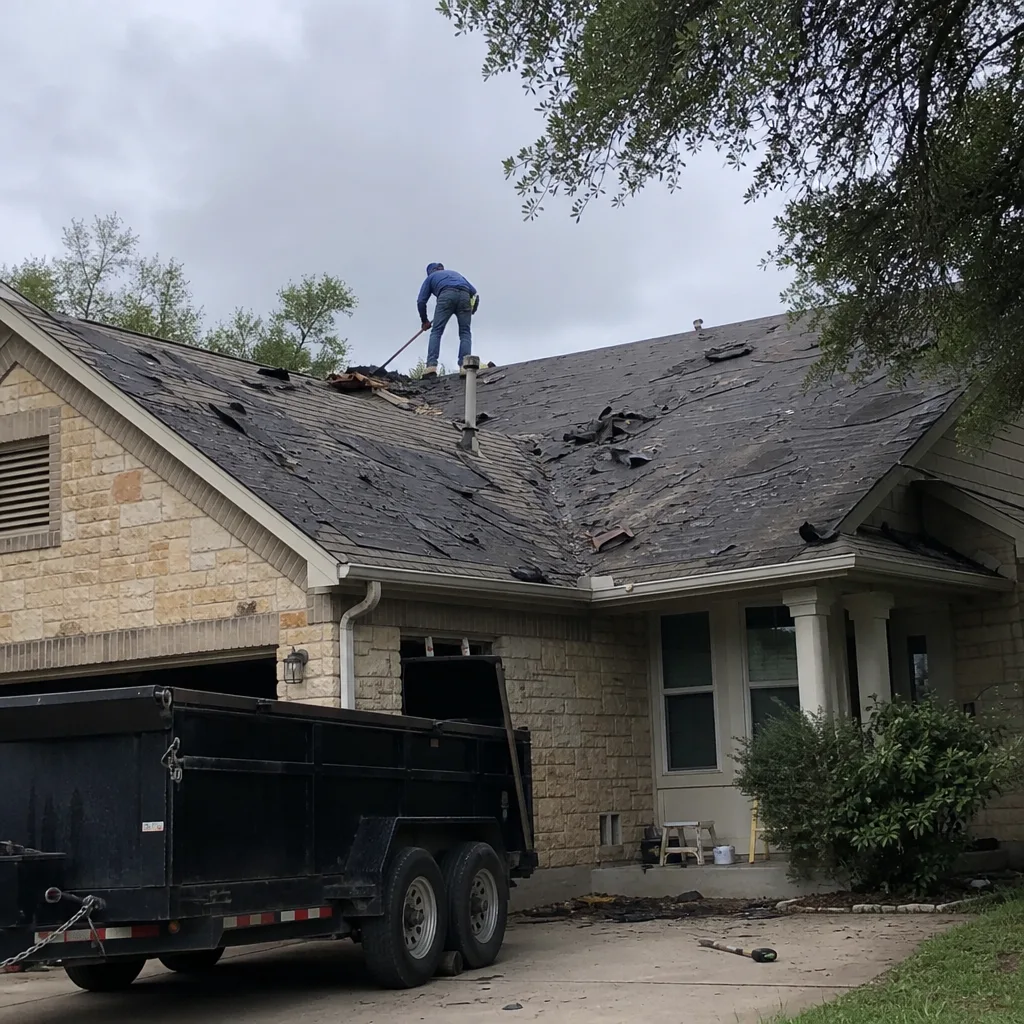 Before
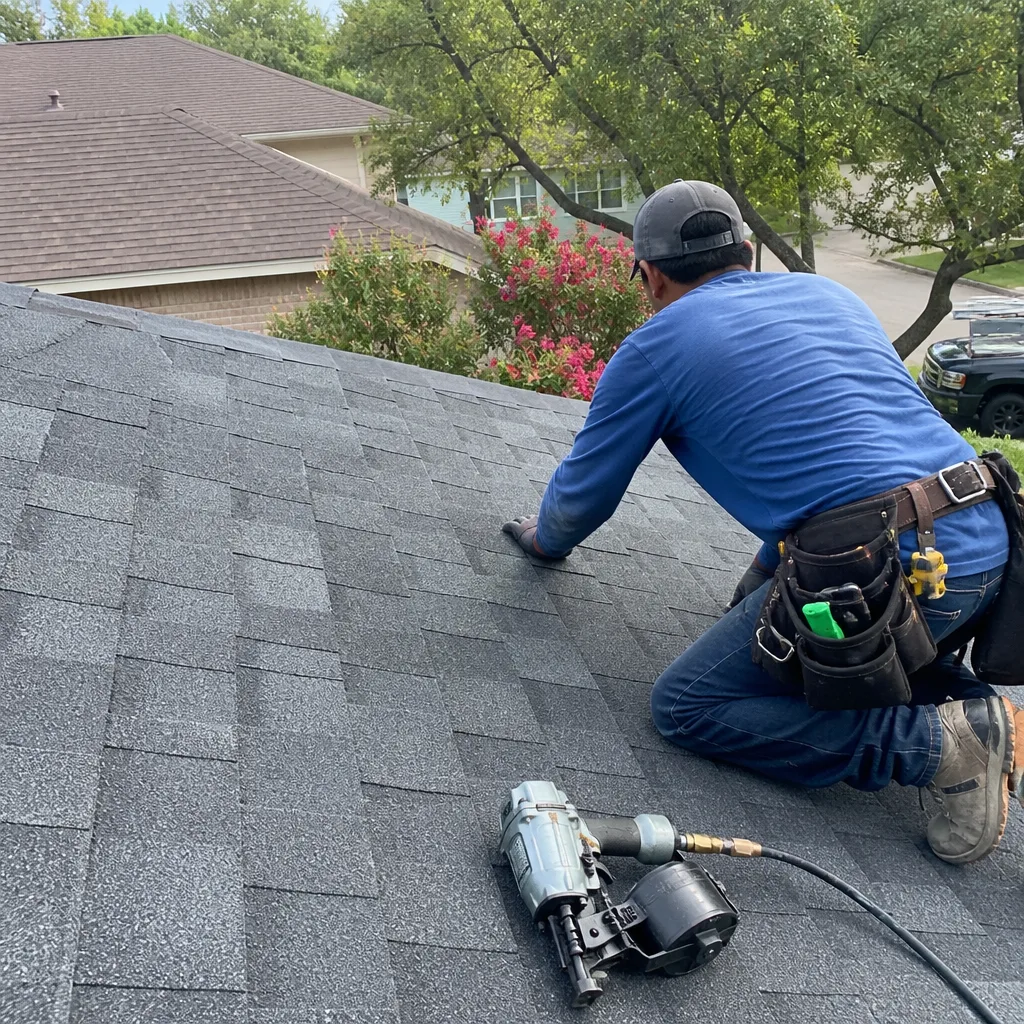 After
After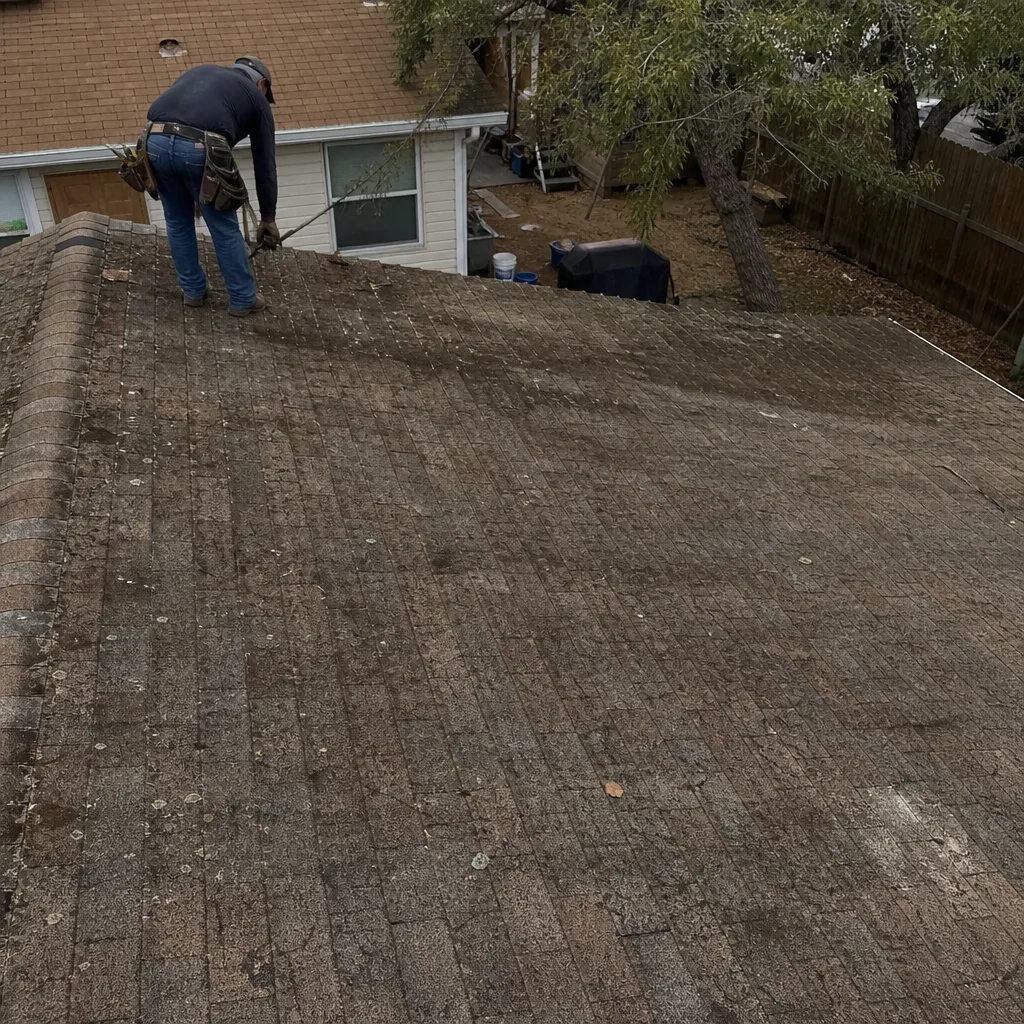 Before
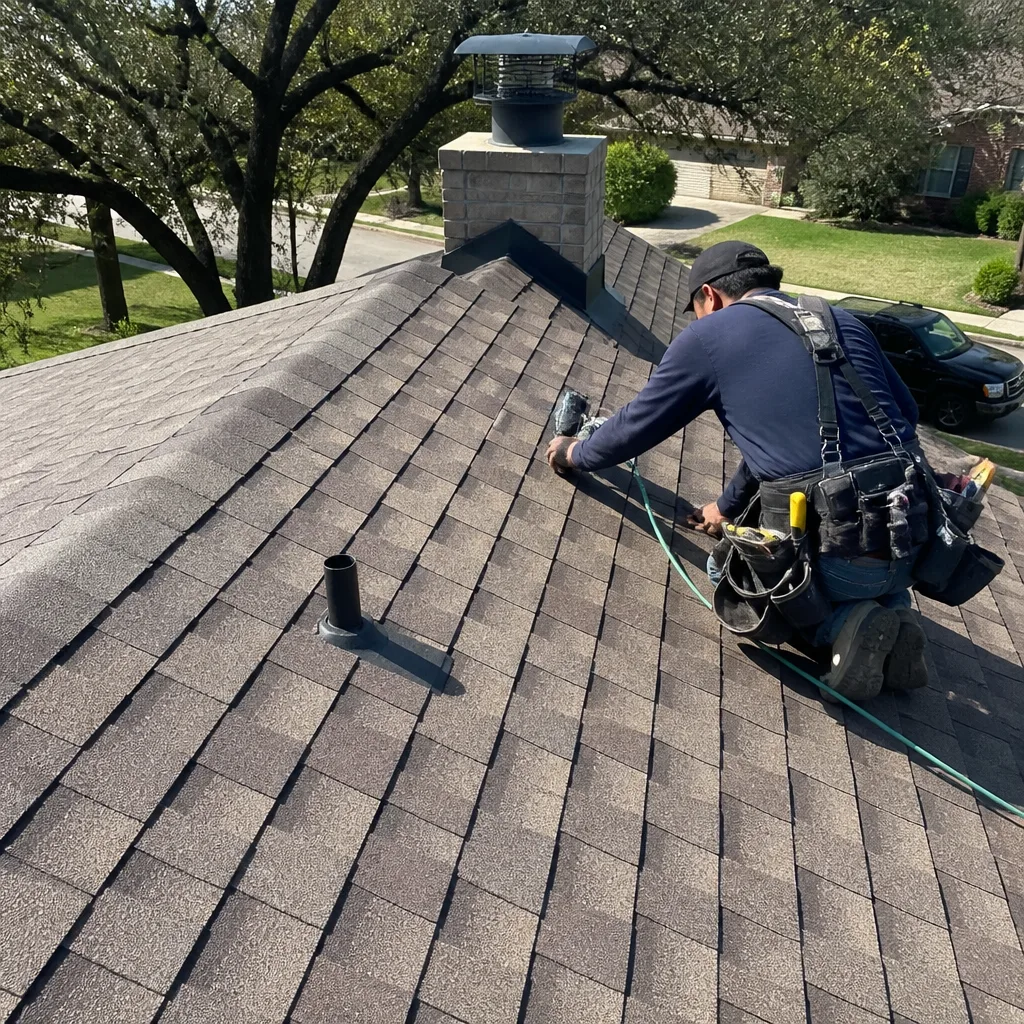 After
After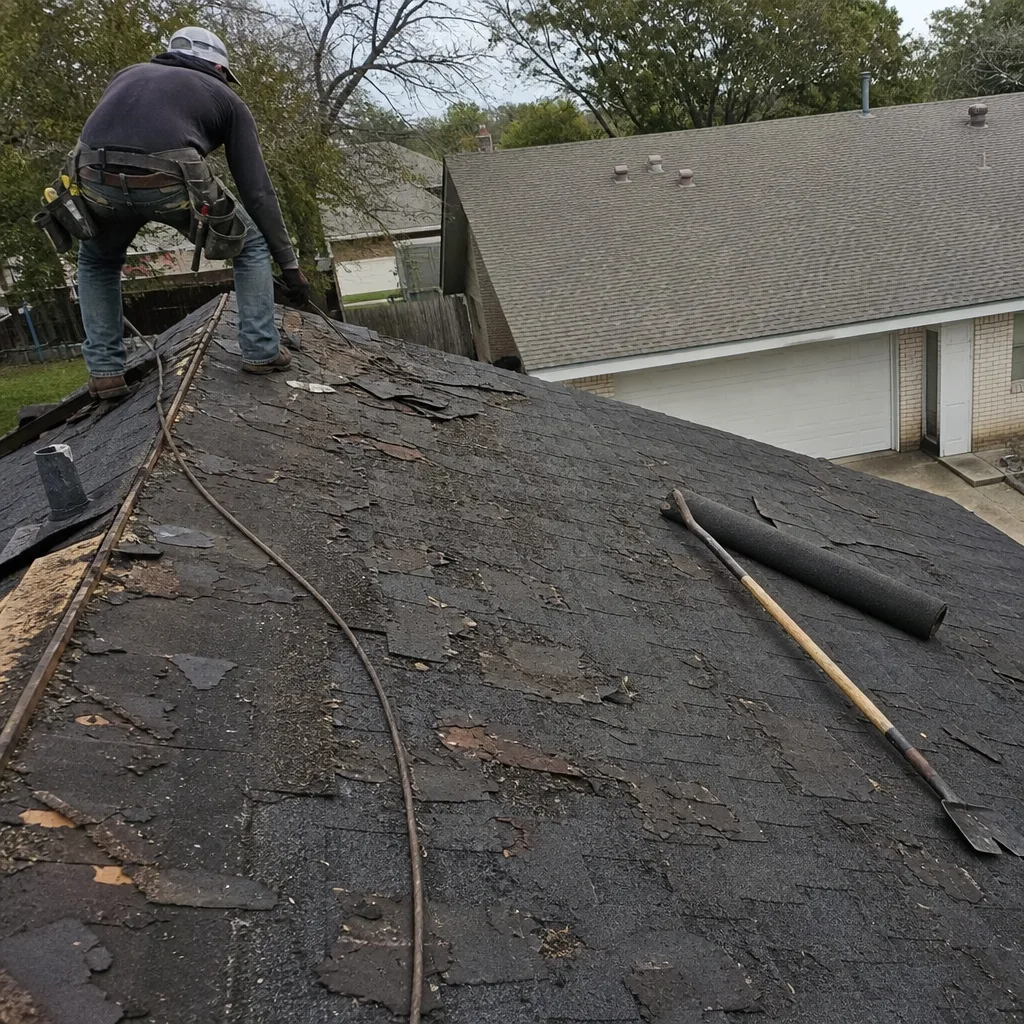 Before
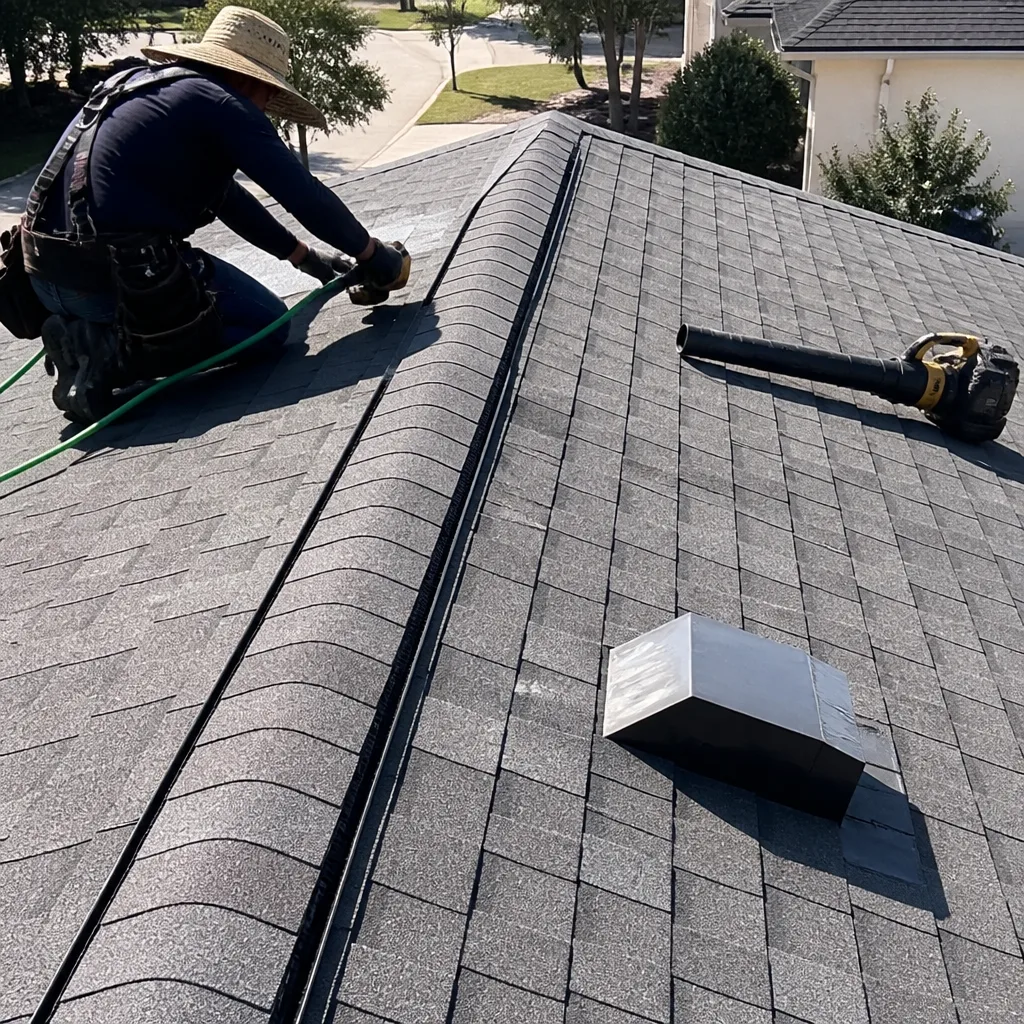 After
After