
Last updated October 17, 2026
 Architectural shingles
 Metal roofing
 Tile roofing
 GAF
GAF Owens Corning
 Flat & low-slope
Free roof inspection with deck photos before we talk money - GAF and Owens Corning certified installation
Roof Repair Maintenance Checklist for Austin Homeowners
The February 2021 freeze caused an estimated $200M in roofing damage across Central Texas. Most of it wasn’t from ice sitting on the shingles. It was from the expansion and contraction cycle that cracked flashings, lifted unsealed shingles, and opened gaps that homeowners didn’t discover for six months, until the spring rains found them. This guide walks through the maintenance tasks that actually matter for roofs in Austin, organized by the specific failure points our climate creates, not generic seasonal advice that could apply to a house in Ohio. For related reading, see our Roofing Cost Breakdown: The Austin Homeowner’s Reference for 2026. You’ll learn what to inspect, when to inspect it, what you can safely do from the ground, and which tasks belong in a professional’s hands.
Styles & brands we work with
Quick Answer
A roof maintenance checklist for Austin homes should prioritize five things: bi-annual gutter cleaning timed before the spring and fall storm seasons, visual inspection of flashing and pipe boots after any freeze event, a midsummer attic ventilation check to catch soffit damage from heat buildup, granule loss monitoring on south-facing slopes, and an annual documented inspection record for insurance purposes. Most homeowners can handle the first four from the ground with binoculars. The documented inspection is worth having a professional do once a year.
Table of Contents
- Why Austin’s Climate Creates Different Roof Problems
- The Month-by-Month Austin Maintenance Calendar
- The Five Austin-Specific Failure Zones Most Homeowners Never Inspect
- Granule Loss vs. Structural Failure: What You’re Actually Looking At
- The Written Pre-Inspection Record and Why It Protects You
- Maintenance Tasks That Void Manufacturer Warranties
- Common Mistakes to Avoid
- When to Call a Professional
- Frequently Asked Questions
- The Bottom Line
Why Austin’s Climate Creates Different Roof Problems
Austin roofs fail differently than roofs in Dallas, Houston, or San Antonio. We sit in a transition zone between the humid Gulf air and the dry Hill Country heat, and that combination produces a very specific set of stress points. The sun here is relentless. A south-facing slope in Austin can reach surface temperatures above 160°F in July, which accelerates UV degradation of the asphalt in shingles at roughly twice the rate of a north-facing slope on the same house. We’ve seen roofs where the south slope needed replacement two full years before the north slope showed any visible wear.
Then there’s the freeze-thaw cycle. Austin gets a hard freeze every few years, often after a warm, wet spell. Water gets into small gaps around flashings and pipe boots, freezes, and expands by about 9%. That expansion is enough to crack metal flashing, break sealant bonds, and lift shingle edges. The damage is rarely dramatic. It’s a hairline crack here, a loosen seal there. But over three or four freeze events, those small openings become water entry points, and by the time you see a ceiling stain, the decking underneath has been wet for months.
High humidity feeds algae and moss growth, particularly on north-facing slopes and under oak canopies that never fully dry. And the summer heat creates a chimney effect inside the attic that pushes hot, moist air against the roof decking, which is why attic ventilation isn’t just a comfort issue in Austin. It’s a structural one.
The starting point for any maintenance routine is understanding that roof repair in Austin is rarely about the shingles themselves. It’s about the flashings, seals, and ventilation systems that fail first.
The Month-by-Month Austin Maintenance Calendar
This calendar is built around Austin’s actual weather patterns: spring storm season runs March through May, hurricane remnants arrive late summer into early fall, the freeze risk peaks in January and February, and the attic heat stress peaks from July through September. Here’s what to do and when.
January – Post-Freeze Flashing Inspection
- After any freeze event where temperatures drop below 28°F for more than a few hours, walk the perimeter of your home with binoculars.
- Focus on every penetration point: plumbing vents, chimney, skylights, HVAC penetrations, and the pipe boot on your main plumbing stack.
- Look for gaps where the metal flashing meets the shingle, hairline cracks in any exposed sealant, and lifted shingle edges.
- Check the gutter downspout for loose granules. A freeze event often knocks granules loose, and a concentrated pile below a downspout tells you water moved quickly across a bare area.
- Make a note of anything suspicious and re-check it after the next heavy rain.
February – Gutter and Downspout Pre-Season Flush
Spring storms in Austin drop a lot of water in a short time. Clogged gutters during a March thunderstorm push water back against the fascia board and under the shingle edge, which is one of the most common causes of rot we find in the Mueller and Hyde Park neighborhoods where trees overhang the roofline. Flush your gutters and downspouts now with a garden hose. Confirm water exits the downspout and flows away from the foundation. If you have gutter guards, verify they’re seated correctly and not sagging.
March – Storm Season Prep
Before the first big storm system, do a ground-level visual sweep for loose or missing shingles, visible nail heads, and any shingle edges that look “puckered.” High winds will exploit any weak spot. If you have a two-story home, a pair of binoculars from the street or a neighboring yard can get you a clear view of the ridge line and valley intersections without getting on the roof. Pay special attention to the ridge cap, where the first shingle loss happens in high wind.
April – Post-Storm Debris Clearing
After each significant storm, clear branches and leaves from the roof valleys and gutters. Debris that sits in a valley traps moisture directly on the shingle surface. Oak leaves are particularly nasty because they hold water and release tannins that stain and accelerate algae growth. If you have a flat or low-slope section, check for ponding water. Ponding that lasts more than 48 hours after rain is a sign of a drainage problem on the roof surface itself.
May – Ceiling and Attic Interior Check
Go into the attic with a flashlight on a bright, sunny day. Turn off the light and look for pinholes of daylight coming through the roof decking. Those holes can also indicate displaced fasteners. Feel framing members near the top of the attic for moisture after a spring rain. Check the underside of the decking for dark spots or water staining. A stain that follows a rafter line tells you water is running down the support structure, not just dripping onto insulation.
June – Aluminum and Galvanized Flashing Inspection
Early summer is the best time to inspect metal flashings because the full sun exposes cracks and rust lines that are invisible in cloudy weather. Look for white oxidation on aluminum flashing, rust streaks on galvanized steel, and any gap where metal meets shingle. If you have a chimney, check the counterflashing that’s embedded in the mortar. Austin’s clay soil moves, which causes brick chimneys to shift slightly, and shifting breaks the mortar bed that holds the counterflashing in place. For more on regulatory requirements, read Roofing Permits, Codes & Inspections in TX: What You Need to Know.
July – Attic Ventilation Check
An Austin attic can hit 140°F in July. If your attic is not properly vented, that heat radiates down through the shingles and accelerates the breakdown of the asphalt compounds inside them. The result is premature cracking and cupping, especially on the south slope. Verify your soffit vents are not blocked by insulation. Check that ridge vents are clear. If you have gable vents, confirm they’re open and that birds or squirrels haven’t nested in them. A quick temperature check: step into the attic at 2 p.m. If it feels significantly hotter than the outside air, you have a ventilation problem.
August – North Slope Algae Assessment
Algae (specifically *Gloeocapsa magma*, the blue-green algae that leaves black streaks) establishes first on north-facing slopes and areas under tree canopy because those surfaces stay damp longer. August is peak algae visibility because the hot, humid air feeds it. If you see black streaking, assess the extent. Light streaking is cosmetic and removable with a soft-wash treatment. Heavy matting can hold water against the shingle and shorten its life. Do not pressure wash. Do not use bleach. We’ll cover why in the warranty section below.
September – Hurricane Remnant Preparation
August and September are when Gulf hurricane remnants reach Central Texas. These storms bring sustained wind and driving rain that can last for hours. The same checklist from March applies here: check ridge cap adhesion, loose shingles, and flashing seals. Confirm gutters are clear and downspouts are discharging away from the house. If you have any large branches extending over the roof, now is the time to have them trimmed. A limb that scrapes the shingles in high wind removes granules every time it moves.
October – Valley and Dormer Inspection
Falling leaves collect in valleys and behind dormers, and that’s where leaks start in fall. With the leaves gone, October is the best month to see the actual condition of the valley metal. Use binoculars to check that valley flashing is not rusted through, that shingles in the valley weave are not lifted, and that no fasteners are visible. A visible nail head in a valley is an active leak waiting to happen.
November – Gutter Clean-Out Before Winter
Leaves fall in Austin through late October into November. Clean gutters one final time before winter. The goal is to ensure that any freezing precipitation in January or February has an unobstructed drainage path. Ice that forms inside a gutter full of wet leaves expands and can pull the gutter away from the fascia board. If the gutter separates from the fascia, water runs directly into the wall cavity instead of away from the house.
December – Document and File
Take dated photographs of your roof from all four compass directions. Store them in a folder with your insurance documents. If a hailstorm or wind event hits in the spring, you’ll have a pre-event baseline that proves any damage you’re claiming was not pre-existing. This single step resolves more insurance disputes than any other maintenance task on this list.
The Five Austin-Specific Failure Zones Most Homeowners Never Inspect
In our experience pulling maintenance records for clients across Austin, five areas account for the overwhelming majority of leaks and premature failures. None of them are the main shingle field. All of them are inspection points almost every homeowner skips.
1. Pipe Boot Seals
Every home with plumbing has pipe boots, which are the rubber and metal assemblies that seal around the plumbing vent pipes that stick through the roof. In Austin, the rubber component fails in two ways: UV exposure cracks it, and our freeze-thaw cycles break the sealant that holds it to the pipe. A pipe boot leak is often mistaken for an attic condensation problem because the water travels down the pipe itself and drips somewhere unexpected, like a hallway ceiling or an interior wall. Check the rubber collar with binoculars for any cracking or separation. If you see a gap between rubber and pipe, that’s water entry. Pipe boots last 8 to 12 years in this climate, meaning a 15-year-old roof likely has boots that are due for replacement even if the shingles still look fine.
2. Ridge Cap Corners
The ridge cap is the decorative shingle that runs along the peak of the roof, and its corners are the most wind-vulnerable shingles on the house. Austin storms push wind against the gable ends and roof edges at odd angles, and the corner ridge caps take the brunt of that pressure. A lifted or cracked ridge cap corner lets water run directly into the attic at the highest point of the house. The first sign is often a shingle on the ground after a storm, but sometimes the corner is lifted just enough to let water in without becoming fully detached.
3. Valley Metal
Roof valleys, especially on Austin homes built in the 1980s and 1990s with galvanized steel valley flashing, are a primary failure point. Galvanized valley metal rusts from the bottom up as water sits against it in the Texas humidity. Once the galvanized coating fails, the metal rusts through in as little as three years. A rusted-through valley lets water pour into the decking along the valley line, and the leak often shows up in an exterior wall or window frame, far from the actual roof penetration, because the water travels along the RAFTER before it finds a break in the ceiling drywall.
4. Soffit Vents
Soffit vents seem unconnected to roof health, but they’re the intake side of the attic ventilation system. When soffit vents are clogged with dust, painted over, or blocked by insulation, the attic stops pulling fresh air. The temperature climbs, the moisture has nowhere to escape, and the shingles cook from both sides. In Austin’s July and August heat, a blocked soffit vent can raise the attic temperature by 20°F, and that heat load translates directly to premature shingle cracking on the south-facing slope above the garage and the master bedroom.
5. The North-Facing Slope
North-facing slopes in Austin don’t get direct sun in winter, and under large oaks they may never fully dry after a rain. That persistent dampness is where algae first colonizes, and algae holds water against the shingle surface, which begins the slow process of granule loss. But the bigger issue on north slopes is the freeze-thaw problem. A north slope that’s already damp when the temperature plunges gets water frozen into the shingle surface, and the expansion forces shingles apart at the seams. North slopes on older homes in the Barton Hills and Tarrytown areas are where we find most hidden freeze-related seam failures.
Granule Loss vs. Structural Failure: What You’re Actually Looking At
Granule loss is the most misunderstood condition in roofing. Every shingle loses granules over time. It’s the nature of asphalt shingles. The question is whether you’re seeing normal cosmetic loss or the beginning of structural shingle failure, and the answer is visible from the ground if you know what to look for.
Cosmetic Granule Loss
Cosmetic loss shows as an even, gradual lightening of the shingle color across broad areas. You’ll see granules in your gutters after the first few rainstorms on a new roof, which is completely normal. The shingle surface still uniform in texture. The granule layer thins, but the asphalt layer underneath remains protected. This type of loss is normal and usually does not shorten the functional life of the roof.
Structural Granule Loss
Structural granule loss is different. You’ll see bare asphalt patches, which look like dark, smooth spots on the shingle where the granular surface has worn completely through. You’ll see granules accumulating in concentrated piles at the bottom of the downspout rather than spread evenly along the gutter. And you’ll see shingles that look “bald” at the edges or around the nail line, exposing the fiberglass mat underneath. A shingle that has lost the granule layer over a large area is at the end of its functional life. The asphalt underneath is now exposed directly to UV radiation, and it’s degrading quickly.
Cupping and Clawing
Cupping is when the shingle edges curl upward, forming a cup shape. Clawing is when the middle raises and the edges droop. Both are signs that the shingle is losing its structural rigidity, usually because of heat-related aging in the asphalt compound. A few cupped shingles on the south slope of an older roof are common. Widespread cupping across multiple slopes is a sign the roof is entering the failure window.
Blisters and Cracks
Blisters appear as small raised bumps on the shingle surface. They’re caused by trapped moisture expanding in the heat. They don’t usually cause leaks by themselves, but they signal that the asphalt is aging and the shingle structure is weakening. Cracks, on the other hand, are active failure points. A crack that runs through the shingle or from the shingle edge into the middle is a water entry point, and cracked shingles should be replaced individually as soon as they’re identified.
If you’re looking at patches of missing granules on the south slope, uneven coloration across large areas, or cupping you can see from street level, it’s time for a professional assessment. A roofing company in Austin can tell you whether you need minor repairs or full replacement, and the answer should always include written documentation of what was found.
The Written Pre-Inspection Record and Why It Protects You
Insurance companies look for any reason to classify roof damage as pre-existing wear and tear rather than storm damage. When a hailstorm or wind event damages your roof, the burden of proof is on you to demonstrate that the roof was in sound condition before the event. The most powerful tool you can have is a dated, documented inspection record that was completed before the storm.
A good pre-inspection record includes: photographic documentation of all roof slopes from multiple angles, close-up shots of flashings, pipe boots, valleys, and ridge cap, a written note of any existing conditions with their locations, and the date and name of the person who performed the inspection. If that person is a licensed roofing professional, the record carries more weight with the adjuster than a homeowner’s own notes.
After a hail storm, the adjuster’s job is to determine what damage was caused by the event versus what existed before. If you have a dated record showing intact shingles, sealed flashings, and sound vent boots from four months before the storm, and you’re now filing a claim for hail damage, the connection is much harder to dispute. Without the record, the claim often becomes a negotiation about the age and condition of the roof before the storm, and homeowners rarely win that negotiation.
The inspection record isn’t a one-time event. It’s an annual practice, updated each year in late fall or early winter, timed to capture the roof’s condition before the spring storm season. If you’d like to start building this record for your home, Mercer Roofing Co Austin home inspections include written findings and photography that you can file with your insurance documents.
Maintenance Tasks That Void Manufacturer Warranties
Some of the routine maintenance tasks Austin homeowners perform actually void their shingle manufacturer warranty. The manufacturers are explicit about these exclusions, and they’re buried in the warranty documentation that most people never read.
Pressure Washing
Pressure washing is the most common warranty voiding mistake. The high-pressure water strips granules from the shingle surface, which is the entire protective layer. It also forces water under the shingle edge, which can lift shingles and break the sealant bond. GAF, CertainTeed, and Owens Corning all state in their installation and warranty documents that power washing is not an approved maintenance method. If your roof has black algae streaks, the correct treatment is a soft wash with a low-pressure chemical treatment, not a pressure washer. If a contractor suggests pressure washing your roof, that’s a red flag that they don’t know the manufacturer requirements.
DIY Sealant Applications
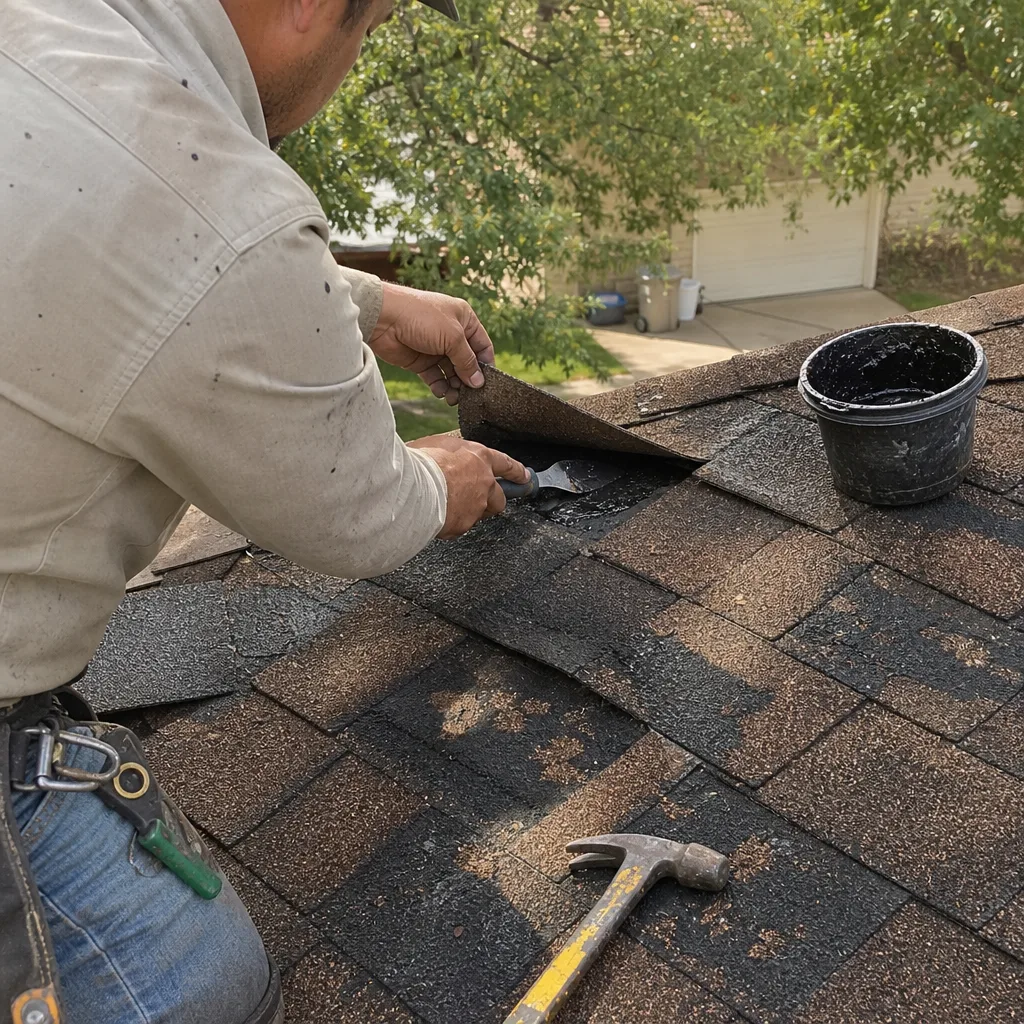
Applying silicone, tar, or spray sealant to shingles or flashings voids the warranty in most cases. The sealants trap moisture underneath, accelerate shingle degradation, and interfere with the shingle’s natural water-shedding design. If you have a small leak, the proper repair is to replace the affected shingle or flashing, not to seal over it.
Walking on the Roof Unnecessarily
Foot traffic doesn’t automatically void a warranty, but it damages shingles, and the warranty doesn’t cover damage caused by the homeowner. The asphalt granules are held in a soft asphalt matrix. Walking on the roof when it’s hot, which is most of the year in Austin, compresses the matrix and dislodges granules. If you need to access the roof, use a professional or limit foot traffic to essential work when temperatures are moderate.
Improper Ventilation Modifications
Third, modifying your attic ventilation in ways that violate the manufacturer’s ventilation requirements voids the warranty. For example, installing a powered attic vent fan that creates negative pressure in the attic can pull conditioned air from the living space, which changes the temperature and humidity profile of the attic, which stresses the shingles from below. Always check the manufacturer’s ventilation guidelines before adding or changing venting. CertainTeed, in particular, has very specific ventilation requirements tied to the shingle warranty.
Common Mistakes to Avoid
- Getting on the roof without a safety plan. Most roof injuries happen during routine inspections, not during installation work. The shingle surface in Austin’s summer heat is soft, slippery, and hot enough to burn skin. Ladders on uneven ground are the most dangerous part of the job. If you can’t inspect safely from the ground with binoculars, hire a professional.
- Ignoring the maintenance side of the warranty during an insurance claim. A shingle manufacturer can deny a warranty claim if they determine the damage resulted from a maintenance issue the homeowner ignored. Document every inspection and every repair in writing, including the date, the location, the condition, and the action taken.
- Waiting for a ceiling stain before investigating. A roof leak often takes weeks or months to travel from the roof penetration to the ceiling drywall. During that time, it’s saturating insulation, rotting decking, and encouraging mold growth. A ceiling stain is the last symptom to appear, not the first. If you suspect any roof issue, check the attic before you check the ceiling.
- Treating the roof as one uniform surface. A north slope in Austin ages differently than a south slope. A valley functions differently than a field. A pipe boot at 15 years is at a different point in its lifecycle than a shingle at 15 years. Every inspection should treat each roof component separately.
- Ignoring the gutter system. Gutters are part of the roof system, not a separate category. A clogged gutter in March means water backed up against the fascia during spring storms, which rots the fascia board, which compromises the drip edge, which exposes the shingle underlayment. The chain of failure always starts with the small, unglamorous component.
- Using the cheapest bidder for minor repairs. A $300 repair done badly can cause $3,000 in interior damage before you notice. The difference between a quality repair and a bad one is rarely visible from the ground, which is why you need someone who will show you the work, explain what was done, and provide written documentation before and after.
When to Call a Professional
Call a professional when you see active leaks, widespread cupping, bare asphalt patches, cracked or missing flashings, or when you need a documented inspection for insurance purposes. If a storm has passed through and you suspect hail damage, a professional can identify impact marks that are invisible from the ground and document what they find in a format an adjuster can use. If you’re not comfortable getting on the roof, a professional can handle the entire inspection from ladders and ridge access without you ever leaving the ground. Mercer Roofing Co Austin offers free estimates in Austin, and every estimate includes a written price before any work starts. Call (361) 202-8874 to schedule yours. For larger projects, roof installation in Austin follows the same documentation-first process, with every price and guarantee in writing before a single nail is driven.
Frequently Asked Questions
Twice a year, once in early spring before storm season and once in late fall before winter freeze risk, plus after any significant hailstorm, freeze event, or wind event over 60 mph. The spring inspection catches damage from winter freezes, and the fall inspection prepares the roof for any freezing precipitation and documents its condition for insurance purposes.
Many roofing companies in Austin offer free visual inspections, including Mercer Roofing Co Austin. Browse our more guides & resources for additional homeowner information. If you need a documented inspection report with photography for insurance purposes, some companies charge between $150 and $350, but that fee is often credited toward any repair work that results from the inspection. Always ask whether the inspection fee applies to subsequent work before you schedule.
Cracked flashing, lifted shingle edges, separated pipe boot seals, and gaps where the metal meets the shingle are the four primary freeze-related damage points. Check your attic for water stains and your gutters for concentrated granule piles after any freeze event. The damage from a freeze is often invisible from the ground for weeks or months, so an attic check is important even if the roof looks fine from the street.
Most of the maintenance on this list can be done safely from the ground with binoculars: visual inspections, gutter cleaning, granule monitoring, and algae assessment. Tasks that require walking on the roof, like replacing shingles or repairing flashings, should be left to a professional. The risk of injury from a roof fall or ladder accident is not worth the cost savings on a DIY repair.
No. Homeowner’s insurance covers sudden and accidental damage like hail, wind, or a falling tree. It does not cover maintenance, gradual wear and tear, or damage that results from a lack of maintenance. In fact, insurance adjusters are trained to look for evidence of neglected maintenance, which can lead to a claim being denied. Keeping a documented maintenance record is your protection against that outcome.
An asphalt shingle roof in Austin typically lasts 15 to 20 years, compared to 25 to 30 in cooler, less sun-intense climates. The UV load, heat stress, and freeze-thaw cycles in Central Texas significantly shorten the functional life. The south-facing slope usually reaches the end of its life before the north-facing slope. A well-ventilated attic, clean gutters, and prompt attention to flashing issues can extend the total life of the roof toward the longer end of that range.
The Bottom Line
The roof over an Austin home faces a unique combination of stresses: intense UV exposure that degrades asphalt faster than almost anywhere in the country, freeze-thaw cycles that crack flashings and break seals, and storm seasons that punish any pre-existing weakness. The maintenance checklist that works here is specific: inspect flashings and pipe boots after every freeze, flush gutters before spring and fall storm seasons, check attic ventilation in midsummer, monitor granule loss on south-facing slopes, and document everything in writing with dated photographs. Most of these tasks can be done safely from the ground. The ones that can’t should be done by a professional who provides written documentation, a written price before any work starts, and a written guarantee on every repair, including a free second visit if the repair fails within 365 days.
Written by Grant Whitlock, Owner at Mercer Roofing Co Austin, serving Austin since 2000.
See the difference
 Before
 After
After Before
 After
After Before
 After
After