
Last updated October 17, 2026
 Metal roofing
 Architectural shingles
 Tile roofing
 GAF
GAF Owens Corning
 Flat & low-slope
Free roof inspection with deck photos before we talk money - GAF and Owens Corning certified installation
Seasonal Roofing Care for Austin: Year-Round Homeowner’s Guide
Austin’s “mild winters” are a myth that costs homeowners money. Since 2010, the city has recorded seven freeze events significant enough to damage roofing systems, yet most seasonal maintenance guides still treat Central Texas as a warm-weather market that only worries about rain. This guide maps roofing care to Austin’s real weather pattern: six distinct chapters, from spring hail to summer UV to the sudden hard freezes that have become more frequent since 2021. For a deeper dive, see The Complete Guide to Roofing in Austin. You’ll learn what to inspect, when to inspect it, what a repair should cost, and when you need a professional on the roof in Austin.
Styles & brands we work with
Quick Answer
Seasonal roof maintenance in Austin means inspecting your roof at six specific times each year: before spring storm season, immediately after any hail event, during peak summer heat, in early fall before leaf drop, before the first freeze, and after any freeze event. Expect to budget $150 – $400 annually for professional inspections and minor maintenance, and always check attic ventilation, flashing, and south-facing shingle wear before they become leaks.
Table of Contents
- Austin’s Six-Chapter Roofing Calendar (Not Four Seasons)
- Chapter 1: Pre-Storm Season Prep (February to Early March)
- Chapter 2: Hail Season Response (March to May)
- Chapter 3: Summer Heat and Attic Ventilation (June to September)
- Chapter 4: Early Fall Gutter Clearing and Algae Treatment (Late September to October)
- Chapter 5: Freeze Preparedness (November to December)
- Chapter 6: Post-Freeze Inspection and Repair (January to February)
- Why South- and West-Facing Slopes Degrade Faster in Austin
- Common Mistakes to Avoid
- When to Call a Professional
- Frequently Asked Questions
- The Bottom Line
Austin’s Six-Chapter Roofing Calendar (Not Four Seasons)
Most roofing guides are written for places with clean seasonal breaks. Austin doesn’t work that way. Our weather arrives in pulses: a wet spring that turns violent quickly, a summer that bakes roofs from above and below, a fall that drops leaves and spreads algae, and a winter that now delivers hard freezes with enough regularity that ignoring them is expensive. We’ve organized this guide around the six chapters that actually govern roofing wear in Austin.
The order matters. Each chapter creates specific stress, and the repair or prep from the previous chapter protects the next one. Skip pre-storm prep in February, and a March hailstorm finds the weak flashing you didn’t fix. Skip early fall algae treatment, and a winter damp spell spreads streaking across the whole north slope. Treat this as a loop, not a checklist with a start and finish.
Austin’s frost depth is zero, so our buildings don’t deal with the heaving northern roofs face. What we deal with instead is extreme temperature swing: a 40-degree drop in 12 hours, followed by sun so intense it raises shingle surface temperature to 160°F by midafternoon. That swing expands and contracts roofing materials thousands of times per year, and it’s why we replace flashing at a higher rate per roof than almost any market in Texas.
Chapter 1: Pre-Storm Season Prep (February to Early March)
Before spring storms build, walk the roof or have a professional do it. Austin’s severe weather season typically begins in March, with hail most likely from mid-March through late May. The prep window is short, and it’s the cheapest time of year to fix small problems before they become storm claims. Roof Repair in Austin in February costs less on average than the same repair in April, because crews haven’t yet hit the surge from storm demand.
Here’s what to check in this window:
- Flashing – the metal sheets that seal your roof’s edges, valleys, chimneys, and vent pipes. Look for lifted or rusted sections. In Austin, the freeze-thaw-freeze pattern from winter has just spent three months working flashing loose.
- Shingle condition – check for curling at the edges, granule loss (look in gutters for grit), and any shingles that moved in winter winds.
- Sealant and caulk – check around vent pipes and skylights. Austin’s temperature swings crack even the best caulk within a few years.
- Gutters – clear out winter debris so spring rains flow. A backed-up gutter during a downpour sends water under the drip edge and into the soffit.
One Austin-specific note: our spring storms often arrive as a single supercell with 60-mph inflow winds before the rain starts. Loose flashing or a shingle with a broken seal becomes a wind-driven leak in minutes. The prep work is about making the roof wind-tight, not just water-tight.
If you’re having a professional do this prep inspection in Austin, expect $75 – $150 for a visual-only assessment. Not sure how to choose one? Read How to Hire a Roofing Contractor in Austin: A Step-by-Step Guide. If you want a written, documented inspection with photos, expect $200 – $300. At Mercer Roofing Co Austin, the price is written before any work starts, so you’ll know the inspection cost and any repair estimate up front.
Chapter 2: Hail Season Response (March to May)
Hail is Austin’s most frequent and most misunderstood roofing event. The city sits in what insurers call “Hail Alley,” and a storm can drop stones large enough to compromise shingles anywhere in the metro, from Cedar Park down through Buda. But here’s what most homeowners don’t know: you don’t need to see shingle damage to prove the roof was hit. Soft-metal damage tells the story.
After any hail event in Austin, do this in order:
- Check your AC condenser unit first. Walk to the side of the house. If the aluminum fins on the condenser coil are dented, that’s your canary. Hailstones that dent thin aluminum fins were large enough to bruise asphalt shingles. This check takes 30 seconds and requires no ladder.
- Check gutters and downspouts. Look for dents in the metal, especially on the top edges. Gutter material is thicker than AC fins, so dents there mean significant hail size.
- Check window screens and exterior window trim. Dents or tears point to impact direction and stone size.
- Only then consider the shingles. If any of the soft-metal checks show dents, call a roofer to inspect the shingle surface for bruising, which looks like a dark circular mark where granules were driven into the asphalt mat. This damage often doesn’t leak immediately, but the shingle life is shortened and insurance may cover replacement.
Document everything before you call insurance. Photos of dents on the AC unit and gutters, with a ruler or coin for scale, strengthen your claim. In our experience, homeowners in northwest Austin neighborhoods near the Hill Country get hit hardest because storms intensify as they move off the Balcones Escarpment.
Hail repair costs in Austin vary widely. Spot repairs on a few damaged shingles run $300 – $600. Full roof replacement after significant hail, if insurance approves, averages $12,000 – $25,000 for a 2,000 sq ft home, depending on the shingle grade and roof complexity. Always get a written price before work starts. We provide one on every job, including hail repairs.
Chapter 3: Summer Heat and Attic Ventilation (June to September)
Austin summer roofs face a double assault: direct sunlight on the shingle surface and heat buildup underneath from a poorly ventilated attic. Direct sun can push shingle surface temperatures above 150°F. If your attic is sealed or underventilated, air temperature below the decking can exceed 130°F. That heat cooks shingles from below, accelerating the loss of the asphalt oils that keep them flexible. The result: shingles that crack instead of bend, granule loss, and reduced lifespan by several years.
South- and west-facing slopes in Austin take the worst of it. A south slope gets direct sun all day; a west slope gets the brutal late-afternoon angle when ambient temperature peaks. We regularly see a 5 – 8 year lifespan difference between north-facing and south-facing shingles on the same roof in Austin, which is why maintenance has to be asymmetric.
Signs of ventilation failure to look for in summer:
- Upstairs rooms that never cool below 80°F on a 100°F day, even with the AC running hard.
- Attic air that feels like a sauna, not just hot. We mean suffocating, baking-hot air.
- Shingle edges that look curled or “hungry” on the south and west slopes only.
- Granules in the gutter after storms, indicating the shingles are drying out and shedding.
- Ice dam-resistant underlayment (rarely relevant in Austin), but more usefully: check for rust on exposed nail heads in the attic, which means condensation from overheating.
If you see these signs, call for a professional assessment before September. Adding ridge vents, box vents, or a powered attic ventilator in Austin typically runs $300 – $800 per vent installed, depending on roof configuration, and it’s one of the highest-ROI roof investments you can make. A properly ventilated attic extends the life of the entire shingle system and lowers cooling costs.
Mercer Roofing Co Austin includes a ventilation check as part of every full roofing assessment in Austin, and we’ll show you photos of what we find before recommending any work.
Chapter 4: Early Fall Gutter Clearing and Algae Treatment (Late September to October)
In Austin, fall doesn’t mean cold weather, it means leaf drop and damp mornings, which is a recipe for algae. Gloeocapsa magma, the blue-green algae that leaves dark streaks on roofs, thrives in the humid conditions that start in late September and run through the mild winter. Many national product instructions say to treat in spring, but Austin’s algae season starts earlier and runs longer. The right time to treat is early fall, before the spores spread through winter dampness.
Algae doesn’t immediately damage shingles, but it holds moisture against the granule layer and accelerates granule loss over time. Left untreated, the streaks expand until the entire north slope looks black. Beyond cosmetics, algae-darkened shingles absorb more heat, which compounds the summer ventilation problem.
Fall gutter work in Austin is about volume. Live oak and pecan leaves drop heavily in October and November, and a single gutter run can clog in a week. What to do:
- Clear gutters and downspouts completely, and check that downspouts drain at least 3 feet from the foundation.
- Flush with a garden hose after clearing to catch any packed debris in the downspouts.
- If you see granule grit in the gutter while clearing, note the amount. A cup or more of granules per 10-foot gutter run in fall means the shingles are shedding more than normal, and a professional look is warranted.
- Apply an algae-preventive treatment if you see any dark streaking. Zinc or copper-based formulas applied in fall work best in Austin’s climate, because the damp winter gives the treatment time to bond before spring growth.
We recommend clearing gutters as early as late September in older Austin neighborhoods with mature oak canopies, like Hyde Park or Tarrytown, where leaf volume is highest. If you’re not comfortable on a ladder, hire the work out. Gutter cleaning in Austin averages $150 – $300 for a single-story home, and it’s safer than a fall off a ladder, which is one of the most common homeowner injuries in the city every October.
Chapter 5: Freeze Preparedness (November to December)
Since February 2021’s Winter Storm Uri, Austin homeowners have learned that freeze preparedness is not optional. That storm, and the cold snaps in 2022 and 2024, showed how quickly a warm-weather house becomes vulnerable when outdoor temperatures stay below freezing for 36 hours or more. Roof systems themselves rarely fail from cold alone in Austin, but the things connected to the roof do.
Focus on the roof edges, vents, and anything that can freeze and back up:
- Inspect the drip edge. The metal strip along the roof’s edge protects the decking from water wicking. If it’s bent or pulled away, freeze-thaw cycles will work it further loose.
- Check attic insulation. Austin homes often have inadequate insulation by northern standards, and during a freeze, heat escaping through the attic melts snow or ice on the roof, which refreezes at the eaves. While Austin snow is rare, the dynamic is the same with ice accumulation from freezing rain.
- Seal attic bypasses. Gaps around vent pipes, wiring, and can lights let warm moist air into the attic, which then condenses against the cold roof decking. After a freeze, that condensation thaws and looks like a leak. In Austin, most “roof leaks” reported the week after a freeze are actually condensation damage from air leakage, not roof failure.
- Clear debris from valleys. Valleys channel water, and if they’re carrying leaves into a freeze, the ice dam that forms pushes water sideways under shingles.
One thing to know: if water does penetrate during a freeze, it’s usually at a flashing point that was already compromised, not in the middle of a field of shingles. The freeze just exposed the weakness. That’s why pre-freeze inspection focuses on flashings and edges rather than the broad roof surface.
For Austin homeowners, a pre-freeze roof inspection in November or December costs $75 – $150 for a visual walk, and it catches most flashing failures before they become weekend emergencies. If you’d rather do a self-check, focus on anything metal: flashings, vent housings, counterflashing, drip edge. Where metal meets shingle is where Austin freeze failures start.
Chapter 6: Post-Freeze Inspection and Repair (January to February)
After any hard freeze in Austin, do a post-thaw inspection. The damage from a freeze often doesn’t show until the ice melts and the roof warms. Here’s the sequence:
- Check ceilings and attic for water stains, especially around vents, chimneys, and where roof planes change direction.
- Inspect flashing visually from the ground with binoculars if you’d rather not climb. Look for lifted, buckled, or separated metal.
- Look for ice damage at the gutter line: sagging gutters, separated seams, or drip edge pulled away from the fascia.
- If you see any of these, call for a professional repair before the next rain. Freeze damage compounds, meaning a small flashing gap becomes a bigger one with each cycle until water gets into the decking.
Post-freeze repairs in Austin average $250 – $600 for a typical flashing repair, and $400 – $1,200 for gutter replacement on a single side. These are small costs compared to replacing rotted decking, which typically runs $3 – $6 per square foot and only gets found once the shingles come off.
The home page for Mercer Roofing Co Austin details our 365-Day Done Right Promise: if the work isn’t right within a year, we make it right. That guarantee applies to freeze repairs too. We expect repair work we do in January to still be holding in December, and we put that in writing.
Why South- and West-Facing Slopes Degrade Faster in Austin
If you have a two-story home in Austin or a house with multiple roof planes, look at your south and west slopes first when you inspect. These slopes get the direct, high-angle sun that breaks down asphalt shingles faster. We see it in almost every inspection: the north slope looks nearly new while the south slope shows granule loss, cracking, and curling.
This asymmetry changes how you budget for roof replacement. A homeowner might inspect the north slope, see healthy shingles, and assume the roof has years left. Then a storm hits and the south slope fails. Asymmetric maintenance means giving extra attention to the hot slopes: check them twice as often, treat them for UV-protective coating if appropriate, and plan for their replacement before the rest of the roof.
Manufacturers recognize this. GAF and CertainTeed offer shingle lines with enhanced UV stabilizers and reflective granules, which perform better on Austin’s hot slopes. When we do a roof installation in Austin, we discuss slope orientation with the homeowner and recommend different shingle specifications for the hot side when it makes sense. The cost difference for upgraded shingles on one slope often runs $25 – $50 per square, and it can add years to that slope’s life.
Some Austin-specific fixes for hot slopes:
- If the attic under the south slope is unvented, vent it first. Ventilation cools shingles from below and is the most effective lifespan intervention.
- Trim trees strategically. A well-placed live oak shades the south slope without dropping debris, cutting direct sun exposure by hours a day.
- Check for uneven fastening on the hot slope. Thermal cycling loosens nails faster there, so shingles lift and become wind-catch points.
Common Mistakes to Avoid
- Skipping the post-hail AC fin check. Homeowners climb ladders looking at shingles when the 30-second ground check at the condenser would tell them if hail was large enough to damage anything at all. If the fins aren’t dented, the shingles probably aren’t damaged either.
- Treating algae in spring. Austin’s algae season starts in September, and spring treatment means the product hasn’t bonded before the summer heat kills the active ingredient. Apply in early fall, not early spring.
- Cleaning gutters only once a year. In Austin, live oaks drop in October and again in March with new leaf flush. Twice-a-year gutter cleaning, minimum, for any home with mature trees.
- Ignoring the attic in summer. If your upstairs runs 82°F with the AC on full blast, the problem may be roof ventilation, not the AC. Fixing ventilation costs hundreds, replacing an overworked AC costs thousands.
- Assuming north-facing shingles represent the whole roof. The south slope tells a different story, and if you only look at the shaded side, you’ll misjudge remaining roof life by years.
- Waiting for a leak to fix flashing. Flashing is the first thing to fail in Austin’s freeze-thaw cycles, and by the time it leaks, water has already saturated the decking. Fix it when it looks worn, not when it drips.
When to Call a Professional
Some roofing tasks are safe for a homeowner with a ladder and good balance: clearing gutters, checking AC fins, looking at flashing with binoculars from the ground. Others need a trained professional. See our DIY vs Professional Roofing: The Austin Homeowner’s Decision Guide to decide which path fits your situation. Call if you see any of these: curling or missing shingles, multiple granule patches in the gutter after a storm, daylight visible through the attic roof deck, water stains on ceilings after rain, or any damaged flashing you can’t confidently inspect from the ground. If you’re unsure whether a problem is minor, call before water gets in. Mercer Roofing Co Austin offers free estimates in Austin, and we send a written price before any work starts. Call (361) 202-8874 for a free estimate.
Frequently Asked Questions
Expect $150 – $400 per year for professional inspections and minor upkeep. A visual inspection runs $75 – $150, a documented inspection with photos runs $200 – $300, and gutter cleaning runs $150 – $300 per visit. Repairs like flashing fixes run $250 – $600. Call (361) 202-8874 for an exact quote, based on your roof’s size and slope configuration.
Six times per year, mapped to Austin’s weather chapters: pre-storm in February, post-hail after any March-to-May storm, mid-summer for ventilation, early fall before heavy leaf drop, pre-freeze in November, and post-freeze in January. Most homeowners can do a visual check themselves, with a professional inspection once or twice a year.
No. Hailstones under about 1 inch in diameter rarely damage healthy asphalt shingles, though they may dent gutters, AC fins, or window screens. The soft-metal check is the fastest way to tell if a storm was large enough to cause shingle damage. If the AC fins are dented, call a roofer for a shingle inspection.
Blue-green algae called Gloeocapsa magma, which thrives in Austin’s humid, warm conditions from early fall through winter. It doesn’t immediately damage shingles but holds moisture against the granule layer and accelerates granule loss. Treat it in early fall with a zinc or copper-based product, not in spring.
Most “freeze leaks” in Austin are either condensation from warm air leaking into a cold attic, or water intrusion at a flash point that was already compromised before the freeze. True structural roof failure from cold alone is rare. A pre-freeze flashing inspection catches most problems before they leak.
Minor repairs like replacing a few shingles or resealing flashing generally don’t require a permit in Austin. Roof replacement or structural work does require a permit, which a licensed contractor pulls and closes with an inspection. At Mercer Roofing Co Austin, permits are pulled and inspections passed on every job that requires them.
The Bottom Line
Seasonal roof care in Austin is a six-chapter rhythm, not a twice-a-year habit. Pre-storm prep in February, hail response in spring, ventilation attention in summer, gutter and algae work in early fall, freeze prep in late fall, and post-freeze inspection in winter. Watch your south and west slopes more closely than the rest of the roof. Check the AC fins after hail before you climb anything. Treat algae in fall when Austin’s damp season actually starts. Budget $150 – $400 a year for maintenance, and fix flashing before it leaks. If you’d rather not climb at all, explore our more guides & resources or call (361) 202-8874 for a free estimate. We’ll send a written price before any work starts, and every repair comes with a written guarantee.
Written by Grant Whitlock, Owner at Mercer Roofing Co Austin, serving Austin since 2000.
See the difference
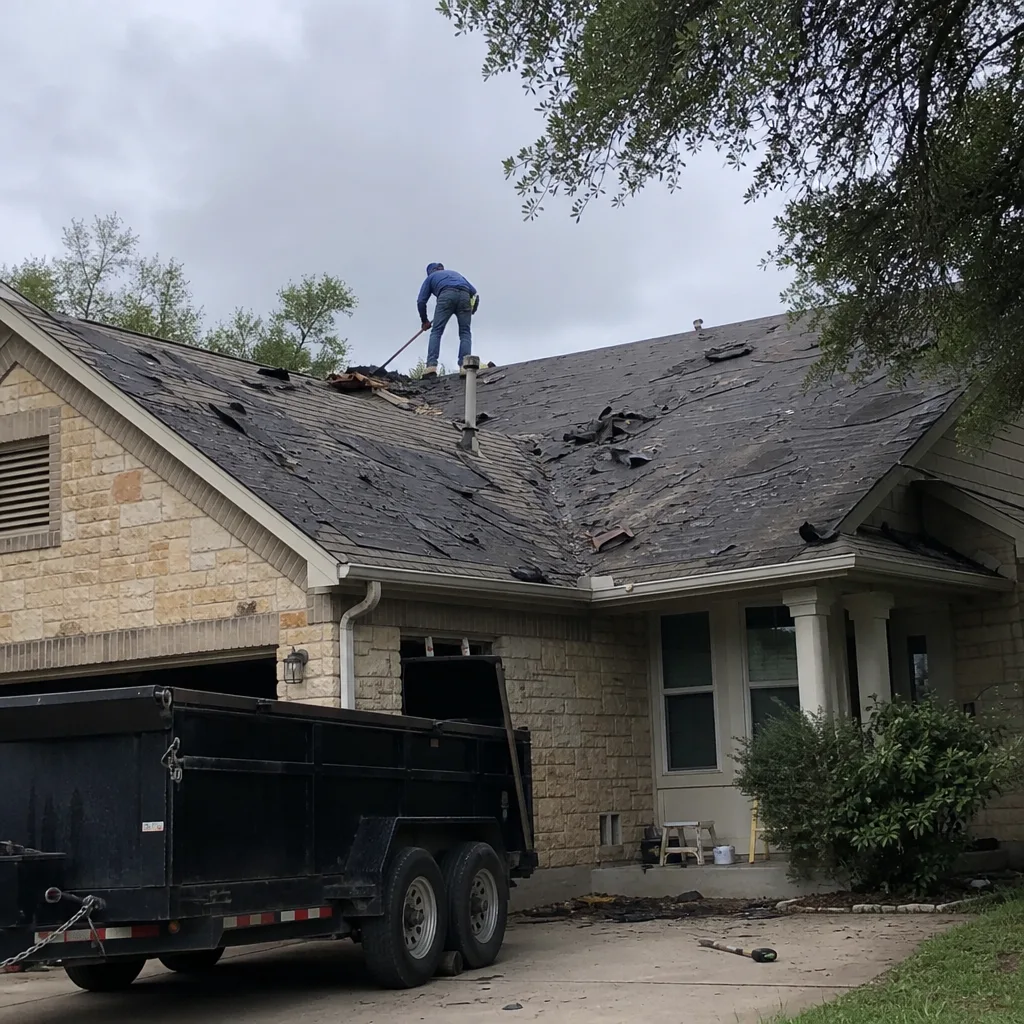 Before
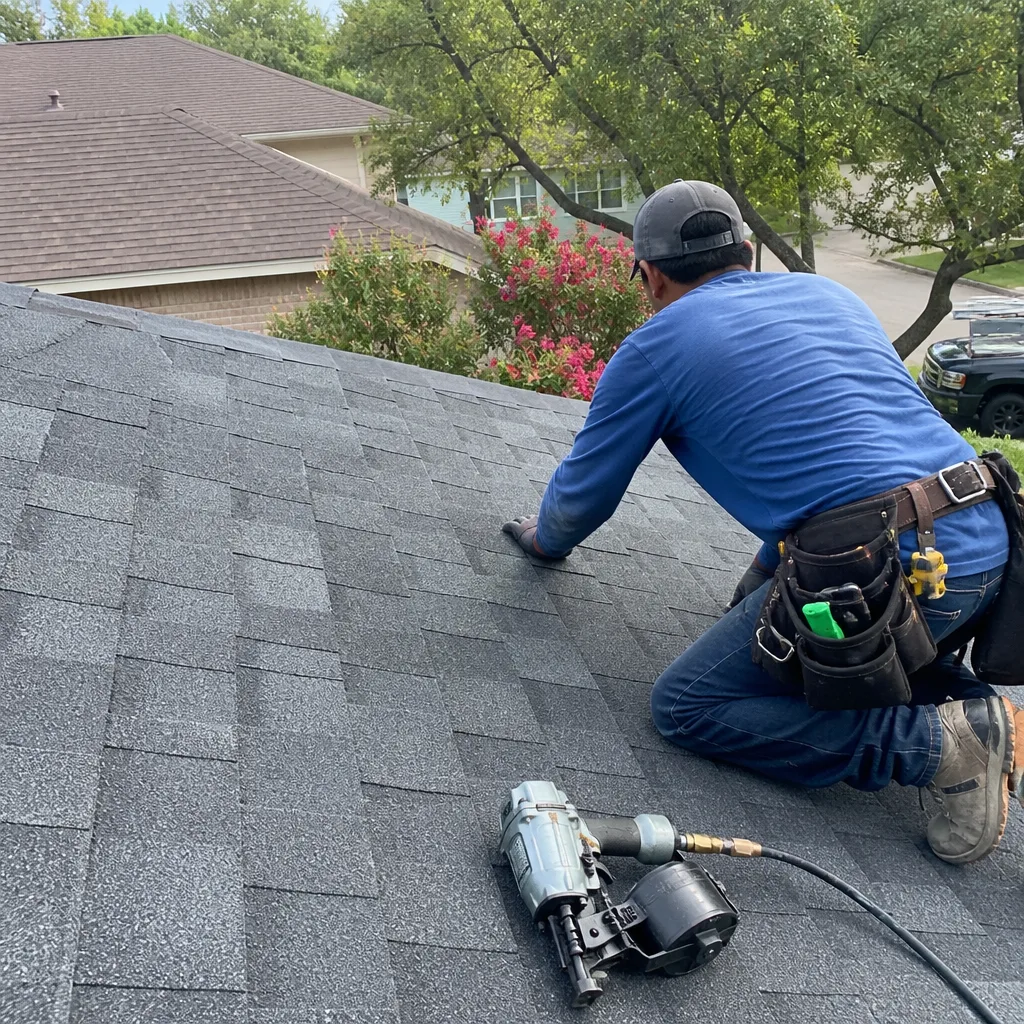 After
After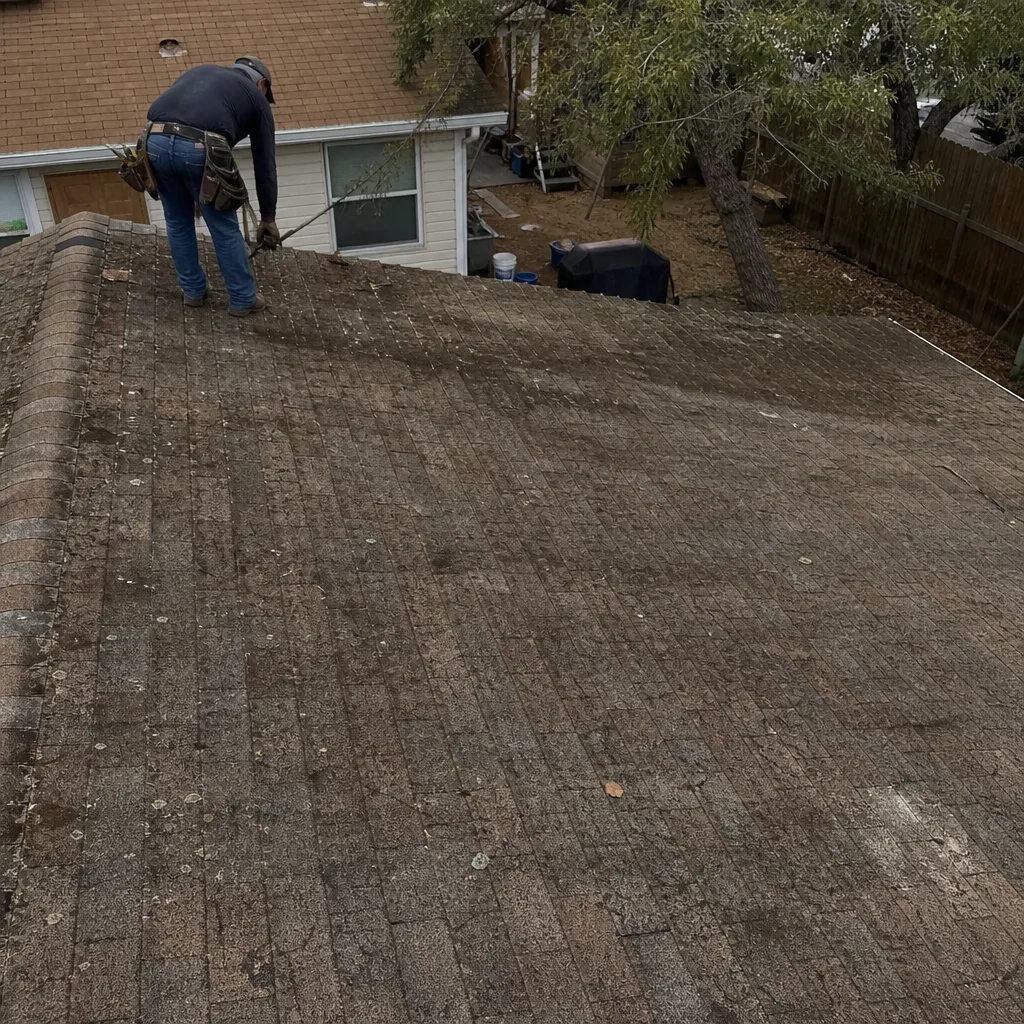 Before
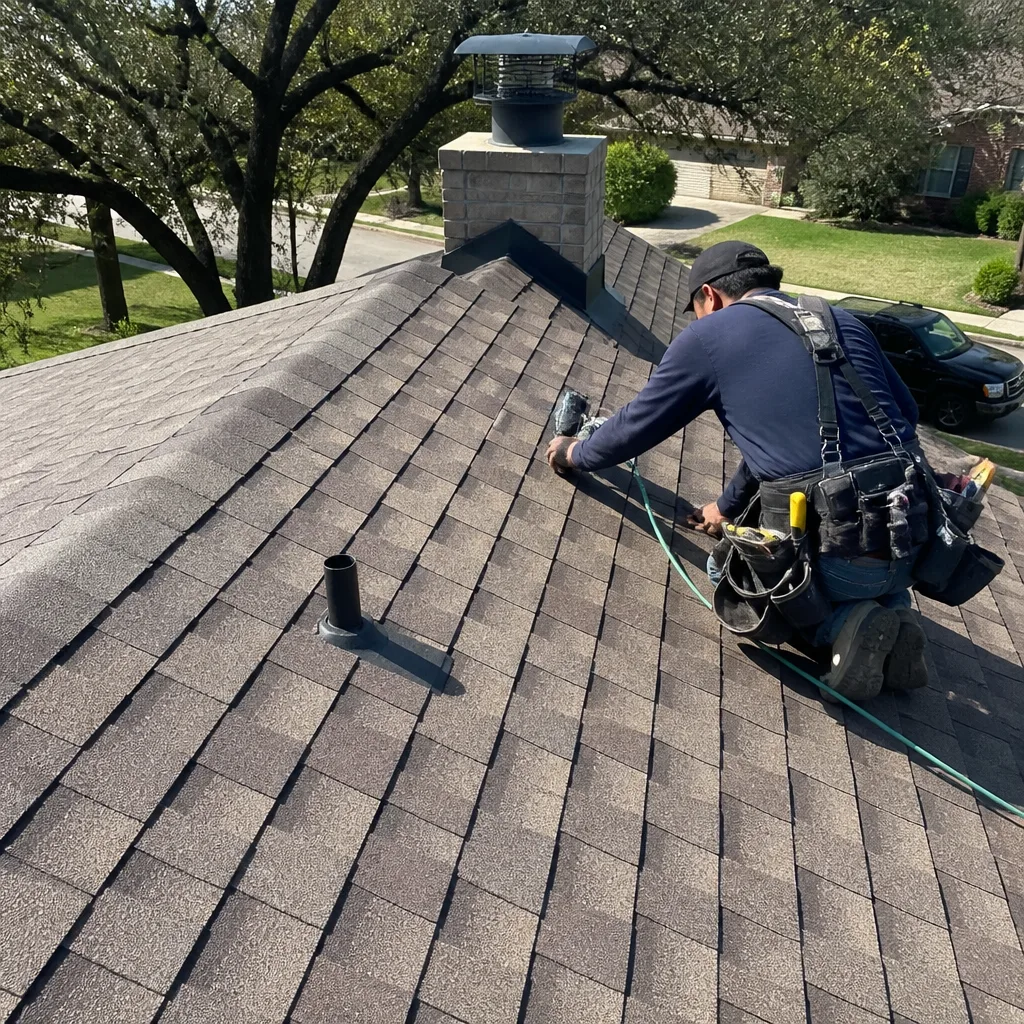 After
After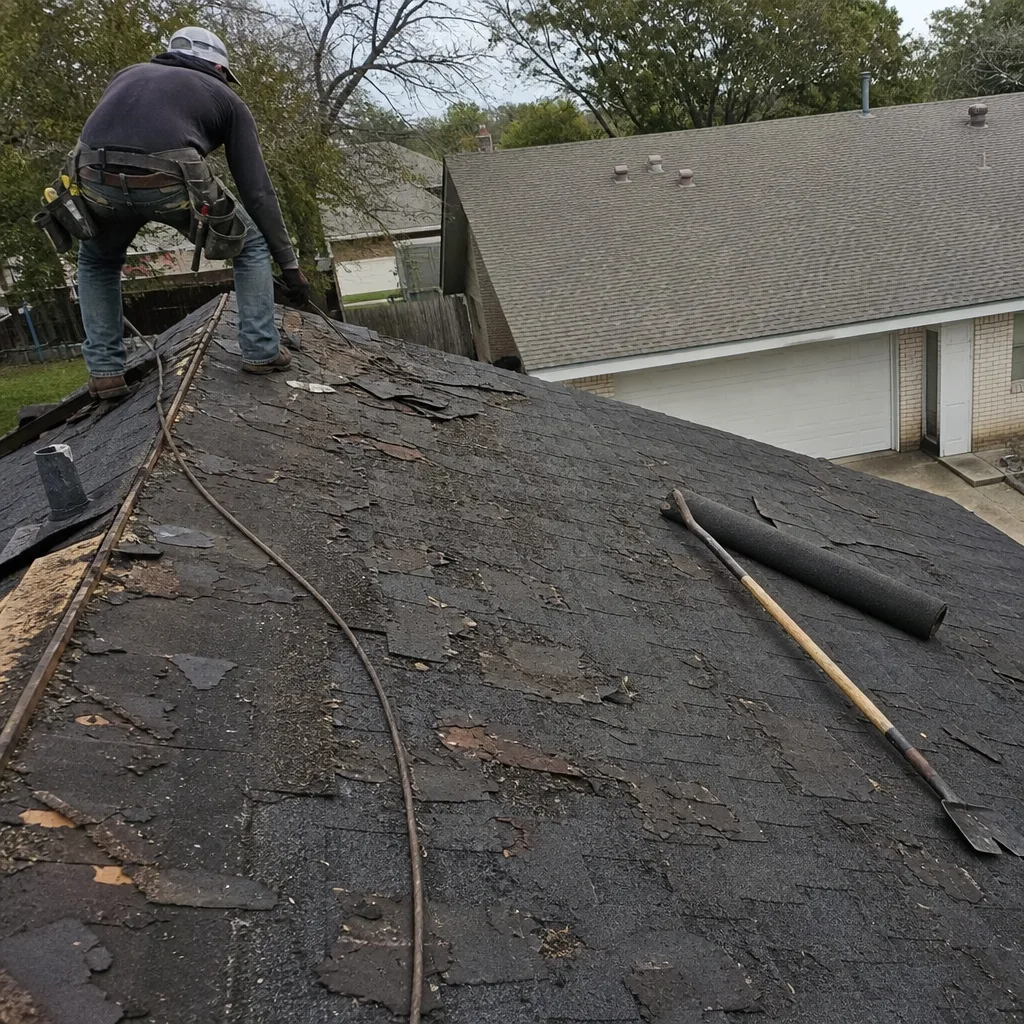 Before
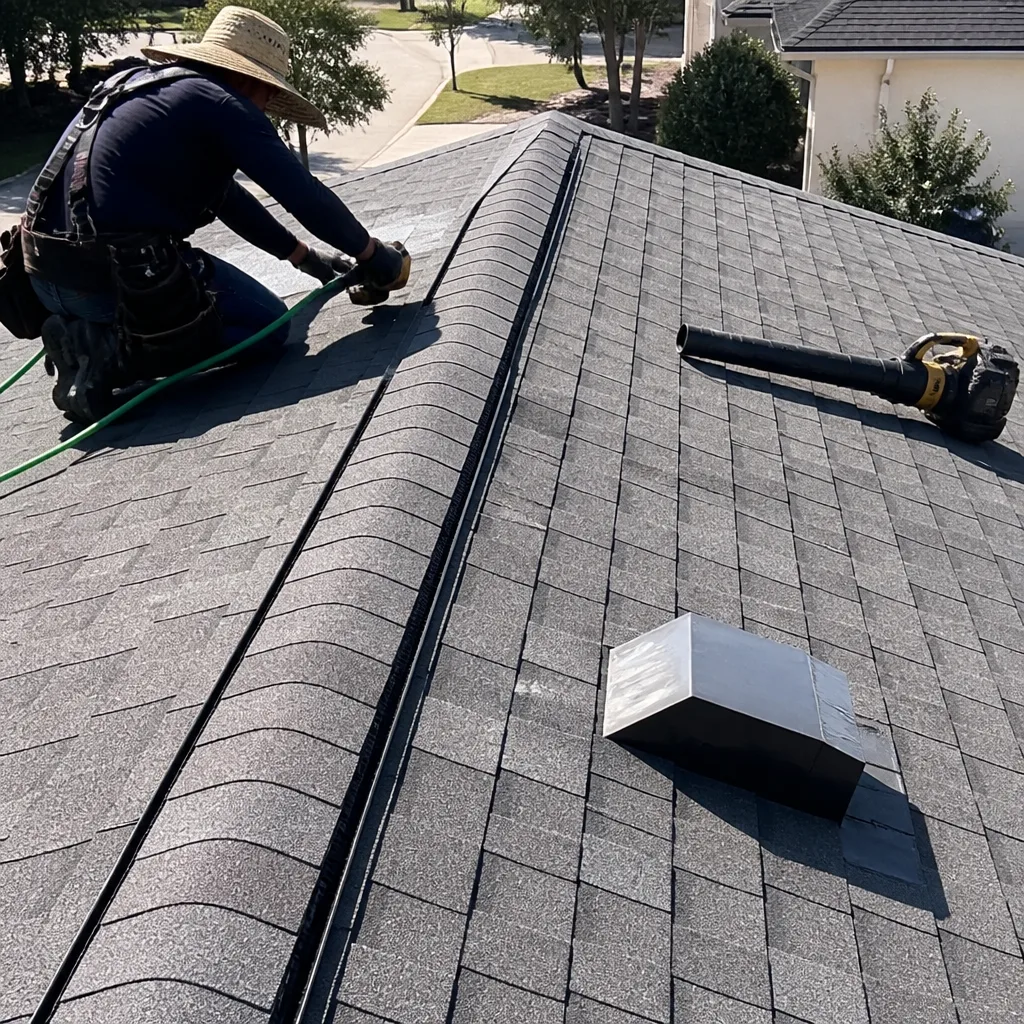 After
After