
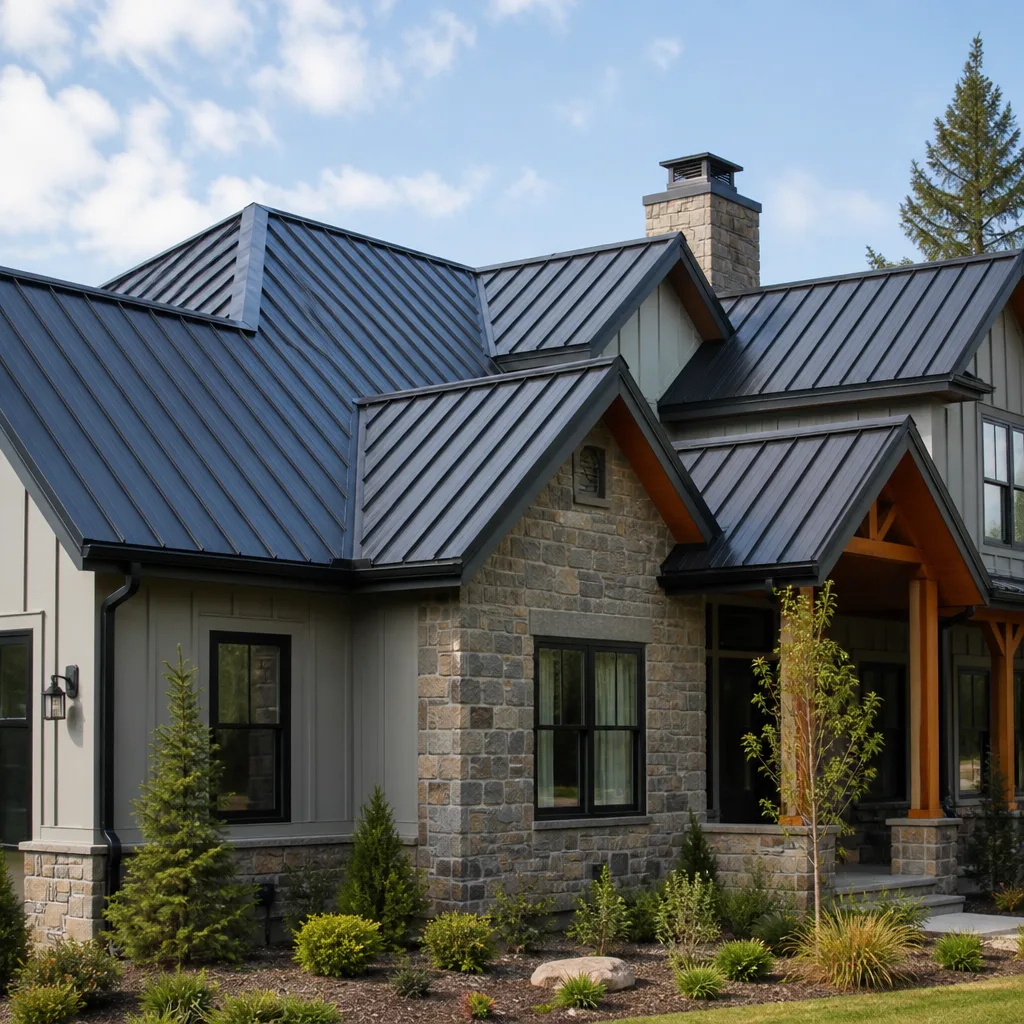
 Metal roofing
 Architectural shingles
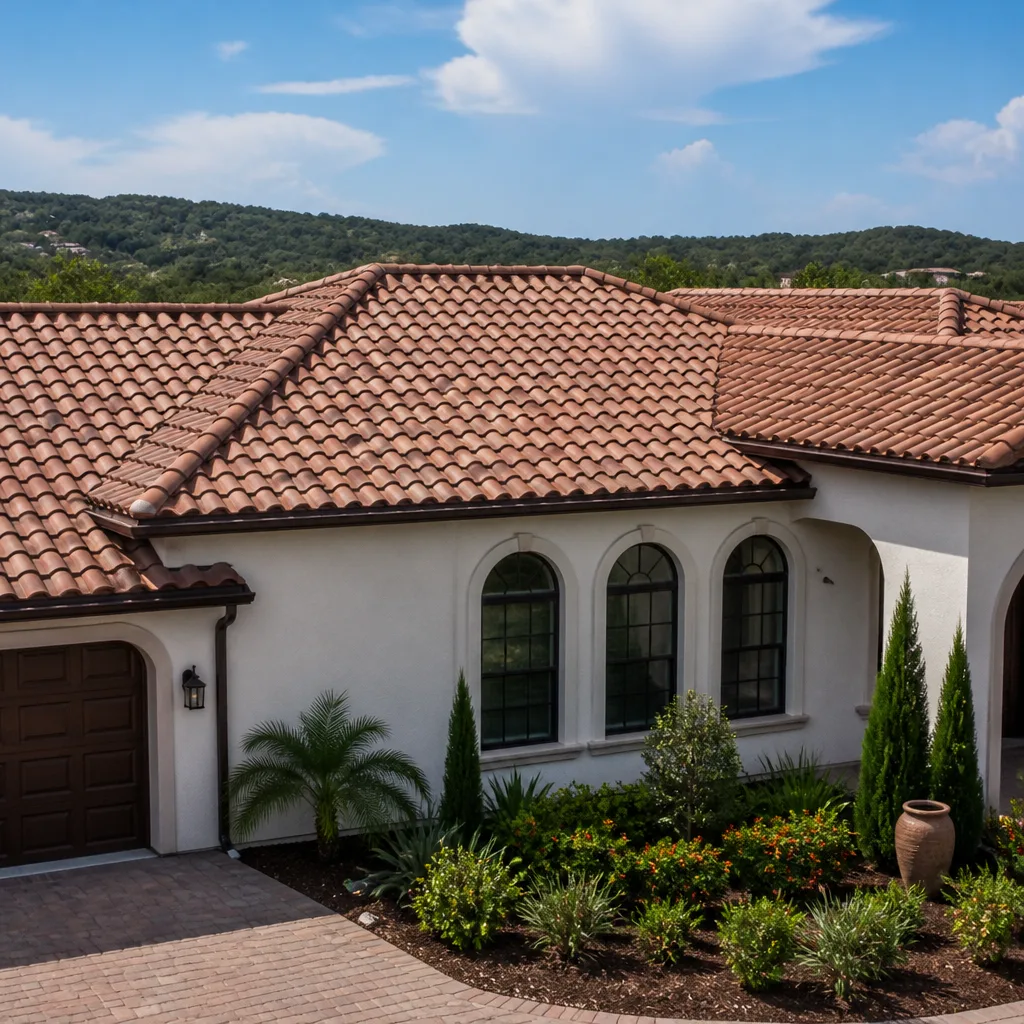 Tile roofing
 GAF
GAF Owens Corning
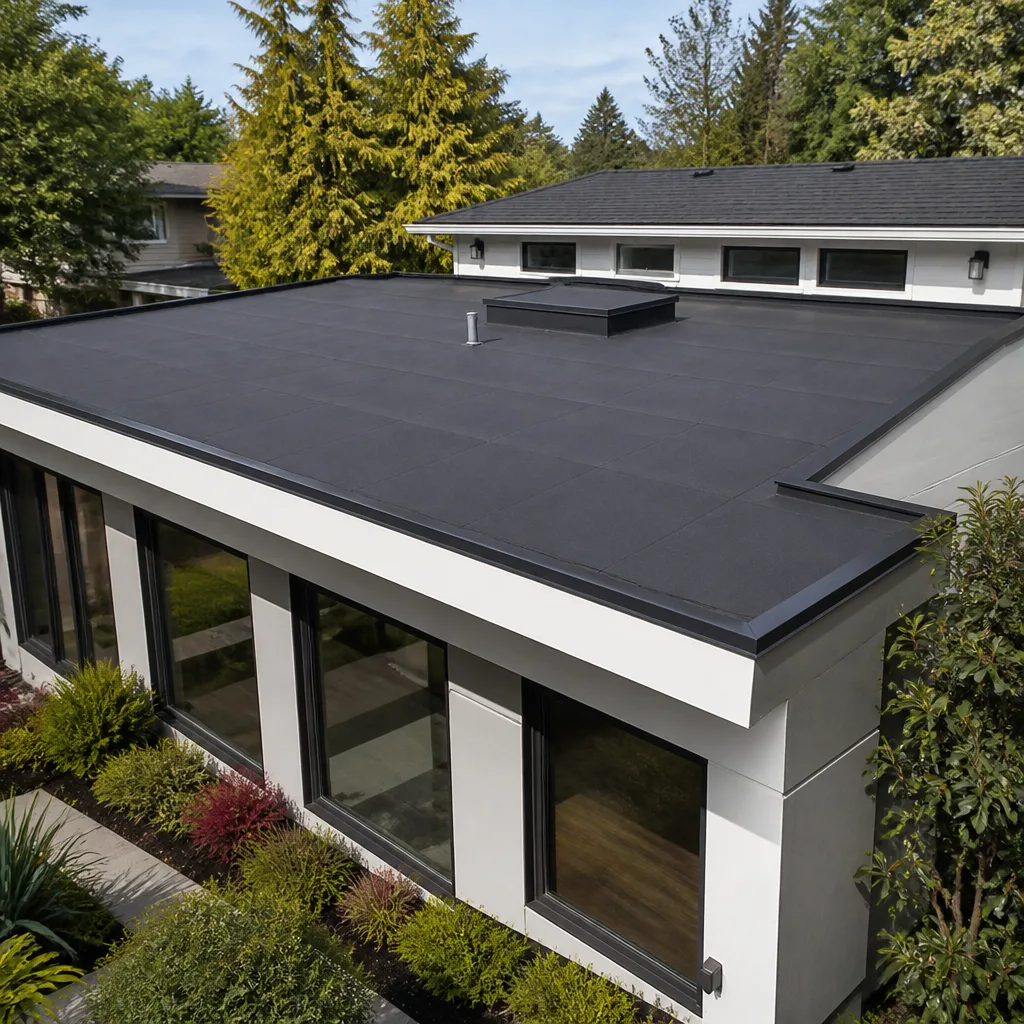 Flat & low-slope
Free roof inspection with deck photos before we talk money - GAF and Owens Corning certified installation
Styles & brands we work with
See the difference
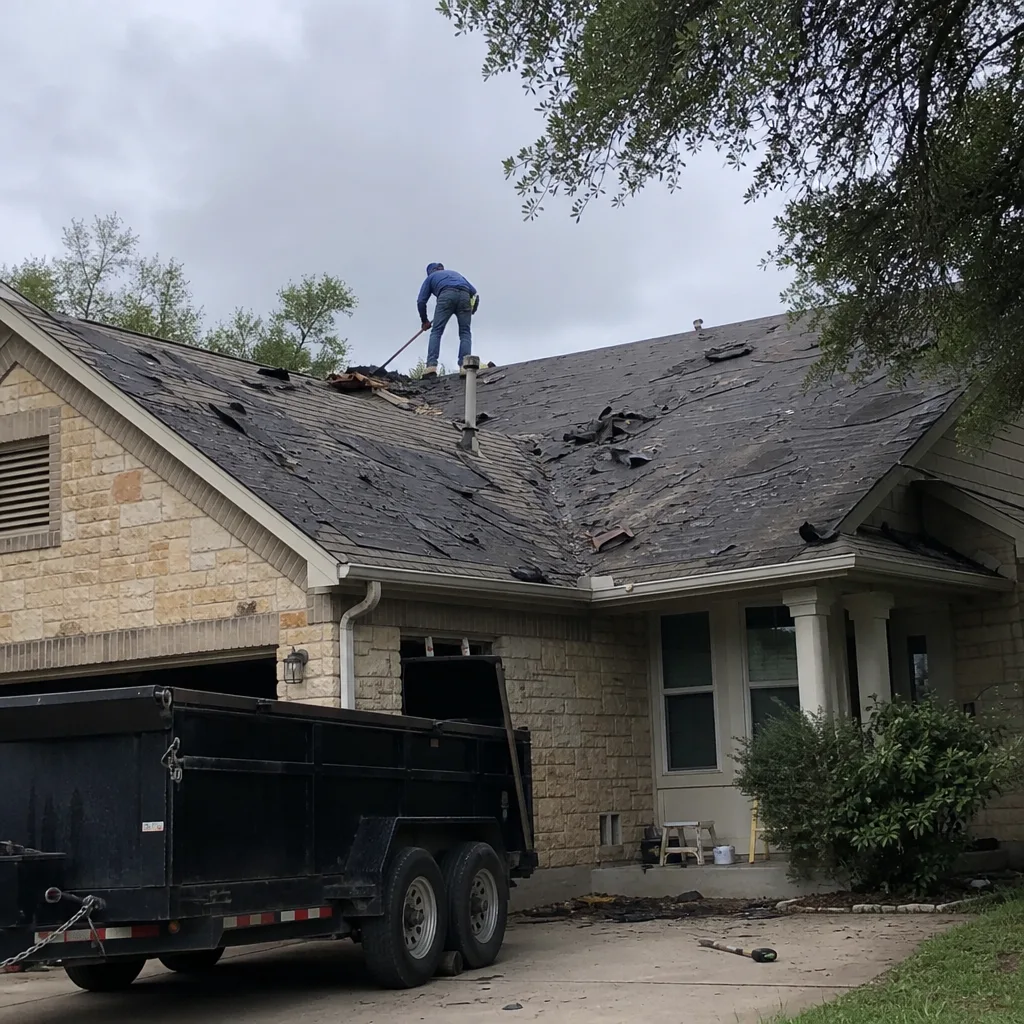 Before
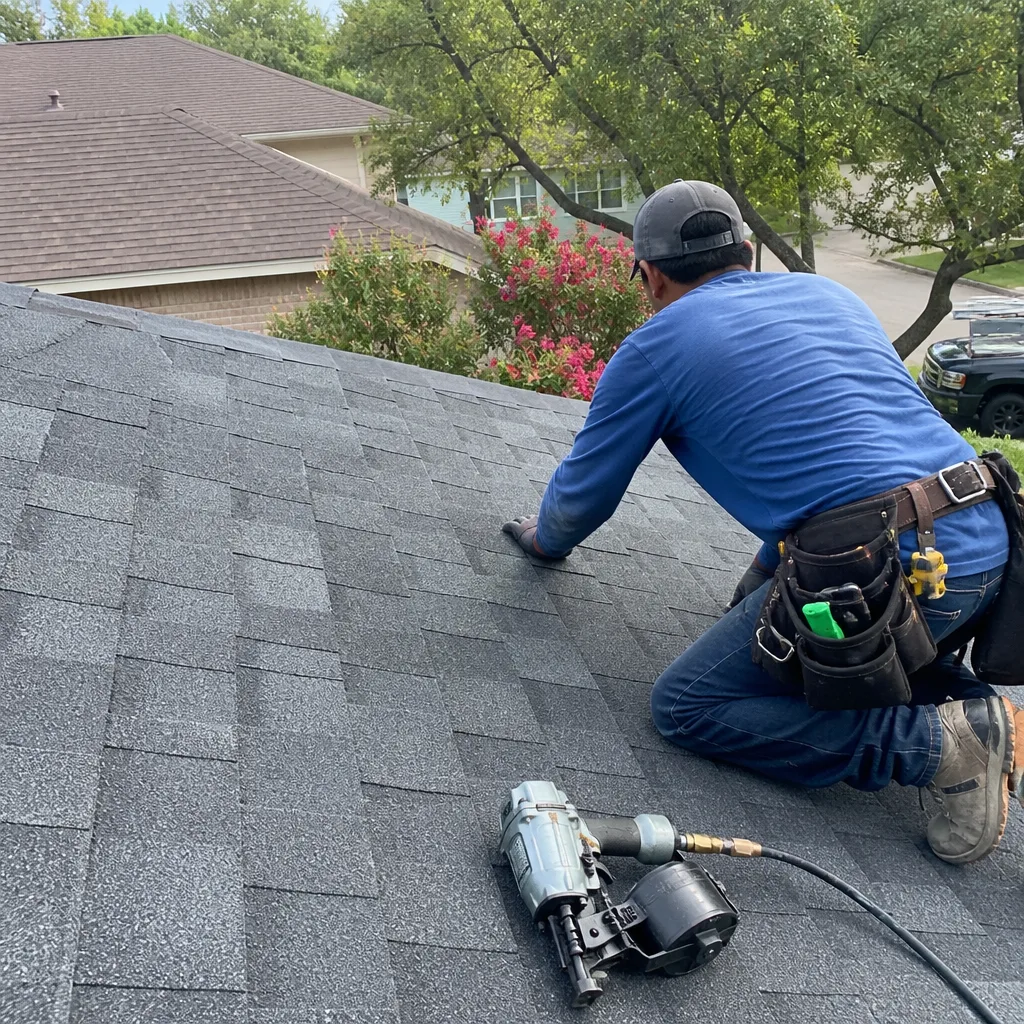 After
After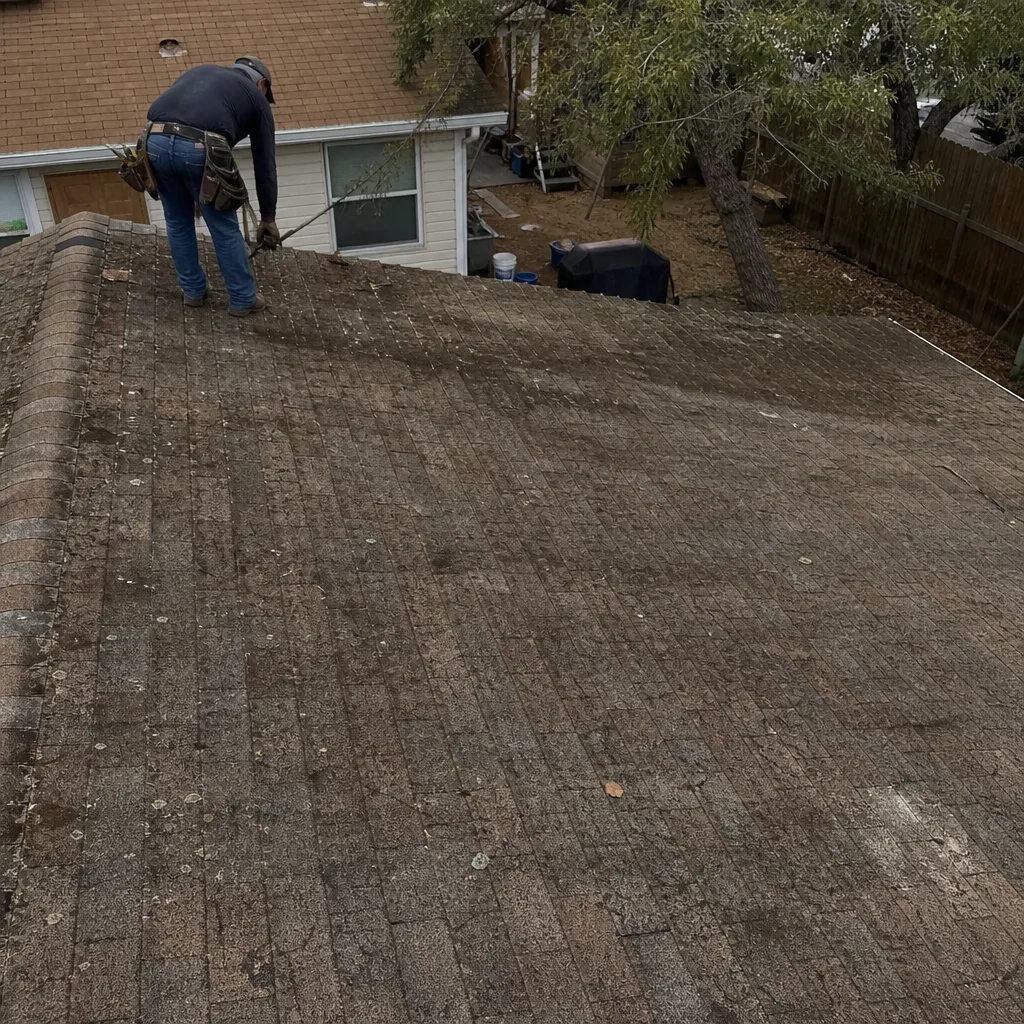 Before
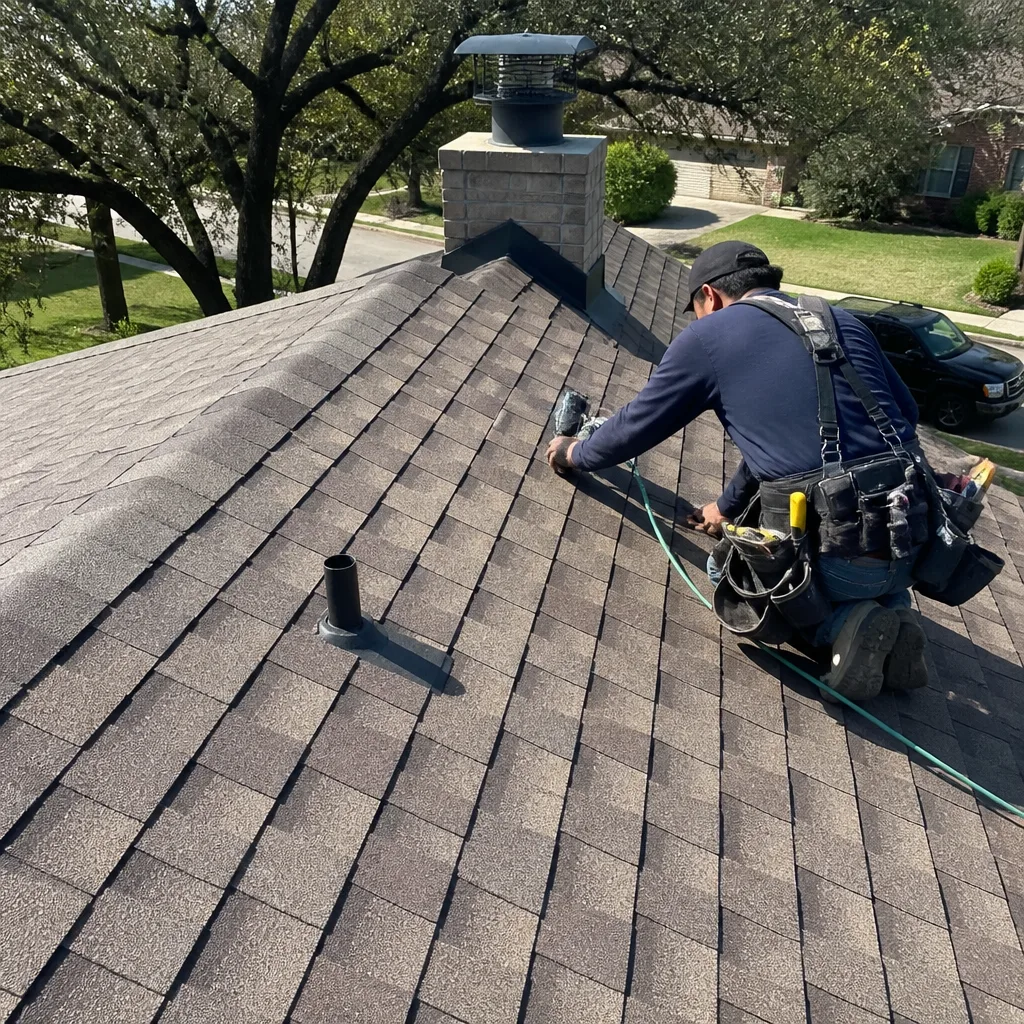 After
After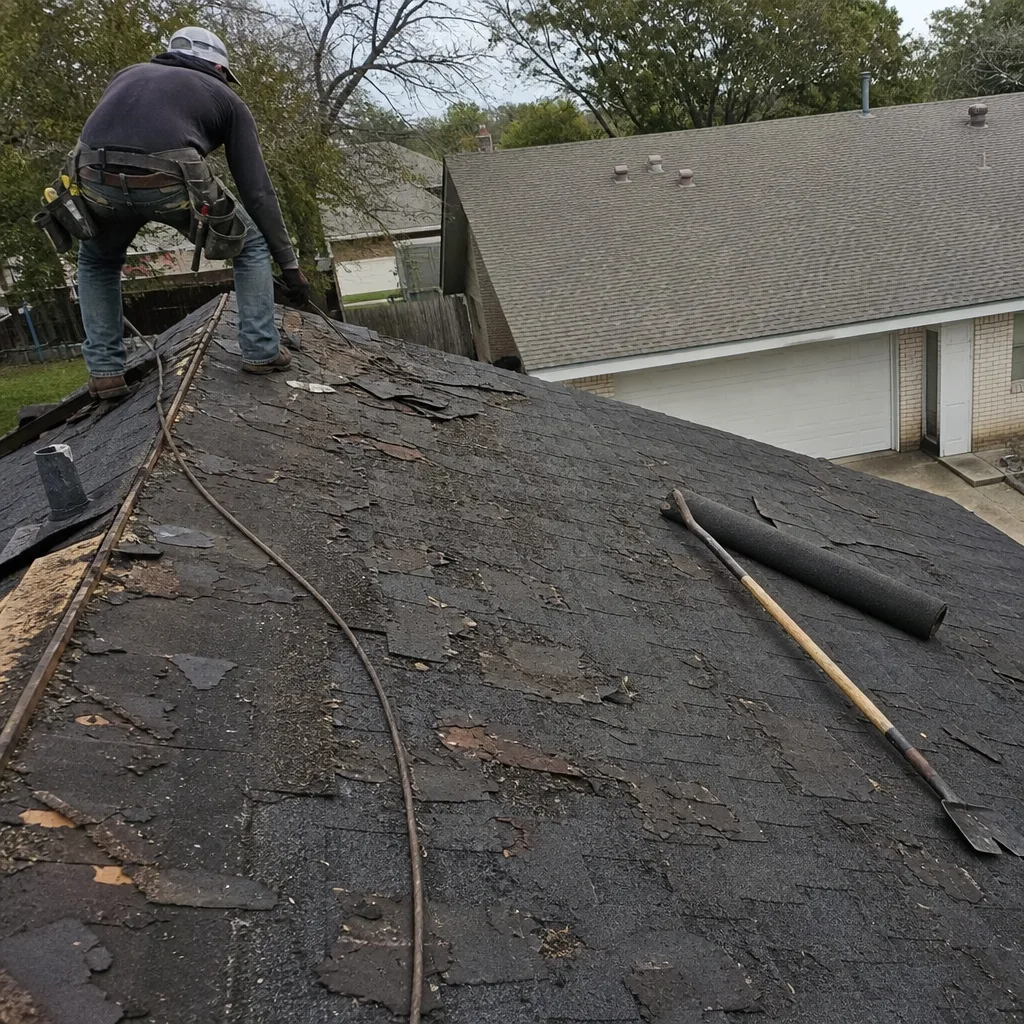 Before
 After
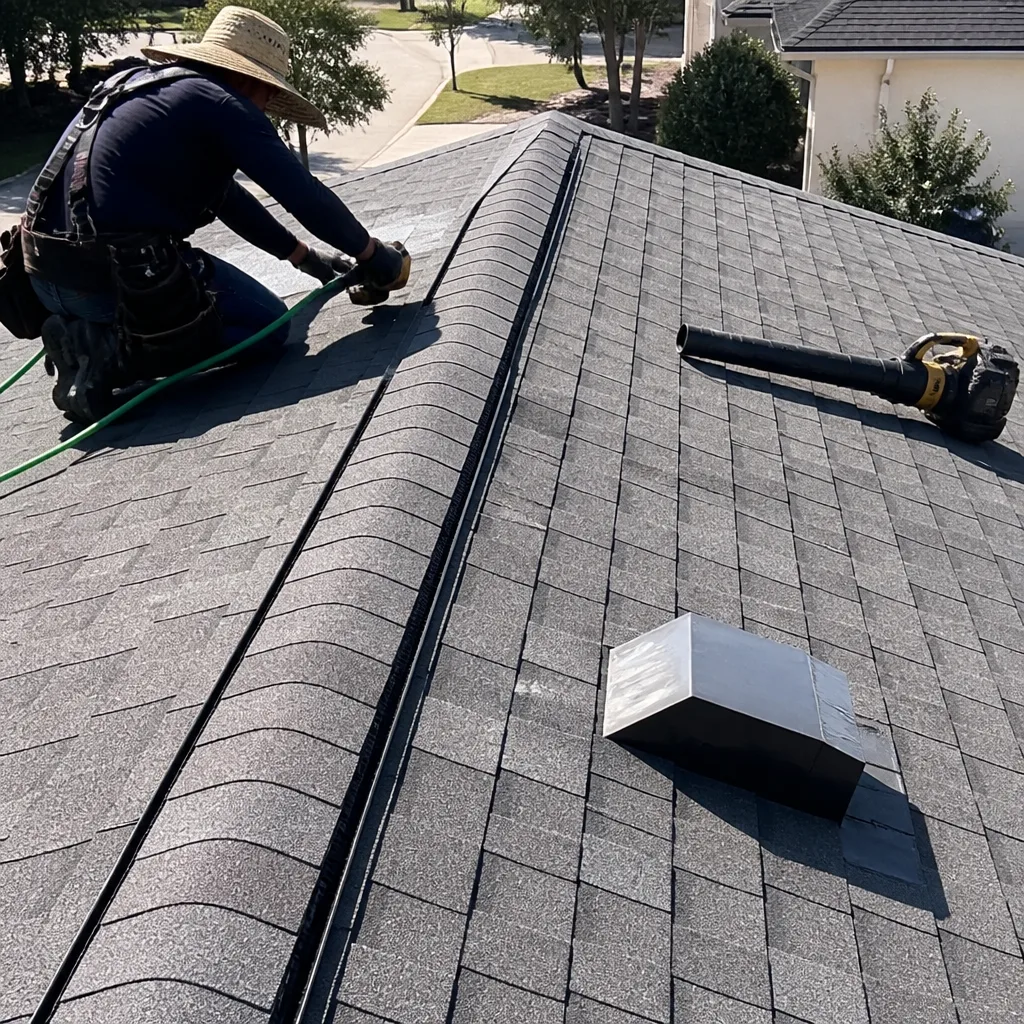
AfterFlat Roof Patch in Austin, TX
A flat roof patch in Austin typically costs between $350 and $750 for a small, localized repair, and most jobs are finished the same day we start. The price depends on the membrane type, how far water has traveled under the surface, and whether the decking underneath is still sound. If you’ve spotted a water stain on your ceiling or heard dripping during one of our spring downpours, call Mercer Roofing Co Austin at (361) 202-8874 for Roof Repair services and we’ll send a technician who arrives with a written price before any work begins.
Flat roofs fail differently than pitched roofs. Water doesn’t run off the way it does on a shingle roof, so a small puncture or a failed seam can sit there, soaking into the membrane and the insulation board beneath it for weeks before you notice anything inside the house. By the time a stain shows up on your ceiling, the damage above it is usually bigger than the stain. That’s why we treat every flat roof patch as a diagnostic job first and a repair second. We’re part of the home services family at Mercer Roofing, and our flat roof work follows the same standard as our full Roof Repair in Austin service: find the real source, show you the price in writing, fix it, and guarantee it for 365 days.
Here’s what matters most when you’re dealing with a flat roof leak in Austin: someone has to get up there and look. Not guess from the ground, not sell you a new roof over the phone. A flat roof leak can start ten feet away from where it shows up on your ceiling, which is why our Leak Repair process traces it to the source. We trace it the hard way, which means removing wet material, finding how far the water traveled, and patching the actual source rather than slapping sealant over the visible crack. Grant Whitlock, owner at Mercer Roofing Co Austin, has built our flat roof patch process around that principle. Because a patch that misses the source is just a future call back, and we’d rather do it once.
When You Need Flat Roof Patch
Flat roofs are common on Austin homes built after the 1960s, especially in neighborhoods like Allandale, Crestview, and the mid-century pockets of North Loop. They’re also the standard on carports, porches, and additions throughout Hyde Park and Travis Heights. Here’s what tells you it’s time to call:
- Water stains on the ceiling or walls. A brown ring, a soft spot, peeling paint, or drywall that feels spongy under your fingers. On a flat roof, water likes to pool and then travel sideways along the decking before it drops, so the stain is rarely directly under the hole.
- Bubbling or blistering on the roof surface. When moisture gets trapped under the membrane, Austin’s summer heat turns it to vapor and pushes the membrane up into soft, spongy blisters. Walk the roof if you can safely access it, or call us and we’ll do it.
- Standing water that hasn’t drained in 48 hours after rain. Flat roofs are designed to shed water through drains and scuppers, not hold it. Ponding water means a low spot or a clogged drain, and either one shortens the life of the membrane dramatically.
- Open seams, cracks, or shrinkage at the edges. Older modified bitumen and built-up roofs shrink over time, pulling away from parapet walls and flashing. If you can see a gap or a curled edge from a ladder, water can absolutely get in there.
- Granule loss or exposed fiberglass on a rolled roof. Rolled asphalt roofing, the kind you often see on porches and carports, wears down in the Texas sun. When the surface looks patchy and you can see the mat underneath, it’s past time for a patch.
- A musty smell in the room below the flat roof section. That smell is almost always moisture that’s been sitting in insulation or drywall. Sometimes it’s the only sign you get before visible staining appears, especially on white-painted ceilings.
If any of these sound familiar, don’t wait for the next thunderstorm to confirm it. Austin’s storms can dump two inches in an hour, and a small penetration becomes a roomful of ruined drywall fast. Call (361) 202-8874 and we’ll get someone on the roof, usually the same day or next morning.
How Much Does a Flat Roof Patch Cost in Austin?
A flat roof patch in Austin generally runs $350 to $750 for a small repair on an accessible section of roof, $700 to $1,400 when the damage extends under the surface and we need to replace wet decking or insulation board, and $1,500 to $3,000 if the patch involves re-flashing a parapet wall or rebuilding a drain area. For full details, see How Much Does Roof Repair Cost? (2026 Price Guide) - Austin, TX; below is how that breaks down on most homes we see in places like Barton Hills, Brentwood, and Mueller.
| Repair type | Typical price in Austin | What’s included |
|---|---|---|
| Small patch, surface-level membrane tear or puncture | $350 – $750 | Clean and prime the area, patch with matching membrane, seal edges, written 365-day guarantee |
| Seam or flashing repair on a modified bitumen roof | $450 – $900 | Re-torch or cold-apply seams, replace damaged flashing, reseal, written 365-day guarantee |
| Wet decking or insulation board replacement plus patch | $700 – $1,400 | Remove wet material, replace decking as needed, install new insulation, then patch the membrane above it |
| Drain or scupper rebuild with surrounding patch | $900 – $1,800 | Remove failed drain or scupper flashing, rebuild the opening, install new membrane, reseal the surrounding area |
| Parapet wall re-flashing with patch work | $1,500 – $3,000 | Cut out old flashing, install new metal or membrane flashing, seal the wall-to-roof transition |
What moves the price is the condition of the decking under the membrane. We won’t know until we open it up, which is why our written price includes a clear explanation of what happens if we find rotten wood or saturated insulation. You’ll know that number before we proceed, not after. A few things that affect cost specifically in Austin: the age of the roof (lots of 1970s and 1980s homes in Northwest Hills and Rosedale have original roofs that need more careful cuts), the type of membrane (TPO and PVC patch differently than torch-down modified bitumen), and access (a roof over a second story or one with no parapet edge is slower, safer work that costs more). All of that shows up in the written estimate, with no surprises afterward.
Every flat roof patch we do includes the 365-Day Done Right Promise. If the patch fails within a year, we come back and make it right at no charge, and a free second visit is written into every repair guarantee. Call (361) 202-8874 for Roof Repair Near Me in Austin, TX and we’ll give you a straight answer about what your repair will cost. Estimates are free, and a live person answers the phone 24/7, not a voicemail system.
Our Flat Roof Patch Process
The process is straightforward, and you’ll know who’s coming before they get there. When you schedule, we send you the technician’s name and photo. When they arrive, they present a photo ID badge at the door, in a clean, marked Mercer Roofing uniform. That’s the Threshold Verified standard, and it’s non-negotiable on every job we run.
- Inspection from the roof surface. The technician walks the flat roof section, identifies every penetration (pipes, vents, AC curbs, drains), and looks for the visible signs: blisters, open seams, pooling water, cracked flashing. Then they go inside your home and map ceiling stains to roof locations. Sometimes the roof looks fine and the stain tells us where the real problem is.
- Core samples and moisture testing where needed. Flat roof leaks hide in the insulation and decking, so if the surface signs are subtle, we take a small core sample or use a moisture meter to see how far the water has moved. We don’t guess. We find the edge of the wet zone and our price includes fixing all of it.
- Written price before any work starts. You get a line-item price for the patch, including any decking or insulation replacement that’s needed, before we open up the roof or buy materials. No work starts without that written number in your hand. Period.
- The patch itself. We cut out the damaged membrane, remove wet decking or insulation if we found it, install new material, and then patch with a membrane product matched to your roof. That matters for both performance and appearance. A TPO roof gets a TPO patch, not a bucket of tar, and the same goes for modified bitumen and PVC. We use manufacturer-recognized products from brands like GAF, CertainTeed, and Tamko where they match your existing system.
- Water test and written guarantee. Before we leave, we test the patch with water where it’s practical, inspect the surrounding seams and flashing, and take photos for your records. Then you get the written guarantee: 365 days, and a free second visit if the repair doesn’t hold.
- Follow-up notes and recommendations. If we saw other trouble spots that aren’t emergencies, you’ll get them in writing with photos and honest guidance on what to watch. We don’t upsell roof replacements that aren’t needed. If your flat roof has years left, we tell you that.
One thing we hear a lot: the last roofer came out, coated a crack with mastic, and it leaked again in six months. That patch might have cost $150, which sounds cheaper until you’re doing it twice a year and replacing drywall. Our patches cost more up front because we cut out the damaged material and repair the actual failure. The 365-Day Done Right Promise means if we somehow get it wrong, you’re not paying for the fix.
What We Patch: Flat Roof Systems in Austin
Austin homes have three common flat roof types, and each one patches differently. Knowing which one you have helps us give you a straight quote over the phone and arrive with the right materials on the truck.
Modified Bitumen (Torch-Down or Peel-and-Stick)
This is the most common flat roof on Austin homes built from the 1970s through the early 2000s. It’s an asphalt-based membrane that we often see on homes in Brentwood, Crestview, Allandale, and the older parts of Hyde Park. Patches involve cleaning the surface, priming it, and either torching or cold-applying a matching bitumen patch. Done right, a modified bitumen patch can outlast the rest of the roof. Done wrong, it peels up in the first hot week and you’re back where you started.
TPO and PVC (Single-Ply Thermoplastic)
These are the white or light-gray membranes common on newer flat roofs, commercial conversions, and some modern residential builds. TPO patches are heat-welded, which creates a seam that’s as strong as the original membrane. The catch is that the welding has to be done with the right temperature and the right technique, or the seam fails. Our techs are trained on welded thermoplastic repairs and use manufacturer-specified patch procedures. If your roof is TPO, we patch with TPO, not with a generic product.
Rolled Asphalt (SBS or Smooth Surface)
You see rolled roofing on carports, porches, patio covers, and the occasional small addition. It’s inexpensive and common, but Austin’s UV exposure means it wears faster than anything else. When granule loss exposes the fiberglass mat, a patch is the right call if the damage is localized. If the whole surface is bare, you may be looking at a re-roll rather than a patch, and we’ll tell you that plainly.
Whatever membrane you have, the principle is the same: the patch has to bond with the existing surface or it’s just a temporary cover. We bring materials that match, and every patch is covered by the same written 365-day guarantee.
Why Austin’s Climate Is Hard on Flat Roofs
Central Texas does three things to a flat roof that most of the country doesn’t, and they explain a lot of the failures we see at Mercer Roofing Co Austin.
First, the sun. Austin gets about 300 days of sunshine a year, and the UV is relentless. Over time, it bakes the oils out of modified bitumen and rolled roofing until the surface is brittle and cracked. TPO and PVC hold up better under UV, but even they degrade at seams and around fasteners if the original install was less than perfect. We regularly see fresh cracks each summer on older bitumen roofs in neighborhoods like Northwest Hills and Westlake, where the homes were built in the 1970s and the roofs are original or close to it.
Second, the temperature swings. A flat roof in Austin can swing from 25°F in a February cold snap to 150°F on an August afternoon. That’s a 125-degree range, and membranes expand and contract with every swing. Over twenty or thirty years, that movement tears seams open at the edges, especially along parapet walls and around penetrations like vent pipes and AC curbs. It’s why we see so many leak calls after cold snaps in neighborhoods where the flat roofs have been patched incorrectly before: a rigid patch can’t stretch, so it cracks, and water gets in.
Third, the rain events. Austin doesn’t drizzle. We get intense, short-duration storms that dump a lot of water very fast. A flat roof with even a small hole or a slow drain will hold water long enough to find its way inside. Add the occasional hailstorm, which is a real concern in Austin, and the membrane takes a beating. Those storms also bring down tree limbs and debris that can puncture a flat roof, especially on homes with big live oaks like you see in Tarrytown and Bouldin Creek.
None of this means flat roofs are bad for Austin. It means they need more attention than a pitched shingle roof, and it means patches need to be done with the local climate in mind. A patch that works fine in Ohio might fail in one Austin summer. We patch for Austin, and every repair is guaranteed for 365 days through the seasons that break other patches.
FAQs – Flat Roof Patch
How much does a flat roof patch cost in Austin?
Expect to pay $350 to $750 for a small, localized flat roof patch in Austin, and $700 to $1,400 when the damage extends to the decking or insulation, which is common because water travels sideways under the membrane. Larger jobs involving parapet flashing or drain rebuilds can reach $1,500 to $3,000. Every patch we quote at Mercer Roofing Co Austin includes a written price before work starts, so you’ll know the exact number for your roof before any material is cut. Call (361) 202-8874 for a free estimate, and a live person will answer.
Can you patch a flat roof the same day?
Yes, in most cases. Small, accessible patches on modified bitumen, TPO, or rolled roofing can often be completed the same day we inspect, especially if the weather is dry. We keep common membrane materials and primers stocked on our trucks, and when you call (361) 202-8874, we’ll tell you honestly whether your repair looks like a same-day job or whether it needs a second visit for materials or weather. Same-day scheduling has no extra fee.
Is it cheaper to patch a flat roof or replace it?
A patch is almost always cheaper up front, at $350 to $750 for a small repair, while a full flat roof replacement in Austin typically runs $8 to $15 per square foot depending on the system. But if the membrane has failed in multiple places, has widespread blistering, or the decking is wet over a large area, repeated patches will cost more in a few years than one proper replacement. Grant Whitlock and our techs will tell you plainly which side of that line your roof is on, with photos and a written estimate either way.
Will my insurance cover a flat roof patch?
That depends on the cause. If a covered event like a hailstorm or a fallen branch punctured the membrane, your homeowners insurance may pay for the patch minus your deductible. If the damage is from age, wear, or deferred maintenance, most policies won’t cover it. We document every repair with photos and a written description of the cause, which is exactly what your adjuster will want to see. Call (361) 202-8874 and we’ll help you assess whether it’s worth filing a claim.
What is the Threshold Verified standard?
Threshold Verified is the quality framework that every Mercer Roofing location operates under. It means every technician is background-checked and identity-verified, they arrive in a clean, marked uniform, and they present a photo ID badge at the door before entering your home. You’ll also receive the technician’s name and photo before the visit, so you know exactly who to expect when you answer the door. That standard is the same on a $400 patch as it is on a full roof replacement.
Do you patch flat roofs on carports and porches?
Yes. Rolled roofing on carports, porches, and patio covers is common throughout Austin, and granule loss and surface cracks on those sections can be patched with matching rolled material. Those structures are typically low-slope rather than truly flat, and the patching approach is similar. If the entire surface is bald or the decking underneath is soft, we’ll show you what we found and recommend either a larger patch or a full re-roll.
Who You’ll See at the Door
The part most roofing companies don’t talk about is the part that matters most to a lot of people: who is actually coming to your home. A flat roof patch means a stranger is going to be walking around your house, going through a gate, probably going inside to check a ceiling stain. For a parent home alone with young kids, or an older homeowner who has dealt with a pushy contractor before, that’s not a small detail. It’s the whole ballgame.
Mercer Roofing Co Austin is built around that concern. Before any technician arrives, you get their name and photo sent to your phone. When they knock, they’re in a clean uniform and they hold up an ID badge you can actually read. Every person we send has been background-checked and identity-verified under the Threshold Verified standard. If the person at your door doesn’t match the photo we sent, don’t let them in. But they will match, because that’s the standard.
This is what Grant Whitlock set up when he brought Mercer Roofing to Austin, and it’s why homeowners here choose us even when a cheaper quote is on the table. You’re not paying a little more for a fancier patch. You’re paying for certainty that the person on your roof is who we said they’d be, that the price won’t move on you, and that the work is guaranteed for a full year. For a lot of Austin families, that’s not a premium. That’s the only way they’d let a roofer on the property at all.
Call Mercer Roofing Co Austin for a Flat Roof Patch
If you have water coming in, a visible crack, a growing stain, or just a feeling that something’s not right on your flat roof, call (361) 202-8874. We answer the phone with a real person, any hour, any day. We’ll schedule a time that works, send you the technician’s name and photo, and they’ll arrive with a badge, a clean uniform, and the tools to find the real source of the problem.
You’ll get a written price before anything is cut or opened. You’ll get a written 365-day guarantee on the patch, with a free second visit if it doesn’t hold. And you’ll deal with a company that treats your home the way we’d want ours treated: carefully, honestly, and with proof at every step.
Written by Grant Whitlock, Owner at Mercer Roofing Co Austin, serving Austin.