
 Metal roofing
 Architectural shingles
 Tile roofing
 GAF
GAF Owens Corning
 Flat & low-slope
Free roof inspection with deck photos before we talk money - GAF and Owens Corning certified installation
IKO Flashing Replacement: The Austin Owner’s Guide
IKO flashing replacement in Austin typically costs $450 – $1,850 installed, depending on where the flashing sits and how much underlying decking needs attention. We keep IKO-compatible flashing materials on our trucks and complete most flashing swaps in a single visit, often the same day we diagnose the problem. Flashing is the metal or synthetic material that bridges the gaps where your roof meets a wall, chimney, skylight, or valley, and when it fails, water gets where it shouldn’t, and you usually notice the stain on the ceiling before you notice the flashing itself.
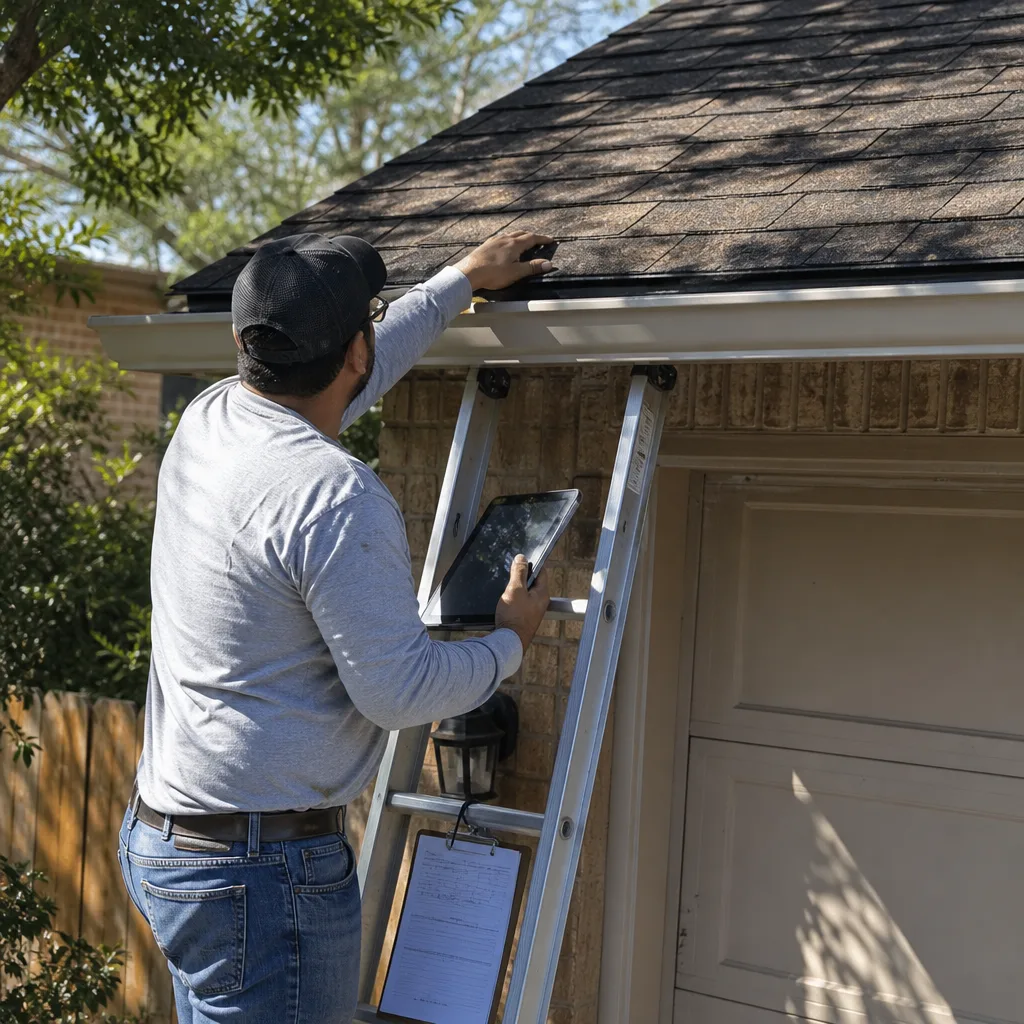
Most Austin homeowners discover a flashing problem one of two ways: a brown water spot appears on the ceiling after a hard spring storm, or a roofer doing gutter work mentions that the flashing near the chimney looks “tired.” Neither is a reason to panic, but both are reasons to act before the next rain. In Austin, where May thunderstorms can drop two inches in an afternoon and summer UV bakes roof metal for months at a stretch, flashing takes punishment that shingles simply don’t.
Key Takeaways:
- Installed IKO flashing replacement in Austin: $450 – $1,850, depending on location and decking condition
- Most swaps take 2 – 4 hours, not days
- We stock IKO-compatible flashing and can match most IKO roof systems without waiting on special orders
- Every flashing repair includes a written price before work starts and a written 365-day guarantee
Which IKO Models This Applies To
The term “IKO flashing” doesn’t refer to one part. IKO manufactures a range of roofing accessories designed to integrate with their shingle lines, including IKO’s ArmourGard, StormMaster, and Cambridge architectural series, each of which uses specific flashing profiles at transitions. The good news: most IKO flashing components follow standard industry sizing, which means a quality match is achievable even when the exact IKO-branded accessory is no longer in production. The detail that matters is not the label, it’s the measurement.
Here’s the compatibility gotcha most people don’t know: IKO’s starter strip and cap flashing dimensions for their Cambridge line differ slightly from their Nordic and Royal Estate premium lines. If you mix a Cambridge profile flashing with a Nordic shingle, you get a gap of about 3/8 of an inch at the lap joint, which is enough to become a problem over time. We measure the existing flashing before recommending anything, and we’ll show you what we found before we quote a price. On most Austin homes, OEM IKO flashing and a well-made aftermarket equivalent perform nearly identically, as long as the gauge and profile match. We’re happy to install either, and we’ll tell you honestly when spending more on OEM makes sense and when it doesn’t.
Mercer Roofing Co Austin is an independent roofing contractor. We are not affiliated with IKO, and we install and repair flashing for all major shingle brands, including GAF, Owens Corning, and CertainTeed, alongside IKO.
Styles & brands we work with
Signs Your IKO Flashing Replacement Is Failing
- Water staining on ceilings or walls near chimneys, dormers, or roof intersections. Flashing is the seam where leaks almost always begin, and the stain appears downstream of the actual breach, so the visible spot can be several feet from the real problem.
- Rust blooms or pinholes visible on metal flashing edges from the ground. Austin’s humidity and occasional roof-level condensation accelerate corrosion on thin-gauge flashing, especially on north-facing roof planes that stay damp longer.
- Lifted or curling flashing along brick chimneys or stucco walls. Thermal expansion and contraction in Austin’s temperature swings pry flashing away from masonry over time, breaking the seal that keeps water out.
- Granules collecting in gutters near roof transitions. When flashing shifts, shingles around it begin to fail early. Granule loss near a valley or wall intersection is a flashing warning before it’s a shingle problem.
- Daylight visible through gaps at roof-wall joints when viewed from inside the attic. If you can see light through the joint, water follows the same path. This is one of the few attic checks worth doing yourself, and it takes a flashlight and two minutes.
None of these symptoms reverse on their own. They get worse with each rain cycle, and in Austin, the gap between “small flashing repair” and “we’re replacing decking too” can close in a single storm season.
Replacement Cost & What’s Included
For an IKO flashing replacement in Austin, budget roughly $450 – $850 for a standard chimney or wall step flashing repair, and $900 – $1,850 when you’re also replacing valley flashing or significant portions of rotted decking sheathing. The range comes down to three factors: how much flashing is being replaced, how steep the roof is, and whether the wood underneath has absorbed water. Steep pitches require more safety equipment and slower work. Decking repair adds material and labor costs of about $70 – $100 per 4-by-8 sheet replaced.
Every quote we write in Austin includes the full job: removing old flashing, inspecting and replacing compromised decking, installing the new IKO-compatible flashing, sealing all transitions with the appropriate sealant for Texas weather, and hauling away debris. You get a written price before work starts, not an estimate range, and that written price doesn’t change unless we both agree in writing to additional work after seeing what’s underneath. Every flashing repair is covered by our 365-Day Done Right Promise: if the repair fails within a year, we come back and fix it at no cost.
See the difference
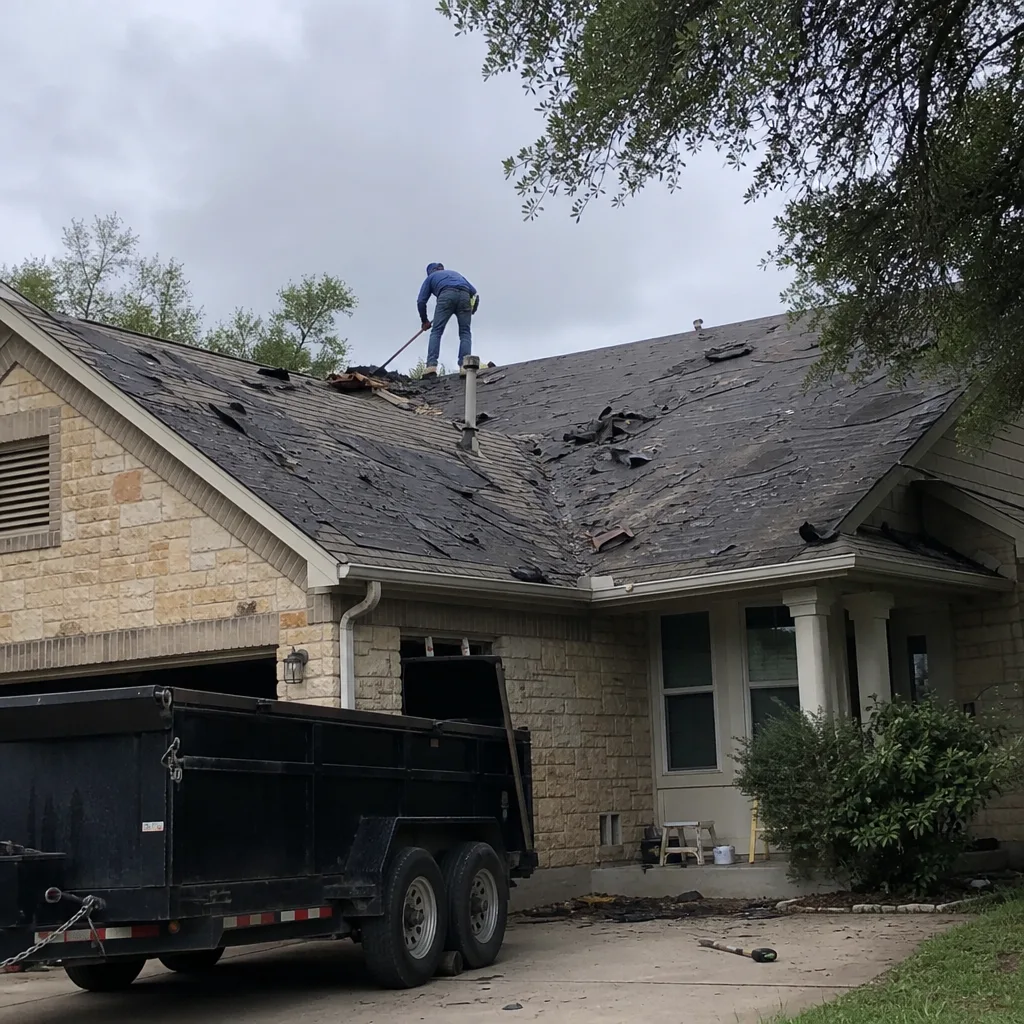 Before
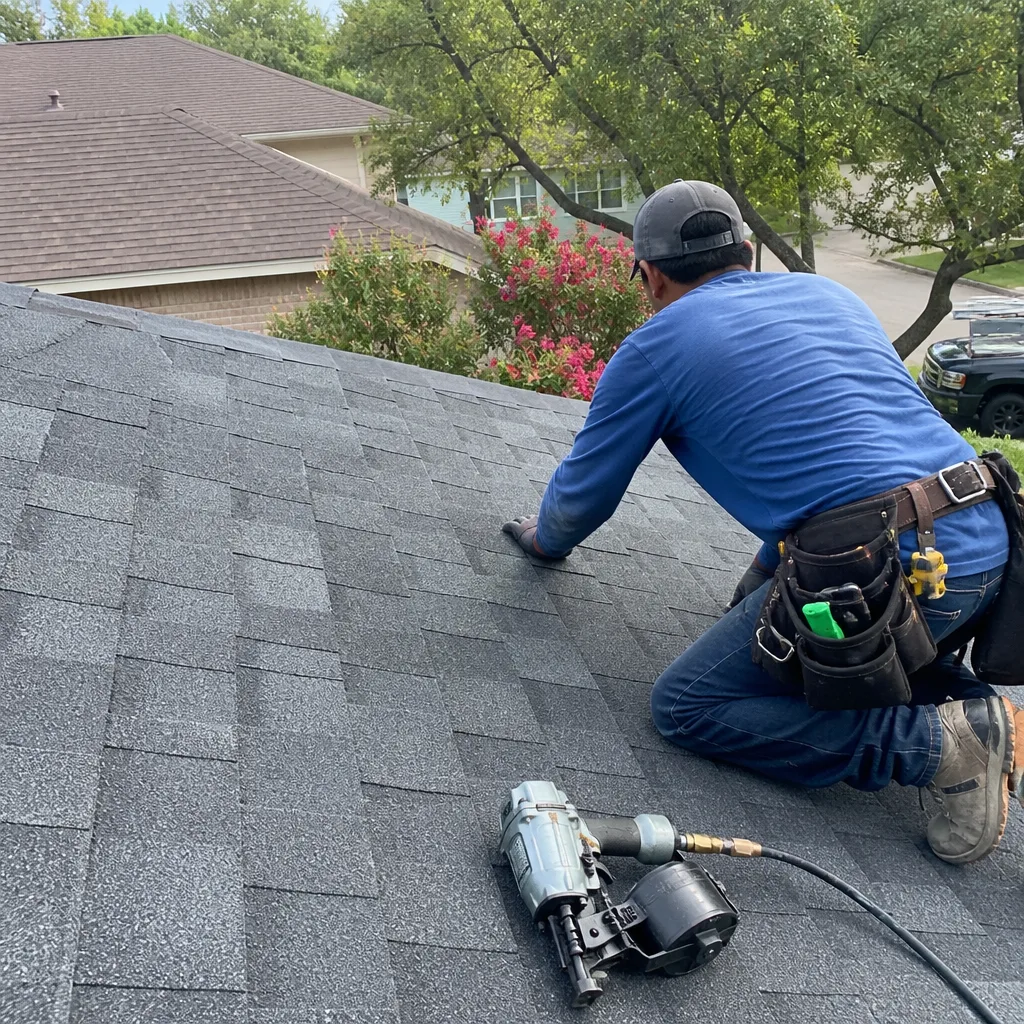 After
After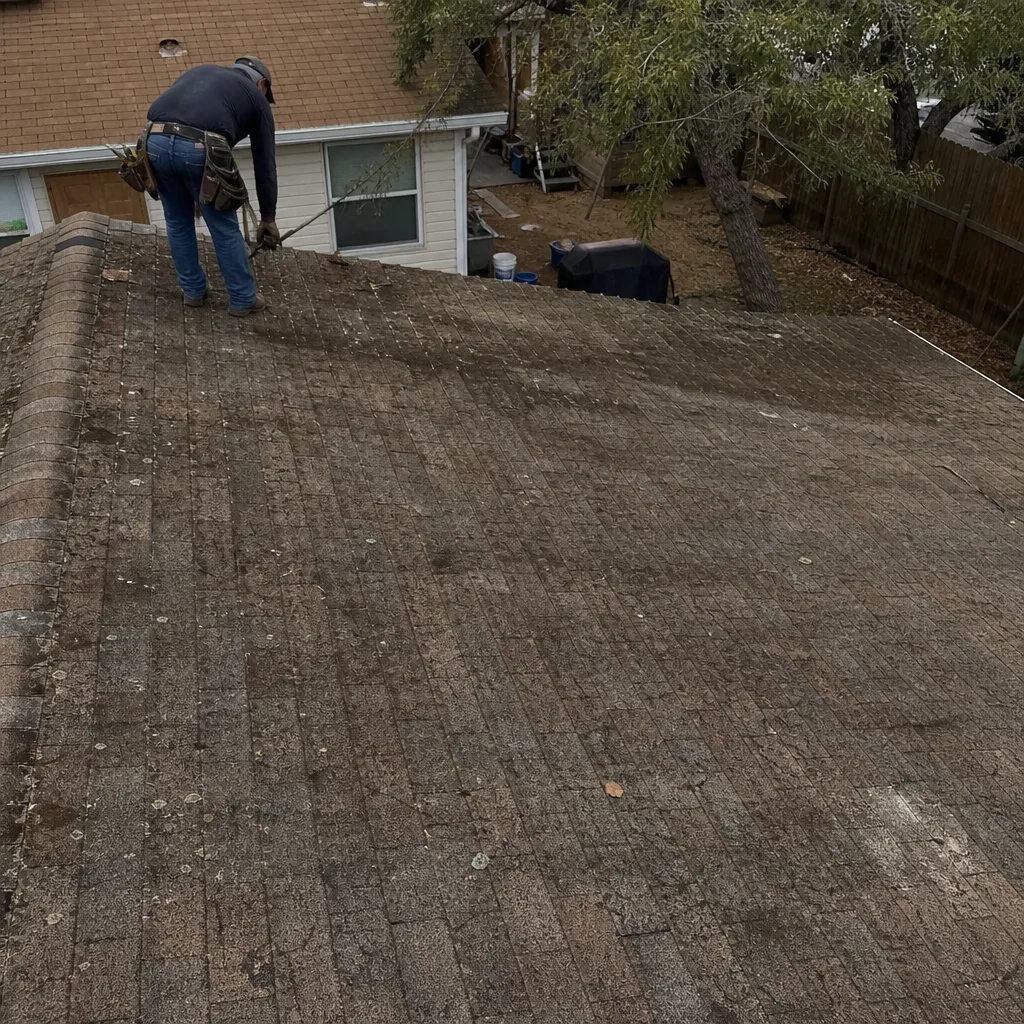 Before
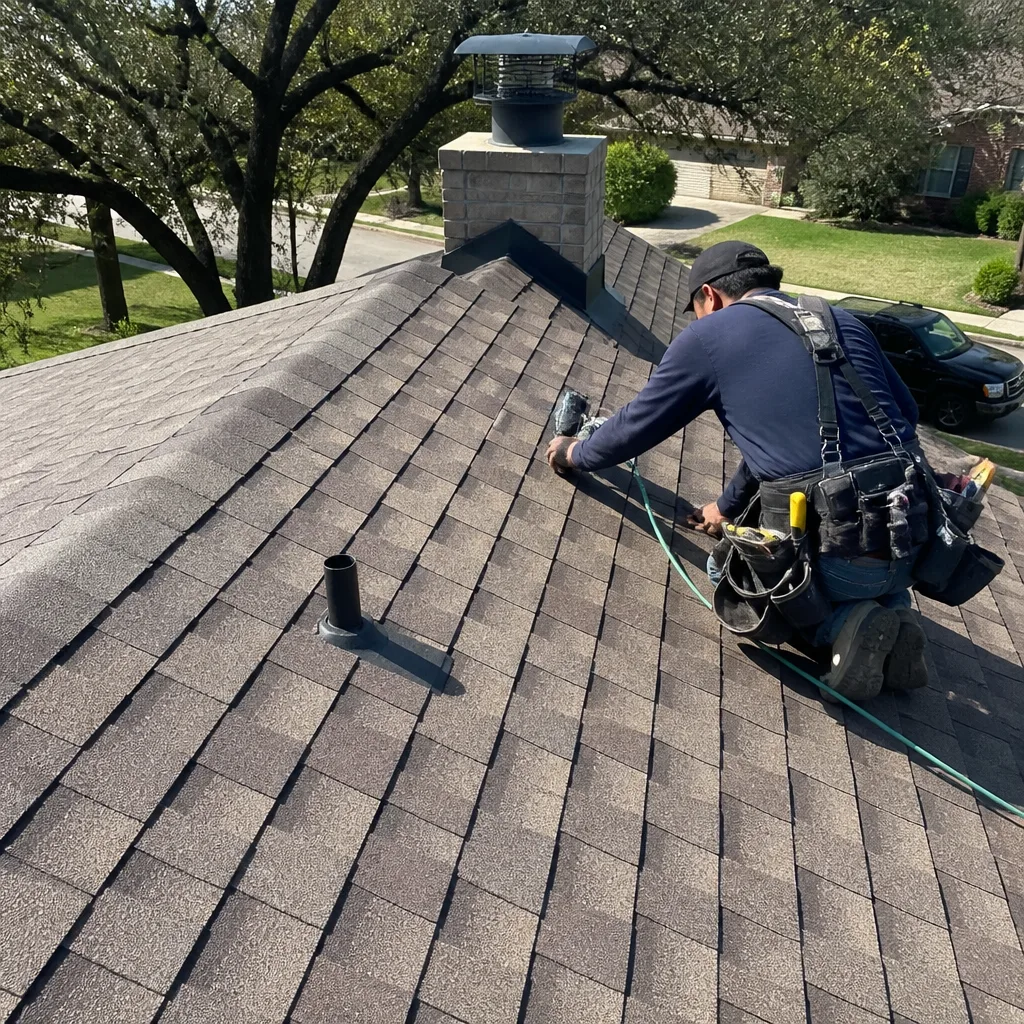 After
After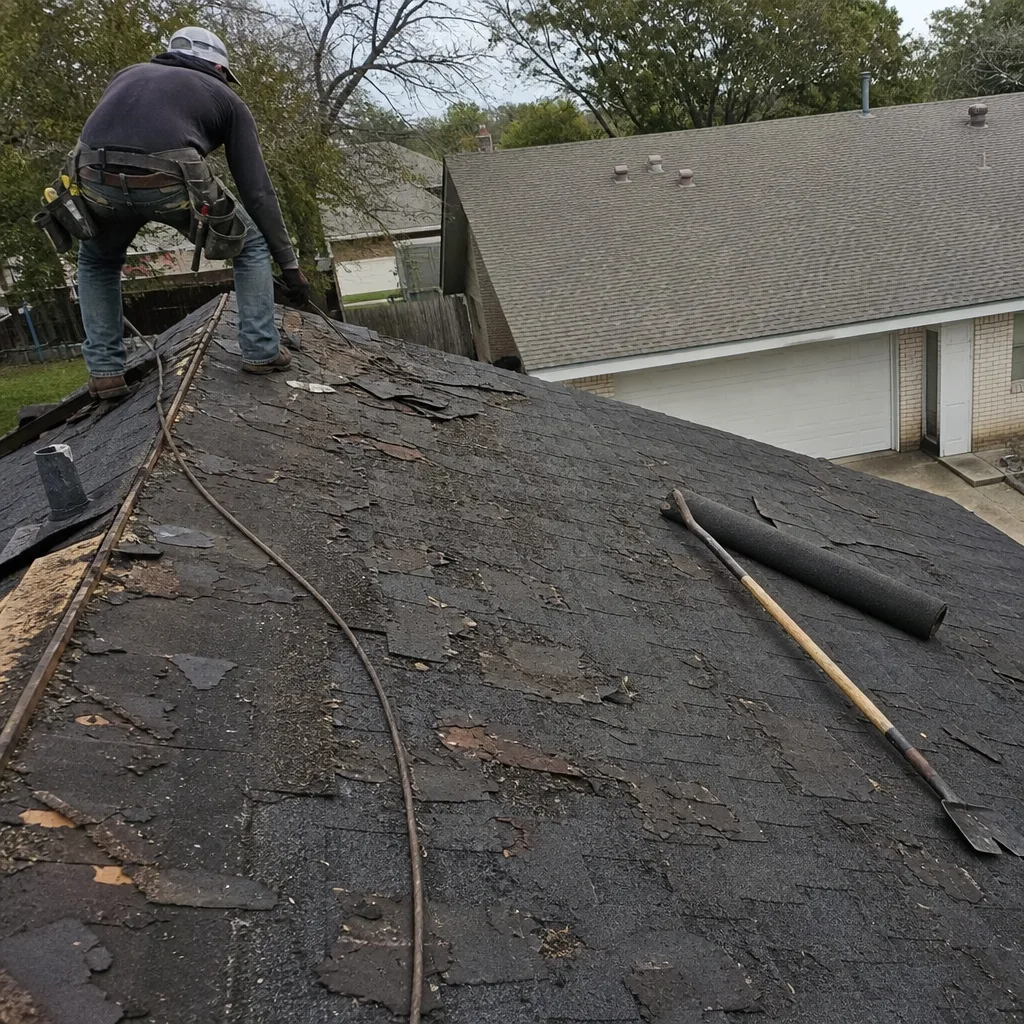 Before
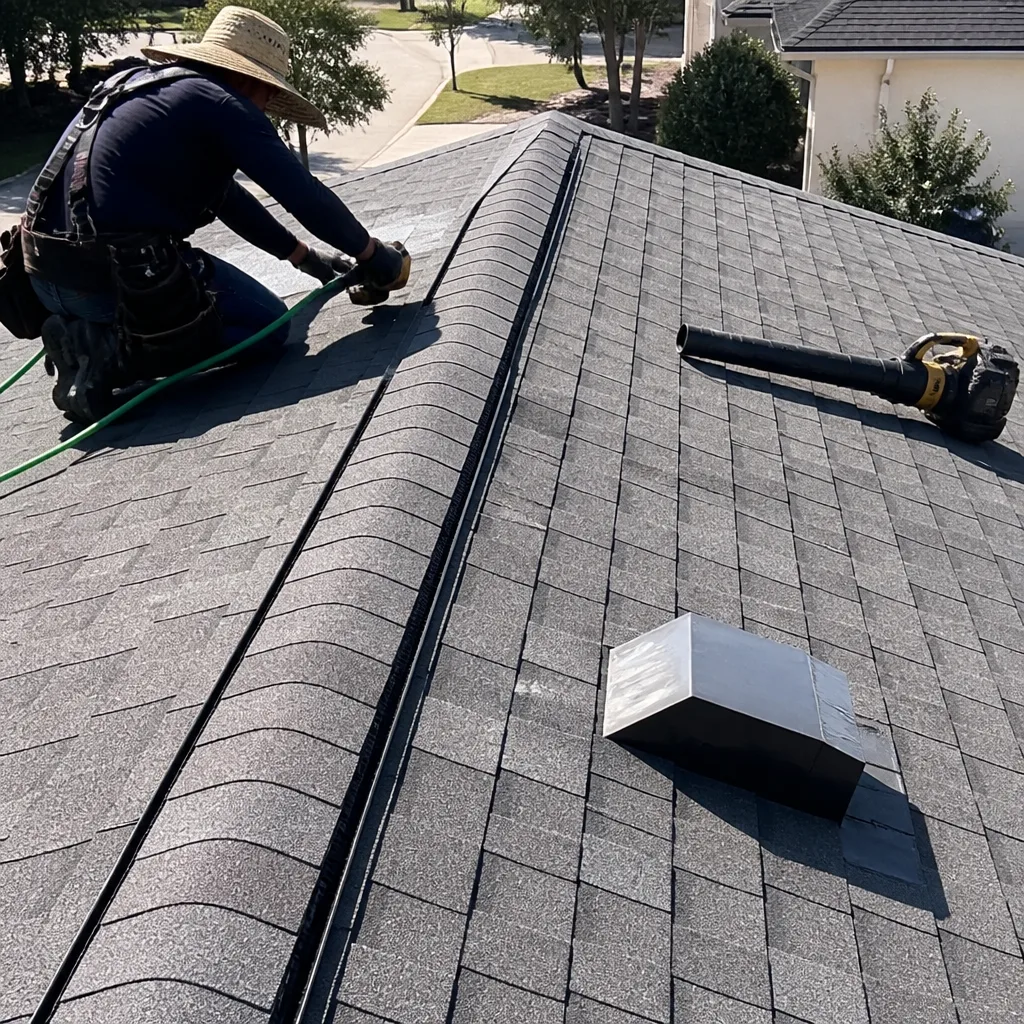 After
AfterDIY or Call Us?
There’s an honest middle ground with flashing. Homeowners can safely inspect flashing from the ground with binoculars, and from inside the attic with a flashlight. Look for rust, gaps, lifted edges, and daylight. What you shouldn’t do is get on the roof with a caulk gun and a tube of sealant. Roof sealant applied to failing flashing is a temporary smear at best and a water trap at worst. If sealant bridges a gap instead of closing it, water pools behind it and rots the decking faster while the roof looks fine from the outside. We’ve repaired more than a few Austin roofs where a well-intentioned sealant job doubled the eventual repair cost.
Flashing work also involves working at height and handling metal edges. It’s not worth a hospital visit to save a few hundred dollars. If you’ve spotted a symptom that points to flashing, call us at (361) 202-8874. We’ll send a technician whose name and photo you receive before we arrive, and that technician will walk the roof and show you exactly what’s happening before any work is quoted or performed.
FAQs
Galvanized steel IKO flashing typically lasts 15 – 20 years in Austin’s climate before showing meaningful corrosion, while aluminum flashing lasts 20 – 30 years on most homes. Austin’s intense summer UV and rapid thermal cycling shorten that compared to cooler regions, but the bigger variable is installation quality and drainage. Flashing that holds small pools of water after rain will fail in roughly half the time of flashing that drains cleanly. If you’re not sure what you have or how old it is, call (361) 202-8874 and we’ll inspect it before you decide anything.
Small, localized flashing failures can sometimes be repaired with a targeted replacement of the failed section, but patching flashing with sealant is not a repair. It’s a delay, and usually a short one. When the flashing is rusted through, lifted along its full run, or the decking underneath has softened, replacement is the honest fix. We’ll tell you which situation you have and show you the evidence, and the quote is free either way.
A standard chimney or wall flashing replacement on an Austin home takes 2 – 4 hours in most cases. If valley flashing or decking replacement is involved, expect the work to run into a second visit on the same day or early the next. We don’t rush flashing work because proper sealing requires dry surfaces and correct temperatures, which in Texas usually means doing the work in the morning before the afternoon heat bakes the sealant.
Yes. Our Austin trucks carry common IKO-compatible flashing profiles, including step flashing, counter flashing, and valley flashing in multiple gauges and finishes. If your roof requires a less common profile or a specific IKO accessory we don’t stock, we’ll order it and return to install it as soon as it arrives, usually within a few days. We’ll always tell you upfront whether the part is on the truck or on order before you commit to anything.
Call Mercer Roofing Co Austin
Your roof shouldn’t be something you worry about, that’s what we’re here for. If your IKO flashing is showing any of the symptoms above, or you just want a professional to confirm it’s still doing its job, call (361) 202-8874 to schedule your free estimate. A live person answers, day or night. The technician we send will arrive in a marked uniform with a photo ID badge, and you’ll have their name and photo before they ring the bell. We’ll give you a written price before any work starts, and the job won’t be finished until it’s right.
Written by Grant Whitlock, Owner, Mercer Roofing Co Austin at Mercer Roofing Co Austin, serving Austin and nearby areas.