
 Metal roofing
 Architectural shingles
 Tile roofing
 GAF
GAF Owens Corning
 Flat & low-slope
Free roof inspection with deck photos before we talk money - GAF and Owens Corning certified installation
GAF Flashing Replacement: The Austin Owner’s Guide
Replacing failed GAF flashing on an Austin roof typically costs between $350 and $850 installed, depending on which flashing component failed, how much decking or underlayment is compromised, and how steep or cut-up the roofline is. We stock GAF-compatible flashing profiles on our trucks, and in most cases we can complete the replacement the same visit we diagnose it. Most homeowners discover flashing failure the hard way: a brown stain on the ceiling, a damp spot in the attic after a Hill Country downpour, or granules collecting in the gutters below a valley.
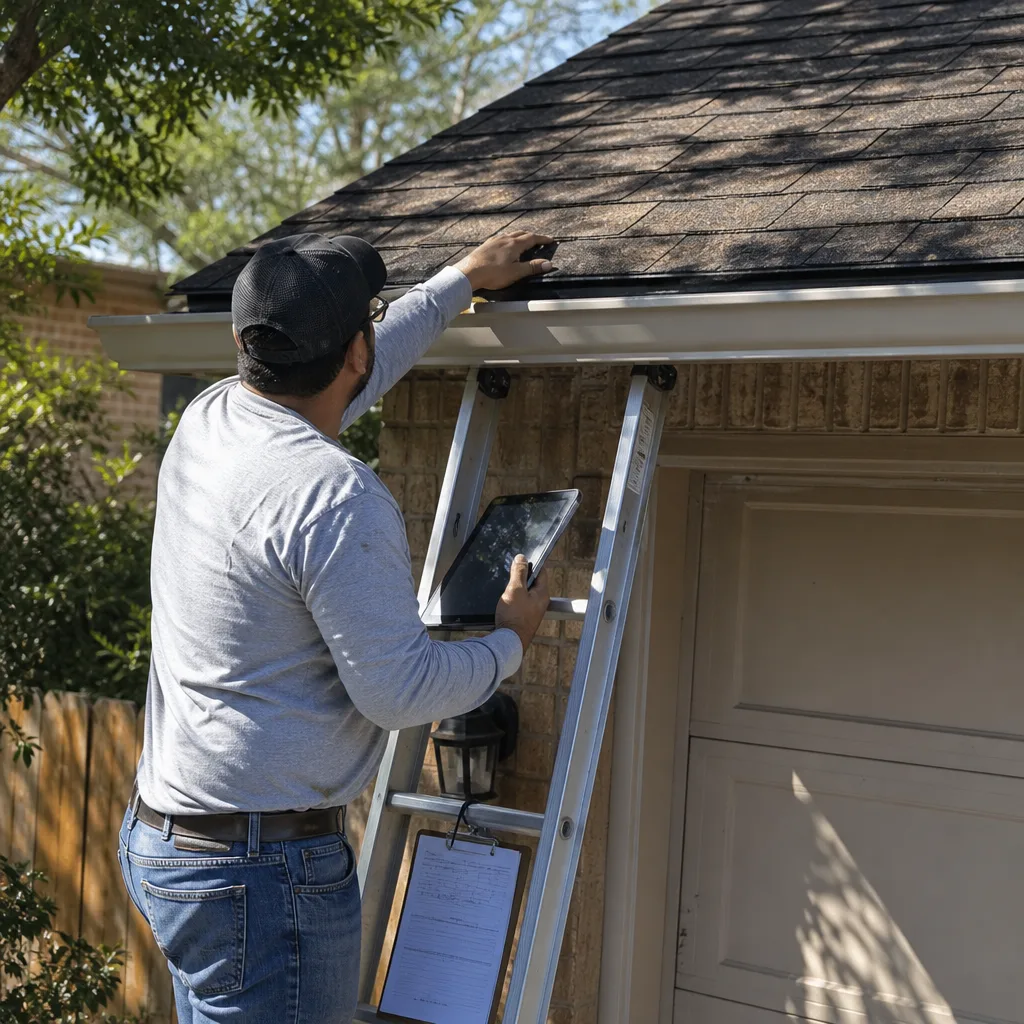
Here’s the thing about flashing in Austin specifically: our weather beats on it more than most climates do. Hundred-degree summers cook the sealant at flashing joints until it cracks. Spring storms drive water sideways into step flashing gaps. And freeze-thaw cycles in January and February work metal loose from mortar and siding. GAF makes good flashing components, but the weather here is relentless about exposing any weak spot. The flashing itself rarely “fails” in the way a shingle fails. It’s the sealant, the fasteners, or the surrounding materials that let go first.
Which GAF Models This Applies To
We replace flashing on rooftops built with GAF Timberline HDZ, Timberline UHDZ, Timberline NS, and Royal Sovereign lines, but honest truth: the shingle series matters less than the flashing type and the penetration it seals. Flashing is graded by application, not by shingle model. What matters is matching the metal gauge, width, and profile to the specific penetration: pipe boot, chimney saddle, valley, sidewall, skylight curb, or exhaust vent.
One compatibility gotcha worth knowing: GAF’s Timberline systems are engineered with a wider 10-inch step flashing profile at sidewalls, where some competitor systems run 8-inch. If a previous repair used a shorter flashing, water wicks behind it over time. That’s the kind of thing we check in Austin because so many homes here have had storm repairs done by out-of-state companies after hail events. On the OEM-versus-aftermarket question: we install genuine GAF flashing where the profile is specific (GAF’s Master Flow pipe collars, for example, are sized to integrate with GAF underlayment lines). For standard step and counter-flashing, we use 26-gauge galvanized or aluminum stock that meets or exceeds the GAF spec for the application. Same protection, often a better long-term corrosion story in our humidity.
Styles & brands we work with
Signs Your GAF Flashing Replacement Is Failing
- Water staining on ceilings near chimneys, dormers, or exterior wall joints. This is the classic sidewall or chimney flashing failure. The water travels along the roof deck and shows up inside, often several feet from the actual breach. By the time you see the stain, the flashing has been compromised for weeks or longer.
- Granules piling up at the base of a valley or around a vent pipe. Whenever water gets under flashing and sits against shingle edges, the shingles start shedding granules as they deteriorate. You’ll see a dark, sandy smear right below the penetration.
- Cracked, peeling, or missing sealant around pipe boots and exhaust vents. This is Austin’s most common failure point. UV and heat dry out the rubber boot and the caulk bead around it. Once the sealant fails, water follows the pipe straight into the attic.
- Rust staining or visible corrosion on exposed metal flashing. Galvanized flashing eventually sacrifices its zinc coating, especially where salt, humidity, or tannins from oak leaves sit on the metal. In neighborhoods like Zilker and Travis Heights where mature oaks overhang roofs, leaf litter accelerates this.
- Moisture or musty odor in the attic after a rain but no missing shingles on the field of the roof. That’s flashing. Shingle loss is obvious. Flashing failure is sneaky, and it’s the most common cause of “my roof leaks but I can’t see any storm damage.”
See the difference
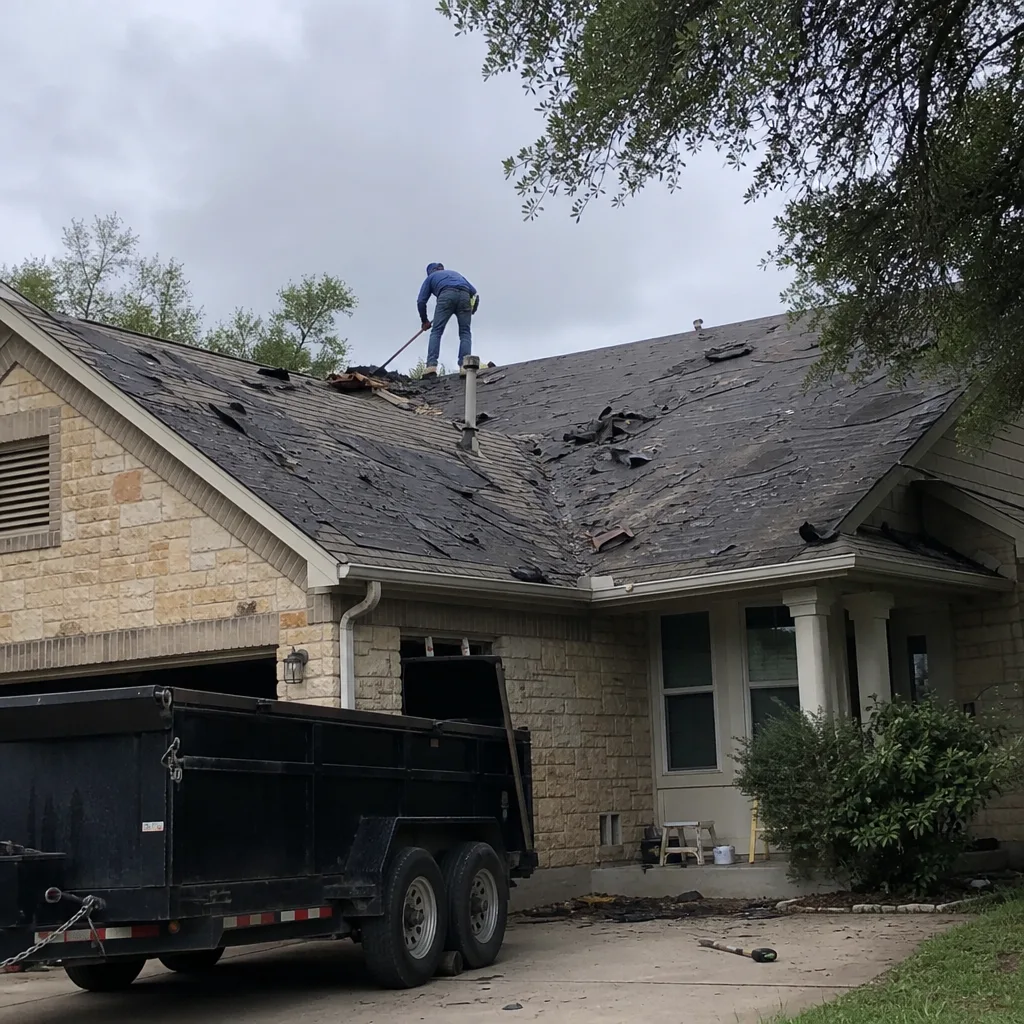 Before
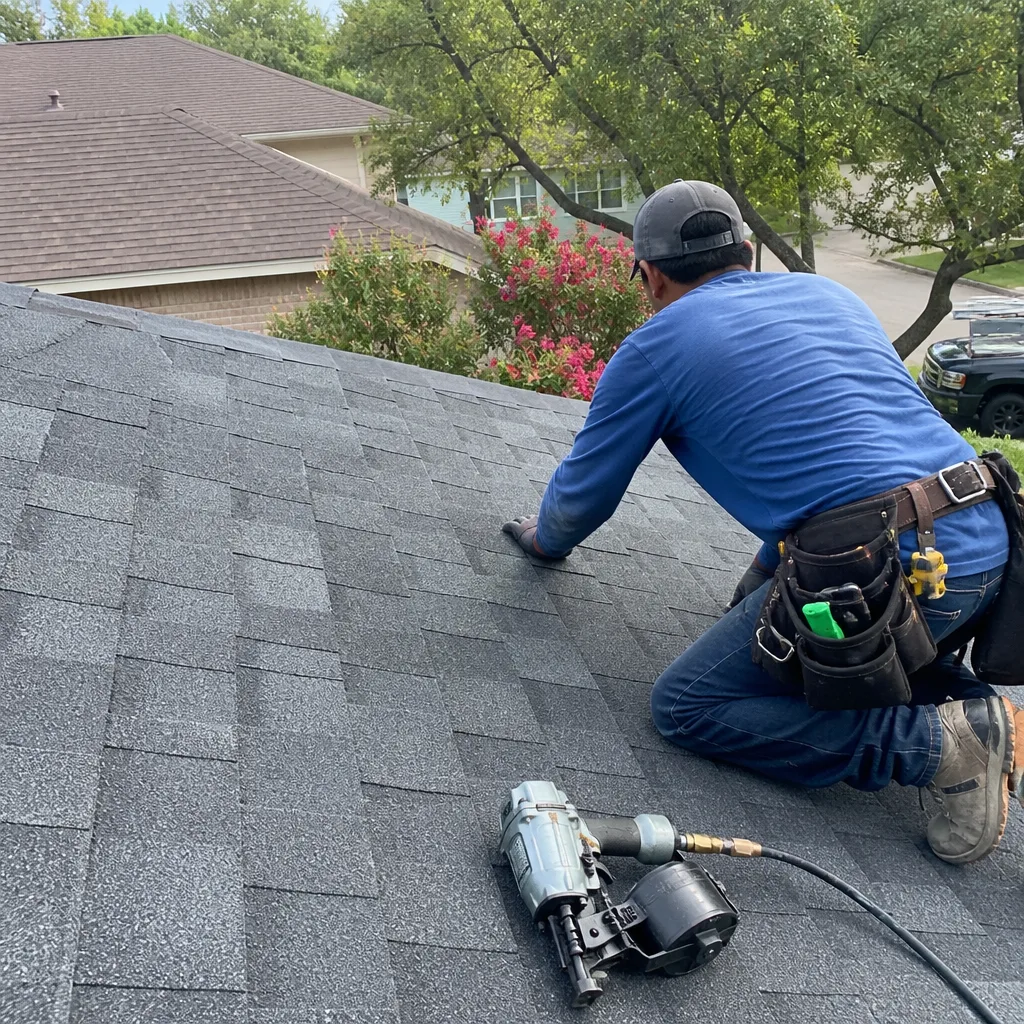 After
After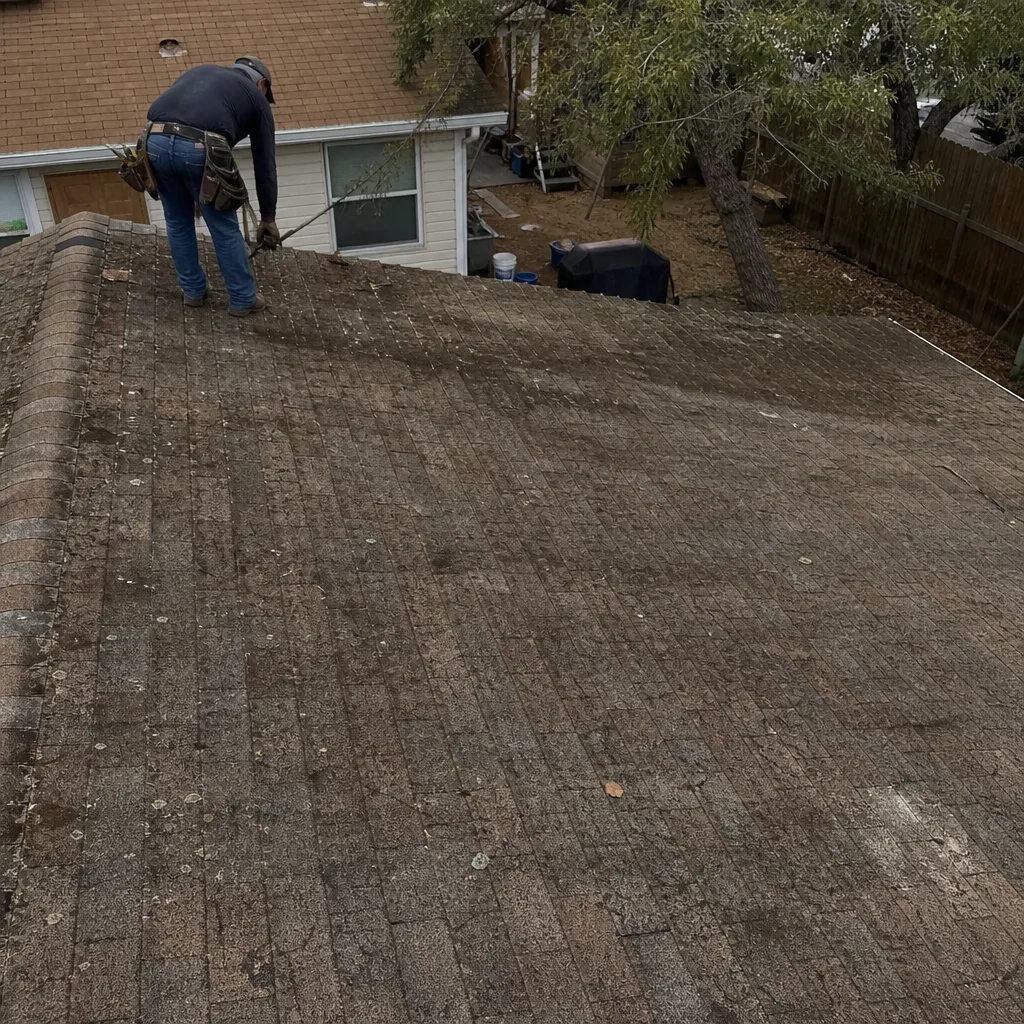 Before
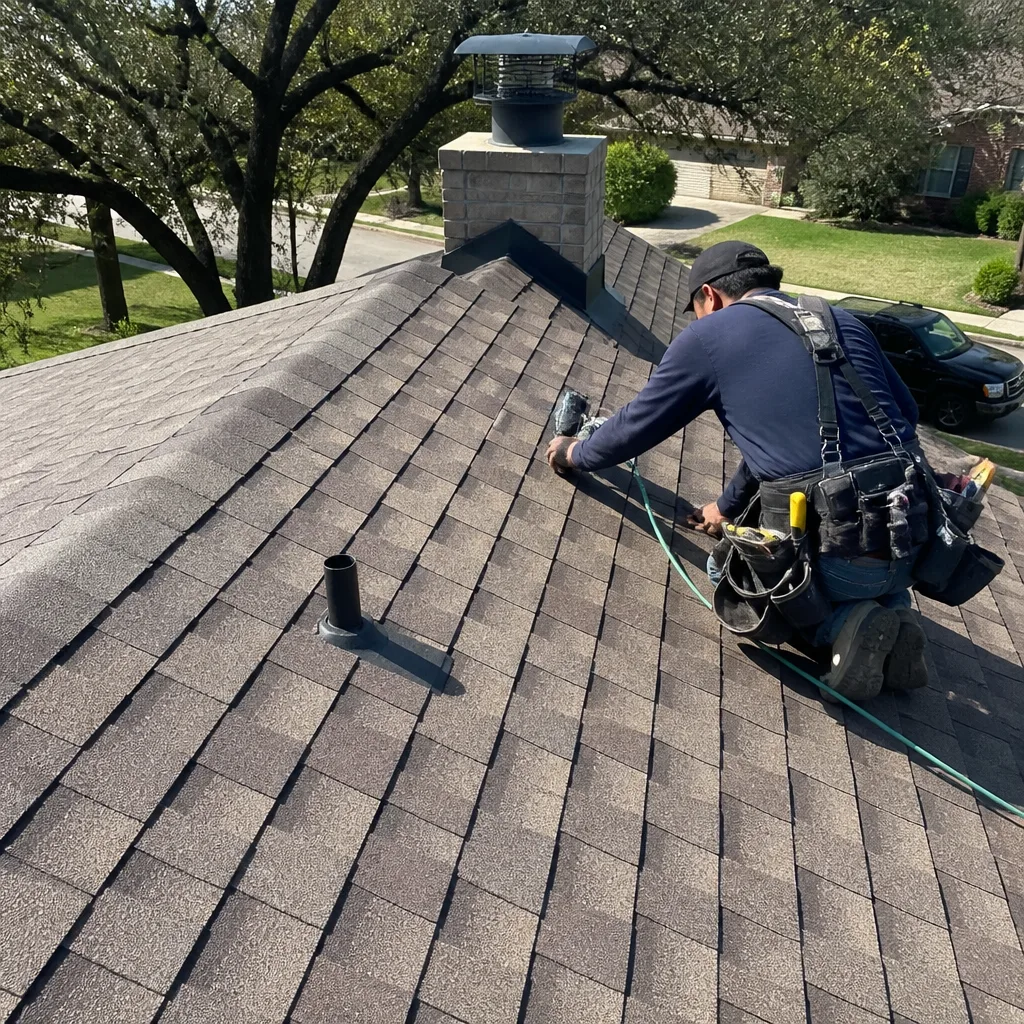 After
After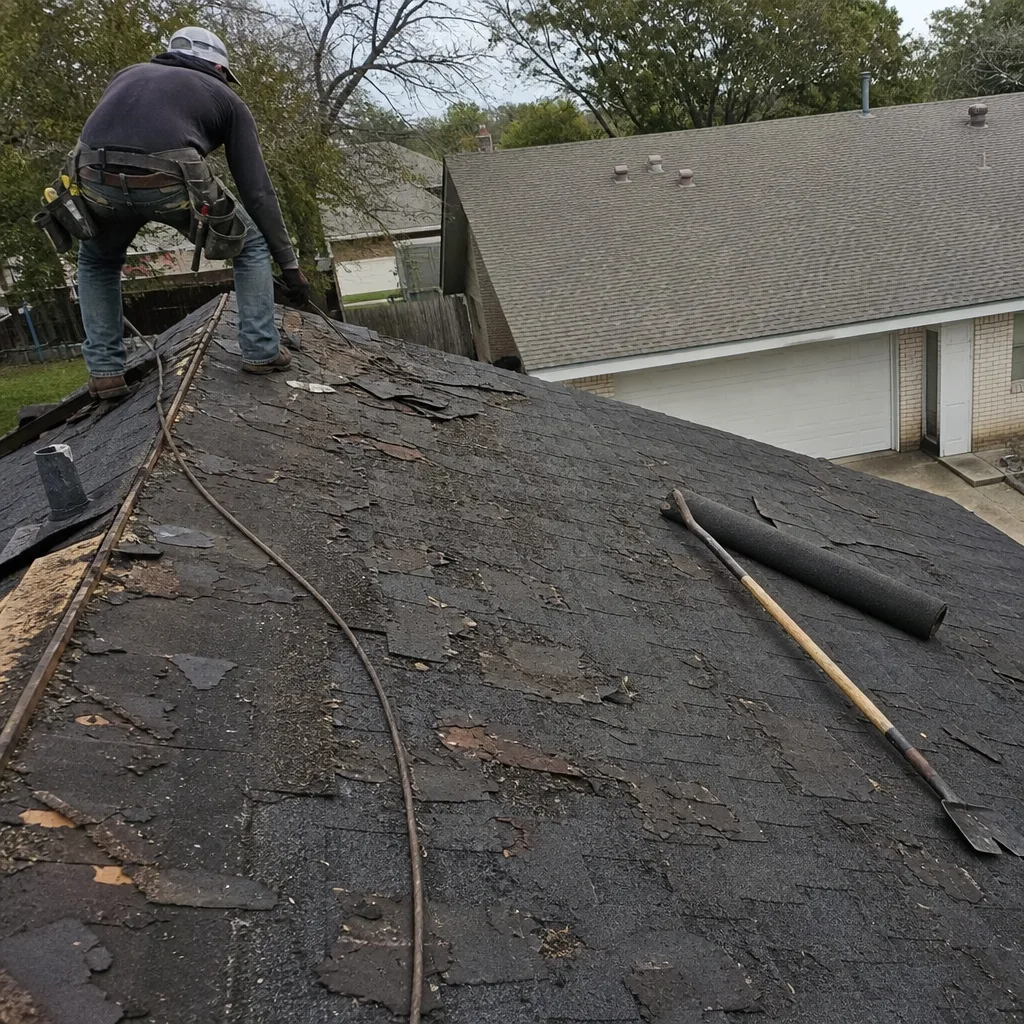 Before
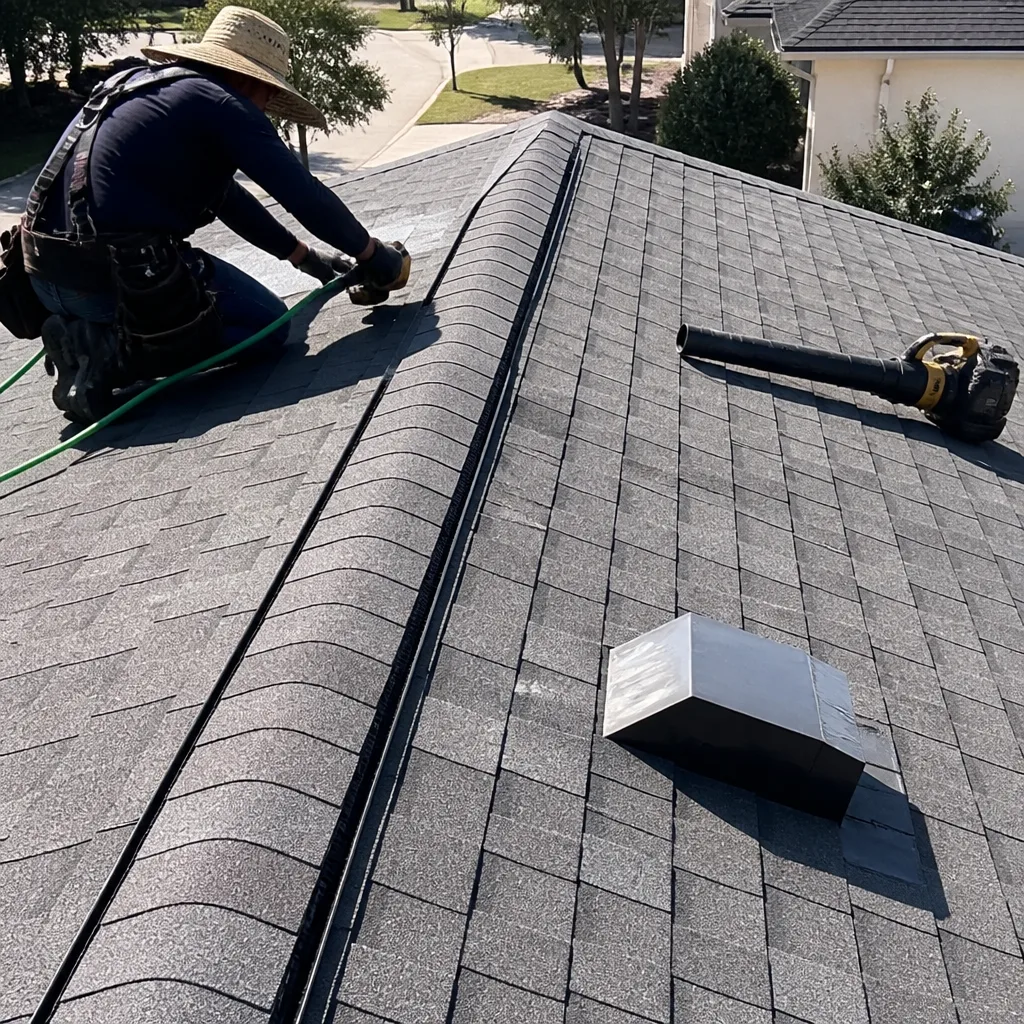 After
AfterReplacement Cost & What’s Included
Here’s the pricing picture for Austin, straight up:
- Pipe boot or vent flashing replacement: $350 to $500 installed. Includes removing the surrounding shingles, setting the new boot, resealing, and re-installing shingles with matching fasteners.
- Step flashing replacement at a sidewall: $450 to $700 installed, depending on wall length. Includes new step flashing, counter-flashing where needed, and resealing the wall junction.
- Chimney flashing (saddle, step, and cap): $600 to $850 installed. This is the most labor-intensive flashing job on most homes. Includes new metal, sealant, and a thorough inspection of the chimney crown.
- Valley flashing replacement: $500 to $750 installed, depending on valley length and whether we’re replacing woven valley shingles or installing a metal valley liner.
Every one of those prices is a written quote before any work starts. No exceptions. The written quote includes materials, labor, haul-away of the old metal, and our 365-Day Done Right Promise in writing. If the repair isn’t right within a year, we come back and make it right at no charge. That’s not a slogan. It’s on every written quote we hand to an Austin homeowner.
DIY or Call Us?
What you can safely check yourself: look at the flashing from the ground with binoculars, check the attic for stains after rain, and clear leaf buildup away from roof penetrations if you can do so from a ladder without getting on the roofline. That’s good preventive care and it helps you know when to call us.
What we don’t recommend doing yourself: pulling shingles to replace flashing. Here’s why. Step flashing and chimney flashing replacement requires working on a sloped surface, often near a drop edge, while removing and re-installing roofing materials in the correct sequence. Get the layering order wrong and you’ve created a new leak where there wasn’t one before. Get on a roof that’s soft from a previous leak and you’ve got a fall risk. Austin roof pitches in older neighborhoods like Hyde Park and Bouldin Creek run steeper than average, and that’s the kind of surface where a homeowner goes up thinking it’s a two-hour job and comes down on a stretcher. Not worth it. If you see signs of flashing trouble, call us at (361) 202-8874. We’ll come inspect it, show you exactly what we found, and give you a written price before anything gets touched.
FAQs
In Austin’s climate, GAF flashing typically lasts 12 to 18 years before sealant degradation or corrosion starts causing problems. Pipe boots fail sooner, often within 8 to 10 years, because the rubber collar is the weak point. Chimney and step flashing last longer if they were counter-flashed correctly and the surrounding masonry or siding is sound. If your roof is older than about 12 years and you’re seeing any of the symptoms above, it’s time for a professional look. Call (361) 202-8874 for an inspection with a written report.
Sometimes, but it depends on what failed. If the flashing itself is intact and the issue is failed sealant at a joint or boot, we can reseal using a high-grade polyurethane sealant rated for Texas temperature swings, and that repair costs less than full replacement. If the metal is corroded through, torn, or improperly lapped, patching just delays the inevitable. Honest guidance from us: if a patch gives you a couple more years, we’ll tell you that. If you need replacement, we’ll show you why with photos. Written quote either way, before the work starts.
Most flashing replacements take 2 to 5 hours once we’re on site, depending on the penetration type and what we find underneath. Pipe boot and vent flashing go fastest. Chimney and long sidewall runs take longer because of the cutting, fitting, and sealing involved. We protect your landscaping, clean up every scrap of old metal, and walk the finished work with you before we leave. A flashing replacement is almost always a one-visit job in Austin.
We stock GAF Master Flow pipe collars, standard 10-inch and 12-inch step flashing in galvanized and aluminum, valley flashing, and counter-flashing profiles on our trucks. Specialty profiles like custom chimney saddles we fabricate or order, but that’s rare. If your flashing is a standard GAF profile, we likely have what we need to fix it the same day we diagnose it. We also carry Owens Corning and CertainTeed flashing components for homeowners whose roofs are built with those systems, so if you’re not sure what’s up there, that’s fine. We’ll identify it on site.
Your roof shouldn’t be something you worry about, that’s what we’re here for. If you’re seeing staining, rust, or granules where they shouldn’t be, call Mercer Roofing Co Austin at (361) 202-8874. We’ll send a background-checked, photo-badged technician to your Austin home, and we’ll put the price in your hand in writing before any work begins.
Written by Grant Whitlock, Owner, Mercer Roofing Co Austin, serving Austin and nearby areas.